Overview
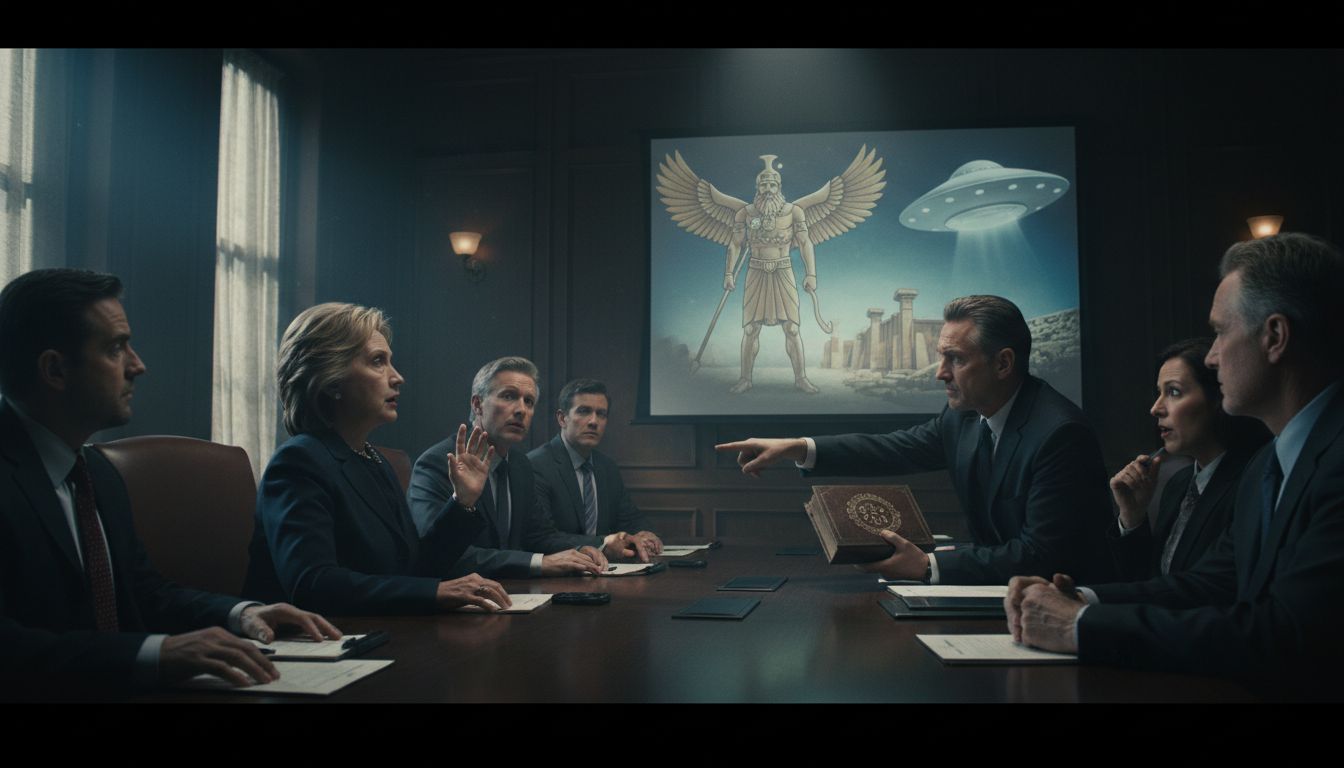
In a deposition taken as part of the ongoing federal investigation into the late financier Jeffrey Epstein, former Secretary of State Hillary Clinton was unexpectedly asked about two topics that lie far outside the usual scope of legal testimony: unidentified flying objects (UFOs) and the ancient Mesopotamian figure Gilgamesh. The line of questioning, reported by NewsNation on March 3, 2026, has drawn attention from legal observers and cultural commentators who note a growing trend of unconventional subjects surfacing in high‑profile court proceedings.
Legal Context
The deposition, conducted by the U.S. Attorney’s Office in New York, focused primarily on Clinton’s interactions with Epstein and the extent of her knowledge regarding his alleged activities. As part of the standard procedure, attorneys are permitted to explore any matter that could be relevant to the investigation, provided it is not overly speculative. According to Jennifer L. Ortiz, a former federal prosecutor now teaching at Columbia Law School, “Depositions are designed to uncover the full factual matrix. While the inclusion of UFO and mythological references is unusual, it may be a strategic move to gauge the breadth of a witness’s knowledge or to test the limits of the questioning.”
Unconventional Questions
The UFO inquiry reportedly centered on whether Clinton had ever been briefed on “government‑sanctioned investigations into aerial phenomena” and if she had any personal observations of such events. The Gilgamesh question, by contrast, asked whether she was familiar with the ancient epic and whether any symbolic parallels had ever been drawn in diplomatic discussions. No official transcript has been released, but a source close to the deposition confirmed that the attorney’s line of questioning was “direct, but framed as a curiosity about historical and contemporary narratives that might intersect with national security concerns.”
Reactions from Experts
Legal analysts and scholars of mythology have weighed in on the odd juxtaposition. Dr. Samuel Patel, a professor of political science at the University of Michigan, suggested that “the Gilgamesh reference could be an attempt to explore how ancient myth informs modern geopolitical rhetoric, especially given the epic’s themes of power and hubris.” Meanwhile, Dr. Laura Chen, a senior researcher at the National UFO Research Center, noted that “the inclusion of UFOs reflects a broader shift in governmental transparency. Over the past decade, declassified reports and congressional hearings have normalized discussion of aerial anomalies, making it a plausible line of inquiry in a high‑stakes deposition.”
Broader Implications
The episode underscores a larger pattern where legal teams are increasingly willing to probe topics that were once relegated to fringe speculation. As the U.S. government continues to release previously classified information on unidentified aerial phenomena, and as popular culture revives interest in ancient epics, the boundaries between mainstream legal discourse and unconventional subject matter appear to be blurring. Observers caution, however, that the primary focus must remain on the substantive allegations surrounding Epstein’s network, warning against “distracting the public with sensationalist angles.”
Outlook
While the immediate impact of the UFO and Gilgamesh questions on the Epstein case remains unclear, the incident may set a precedent for future depositions involving high‑profile figures. Legal scholars anticipate that attorneys will continue to test the limits of relevance, especially as public interest in both extraterrestrial investigations and mythic symbolism grows. For now, Clinton’s legal team has declined to comment on the specific line of questioning, emphasizing that “the deposition remains a matter of ongoing litigation.” As the case proceeds, the focus will likely return to the core evidence, but the episode serves as a reminder that modern legal proceedings are increasingly intersecting with the cultural curiosities of the 21st century.


