Overview
A recent historical survey of UFO and UAP lore underscores a point often lost in modern debate: reports of strange aerial phenomena long predate the term “flying saucer.” The centerpiece of the piece is the 1897 account of Missouri traveling salesman W. H. Hopkins, who claimed he encountered a metallic craft and two unusual occupants during the height of America’s “Mystery Airship” craze. The story is presented alongside other episodes drawn from a much wider timeline, including alleged ancient Chinese sightings, reports of glowing orbs, a 1969 Chilean case, and a 1987 close encounter, illustrating how recurring descriptions of unexplained lights and craft have echoed across cultures and eras.
The 1897 Missouri encounter
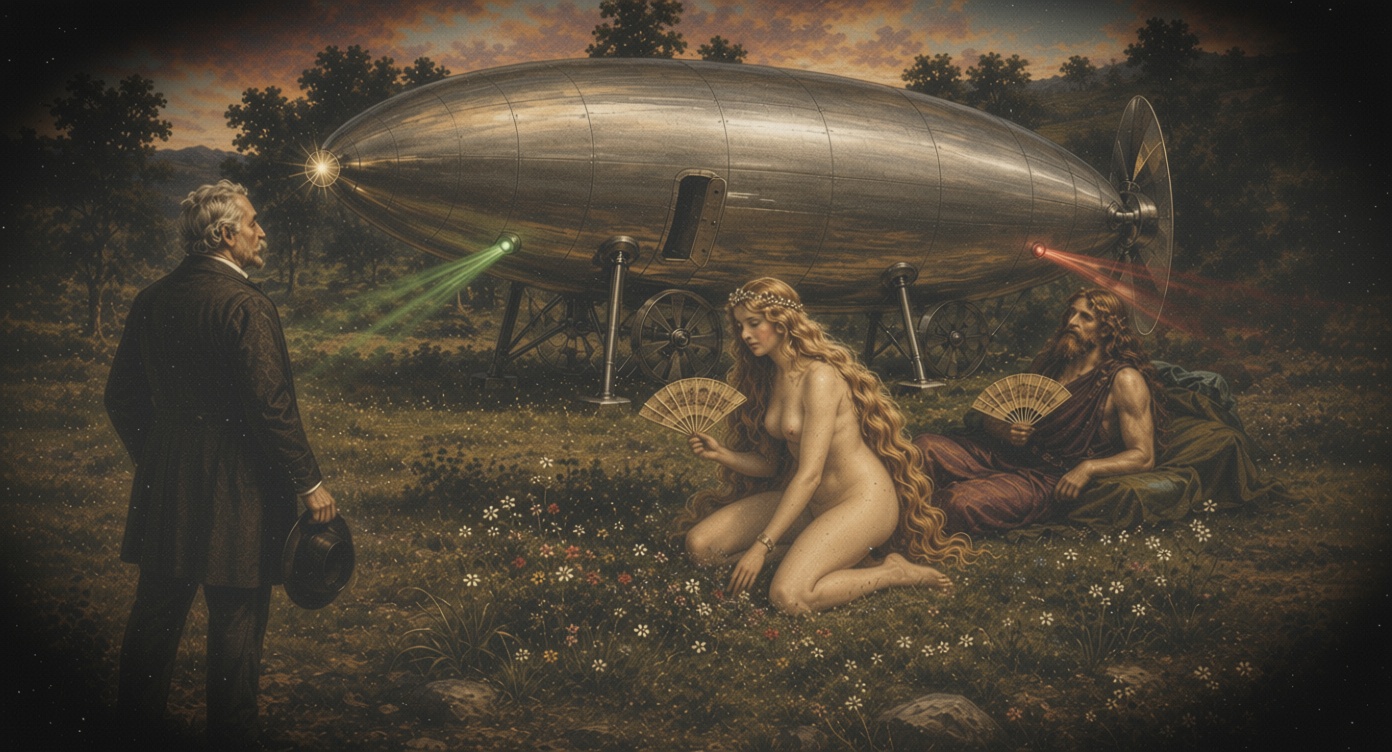
Hopkins’ account, published in the St. Louis Post-Dispatch on April 19, 1897, is striking not only for its detail but for its timing. He said that on a sunny day near Springfield, Missouri, he came upon a metallic vessel about 20 feet long, resting in a clearing on four supports, with propeller-like wheels and a stern-mounted appendage. Near the craft, he reported seeing a petite young woman with golden hair and no clothing, as well as a powerfully built man with auburn hair and a beard. According to Hopkins, the woman laughed, gathered flowers, and spoke in a language he could not understand. When asked where they had come from, he said they pointed upward and appeared to say “Mars.”
What makes the account notable is that it was not buried in a later UFO memoir or fringe pamphlet. Hopkins was a real person, his employer was real, and the newspaper reportedly investigated him and interviewed his family. That does not make the claim true, of course, but it does place the story within the broader record of late-19th-century mystery airship reports that captured public attention across the Midwest. In 1897, many such sightings were attributed to secretive inventors testing new technology rather than extraterrestrial visitors, though the atmosphere of speculation resembles later UFO waves.
A broader pattern of strange sightings
The article situates Hopkins within a much longer human fascination with the unknown sky. The mention of ancient Chinese reports reflects a recurring theme in ufology: unusual lights and objects have been recorded in historical texts long before aviation existed. Likewise, the inclusion of glowing orb reports and the 1969 Chilean case points to the way similar phenomena appear in different national settings, sometimes described as luminous objects, sometimes as structured craft, and sometimes as encounters involving witnesses on the ground. The 1987 close encounter extends that timeline into the modern era, showing that the basic structure of the narrative—an observer, an unfamiliar object, and uncertainty about what was seen—remains remarkably consistent.
Why these cases still matter
Taken together, these stories do not prove a single explanation for UFOs, nor do they settle the question of whether every witness was describing something physical, psychological, or misidentified. In fact, the piece is careful to note that some reports may have ordinary explanations. But that caution is part of the value of historical research: it shows how deeply rooted the phenomenon is in public memory and how often witnesses have interpreted unfamiliar sights through the lens of the technology and beliefs of their time. More than 125 years after Hopkins described a gold-haired figure beside a mysterious craft, the case still resonates because it sits at the intersection of folklore, journalism, and the enduring human impulse to ask whether we are alone.