Overview
A recent review of historical UFO and paranormal reports revisits a series of unusual episodes, ranging from a 1910 account of an apparent visitation in County Donegal, Ireland, to the U.S. military’s mid-20th-century effort to build a flying saucer. The material places these cases within their historical and cultural settings, emphasizing that they are reports, interpretations and archival narratives—not independently verified evidence of extraterrestrial activity.
The Irish case emerged during widespread anxiety over the return of Halley’s Comet. As described by Robert E. Bartholomew and Hilary Evans in Panic Attacks: Media Manipulation and Mass Delusion, a February 1910 New York Times report warned that cyanogen had been detected around the comet. Although astronomers later rejected the idea that the comet posed a poisoning risk, public concern spread internationally. By early May, the approaching passage had become associated in some communities with catastrophe and the “night of doom.”
The 1910 Donegal Account
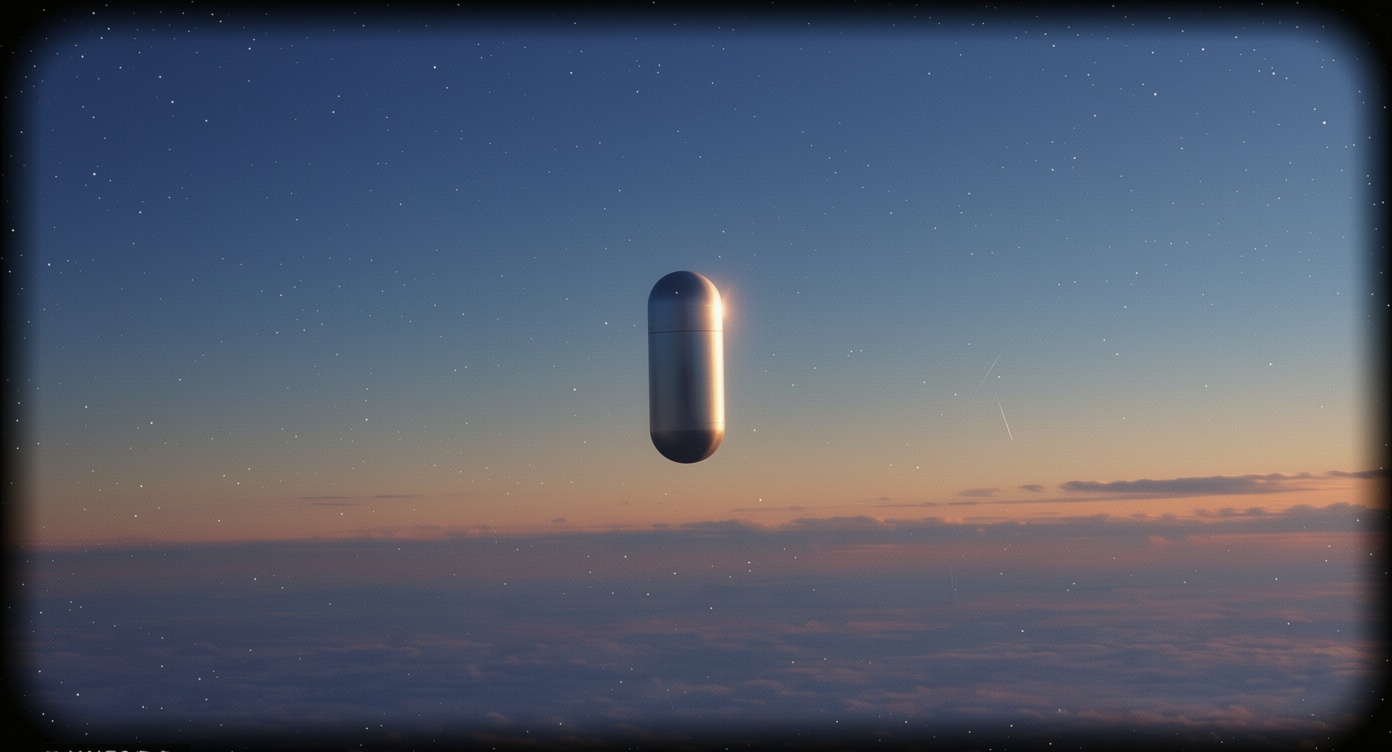
Against that backdrop, the review describes an alleged encounter on Doagh Island in County Donegal on May 6, 1910. According to the account, local men working in fields saw what they initially believed to be a large steamship approaching from the North Atlantic. The object was reportedly surrounded by dense blue-gray vapor and appeared to be moving rapidly toward the mainland.
Concerned that the vessel might crash, the men ran toward it. At a distance of approximately 400 yards, however, they allegedly concluded that it was not an ordinary ship. The published account presents the incident as a striking example of how an unusual sighting can become intertwined with contemporary fears and expectations. Because the surviving narrative is historical testimony rather than a documented investigation with modern physical evidence, its details remain difficult to assess independently.
Other Historical Cases
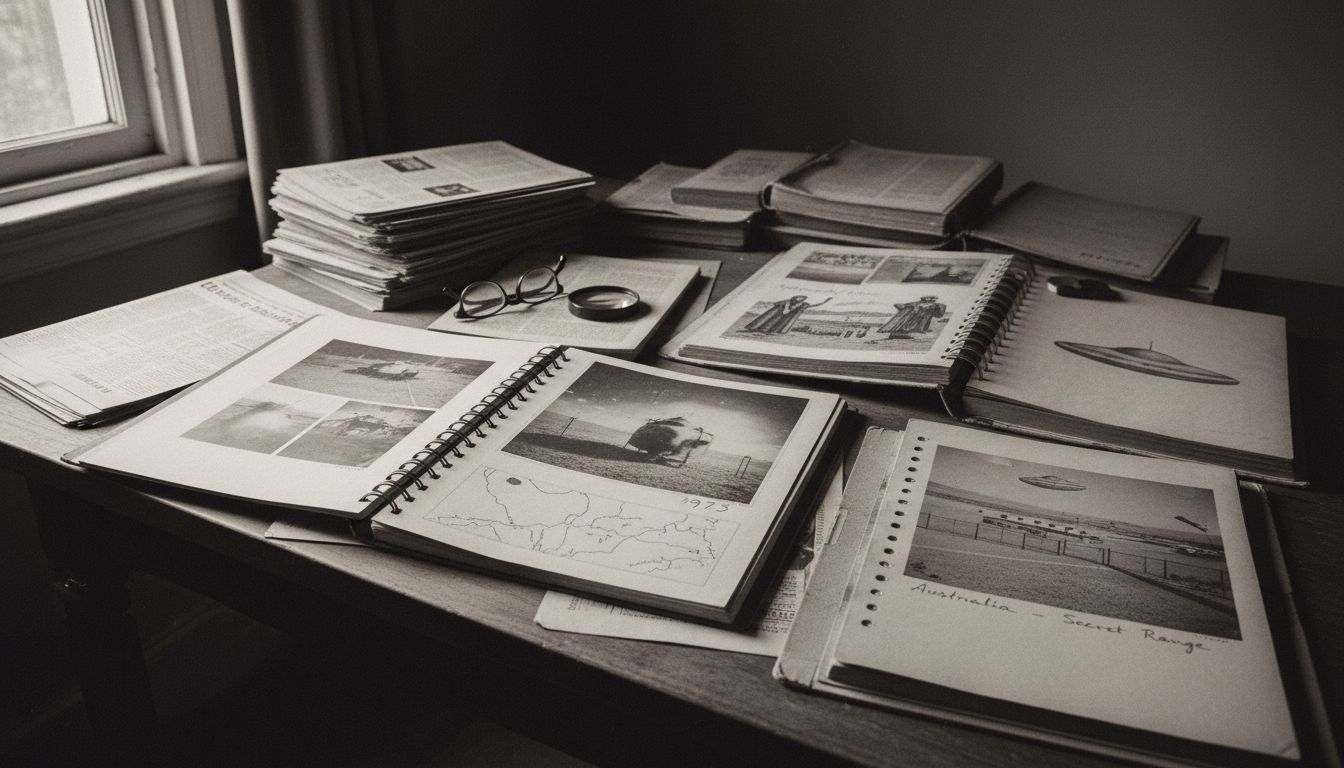
The broader review also examines the 1973 “Roswelsh” incident in Wales, a name that reflects comparisons often made between the Welsh report and the better-known 1947 Roswell case in New Mexico. It further considers an Australian sighting near a secret military test range, where the presence of restricted defense activity provides an important alternative context for interpreting reports of unidentified objects. Such locations have historically attracted speculation because experimental aircraft, surveillance technology and unusual atmospheric effects may be unfamiliar to civilian observers.
These cases illustrate a recurring problem in UFO reporting: an unexplained observation is not necessarily evidence of an extraterrestrial craft. The absence of publicly available information—particularly around military facilities—can encourage competing explanations, while later retellings may add detail or connect an incident to more famous events.
The Avrocar and Popular Imagery
The review also discusses the Avrocar, an actual U.S.-Canadian military aerospace project developed during the Cold War. Designed as a circular, vertical-takeoff aircraft, the Avrocar was intended to exploit a central engine and air cushion for hovering and high-speed flight. In testing, the aircraft reportedly suffered from instability and limited performance, and the project was ultimately abandoned.
Although the Avrocar was not an extraterrestrial vehicle, its saucer-like appearance helped demonstrate how secret aerospace research could influence UFO culture. Photographs and reports of unconventional prototypes can blur the line between science-fiction imagery, military experimentation and claims about unidentified craft.
FATE, Heaven’s Gate and Historical Interpretation
Finally, the material explores a reported connection between the magazine FATE and the Heaven’s Gate tragedy, the 1997 mass suicide of the religious group’s members in California. The connection is presented as part of a broader examination of how paranormal publications, belief systems and media narratives can intersect—not as proof that the magazine caused or directly orchestrated the event.
Taken together, the cases show how UFO and paranormal stories develop through a combination of eyewitness testimony, cultural expectations, secrecy and later interpretation. Their historical value lies in what they reveal about public belief and information environments, while their evidentiary status remains unresolved.