Overview
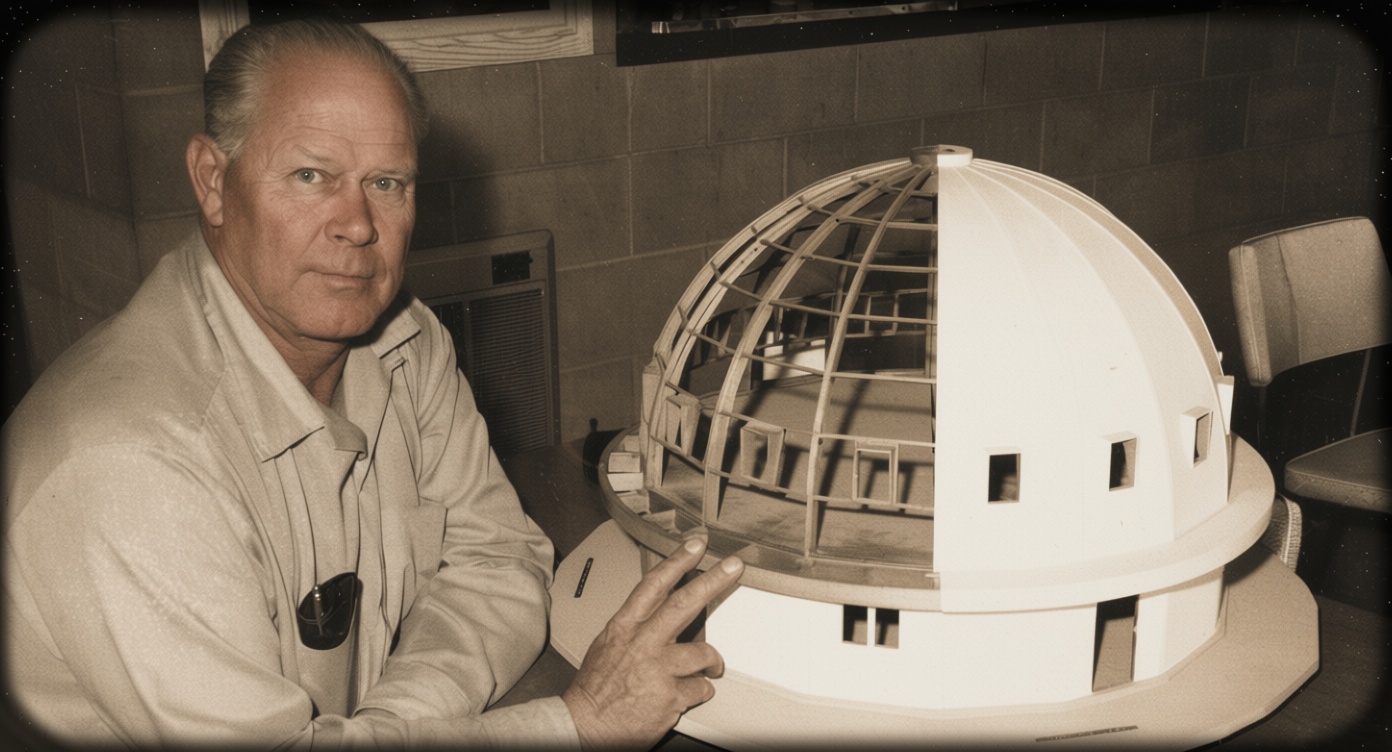
A collection documenting the UFO movement surrounding the Mojave Desert’s Integratron has found a new home at the Huntington Library, Art Museum, and Botanical Gardens in San Marino. The archive traces the life and ideas of George Van Tassel, the former flight inspector who built the distinctive white-domed structure near Landers and claimed that extraterrestrial beings from Venus had guided his work.
The collection’s arrival at the Huntington reflects an unusual collaboration involving a podcaster, an architectural historian and a pool contractor. Their efforts helped preserve materials connected not only to UFO belief, but also to Southern California’s aerospace industry, desert communities and postwar fascination with contact from other worlds.
“This isn’t just a UFO collection,” said Jack Wagner, the Los Angeles-based host of the paranormal podcast Otherworld. “This is connected to the history of the desert, aerospace, and Southern California in general.”
George Van Tassel and the Integratron
Van Tassel became one of the leading figures in the postwar UFO-contactee movement. After working as a flight inspector in Southern California’s growing aeronautics industry, he moved with his family to the Mojave Desert, where they operated the Come On Inn café near an airstrip. He also organized conventions that attracted people who believed they had encountered extraterrestrial beings.
In a 1964 television interview, Van Tassel described what he said was a close encounter with humanoids from Venus. “They were about five foot six,” he said. “They came about to my eyebrows, and they could have walked in our clothes down any of our streets, and we would not have paid any attention to it.”
Van Tassel said one of the beings, whom he identified as Solganda, gave him the idea for a structure that could bathe people in electromagnetic energy. He believed the process could recharge human cells and extend life. Construction on the Integratron began in the late 1950s, financed through his publications, UFO conventions and donations. A longstanding rumor holds that Howard Hughes, for whom Van Tassel had worked, contributed $40,000—roughly half a million dollars in current value.
From UFO landmark to archival record
The Integratron was not completed when Van Tassel died of a heart attack in 1978, according to La Crescenta-based architectural historian Daniel Paul. Although the building later became internationally known for sound baths, its earlier history is rooted in the network of UFO enthusiasts who gathered in the Mojave after World War II.
That history is now being treated as an archival and cultural subject rather than solely as a question of whether Van Tassel’s claims were true. The Huntington’s holdings include material from the McKinney Collection of George W. Van Tassel Papers, offering researchers a way to examine the people, organizations and ideas that shaped the movement.
The institution will offer an early public look at the Integratron archive during its “Strange Science” event, scheduled for Oct. 30–31, 2026, from 6 to 10 p.m. The program will take place at the Huntington in San Marino and cost $90. The event is expected to place the Integratron within a broader history of science, technology, belief and popular culture.
For Wagner and the other people involved in bringing the material to the Huntington, the collection’s significance lies in that broader context. The archive connects a desert landmark to the region’s aviation history, changing ideas about technology and the enduring appeal of UFO stories in Southern California.