Overview
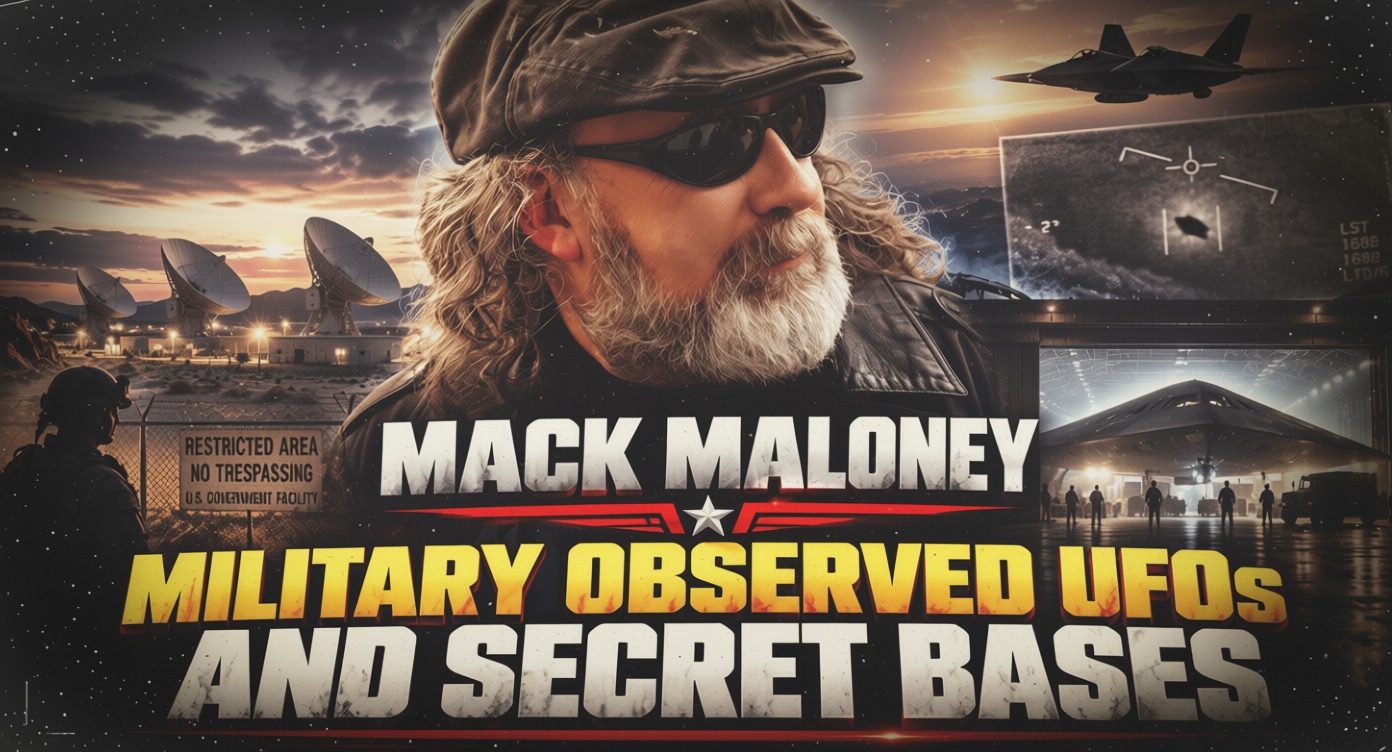
Author and UFO researcher Mack Maloney discussed military sightings, secret test facilities and the national-security implications of unidentified aerial phenomena during a recent episode of The Big Finale, hosted by Bruce Collins. The interview, titled “Military Observed UFOs and Secret Bases,” was conducted largely by telephone after technical difficulties disrupted the original connection. The discussion ranged from World War II reports of unexplained lights to incidents near U.S. nuclear missile facilities. The claims remain matters of interpretation and are not presented as independently verified evidence of extraterrestrial activity.
Military Origins of UFO Research
Maloney, best known for military-fiction works including the Wingman series, said his interest in UFOs grew after conversations with his editor about the large number of unexplained sightings reported by servicemembers during wartime. A major focus of the interview was the “foo fighter” phenomenon reported by Allied and Axis aircrews during World War II. Pilots described glowing objects or lights that appeared to follow or maneuver near their aircraft.
According to Maloney, postwar discussions between Allied and German military leaders suggested that both sides had initially suspected the other of testing secret technology. Those suspicions reportedly faded when neither side could provide a conventional explanation for all of the observations. Such accounts have contributed to the enduring view that military personnel may have encountered phenomena beyond the known aircraft technology of the period, although historical records and later interpretations remain contested.
Nuclear Sites and Secret Facilities
The interview also examined reports from the late 1960s and early 1970s involving unidentified objects near intercontinental ballistic missile installations. Maloney referenced alleged incidents at Whiteman Air Force Base in Missouri and at facilities in Maine and South Dakota. In his account, some objects were associated with disruptions to electrical systems or changes in missile targeting data. Maloney characterized the incidents as suggesting an apparent interest in nuclear capabilities rather than an overtly hostile attack.
The discussion broadened to secret military locations beyond Nevada’s Area 51. Maloney identified the Tonopah Test Range, along with sites in Arizona and New Mexico, as examples of facilities associated with classified aircraft development. He noted that experimental platforms, including stealth aircraft and the SR-71, may account for some UFO reports when viewed by observers unfamiliar with their capabilities. This explanation is consistent with the documented history of secret aviation programs, though it does not resolve every reported sighting.
Landmark Cases and Alternative Explanations
Several well-known cases were also reviewed. In the 1967 Shag Harbour incident in Nova Scotia, witnesses reportedly saw an object enter the water, while radar observations and searches failed to identify a missing aircraft. The 1980 Rendlesham Forest case, near a joint U.S.-U.K. airbase, was discussed through competing explanations involving a nearby lighthouse and the possibility of activity connected to sensitive weapons stored at the facility. Maloney took a more skeptical position on Roswell, describing it as most likely connected to Project Mogul, a classified balloon program designed to monitor Soviet nuclear tests. He argued that later media attention helped transform the incident into a major UFO controversy.
A Speculative Conclusion
Maloney ultimately proposed that some UFO reports might involve “history tourists” from Earth’s distant future rather than visitors from another planet. The idea remains speculative and was presented as a hypothesis, not a demonstrated conclusion. He continues to explore military-related anomalous reports through his Military X-Files podcast and an upcoming book, Haunted Universe, Volume 2, focused on unusual incidents reported by troops in Afghanistan and Iraq. The original Reddit post linking to the interview offered no additional documentation or comment-based analysis to substantiate the claims discussed.