Overview
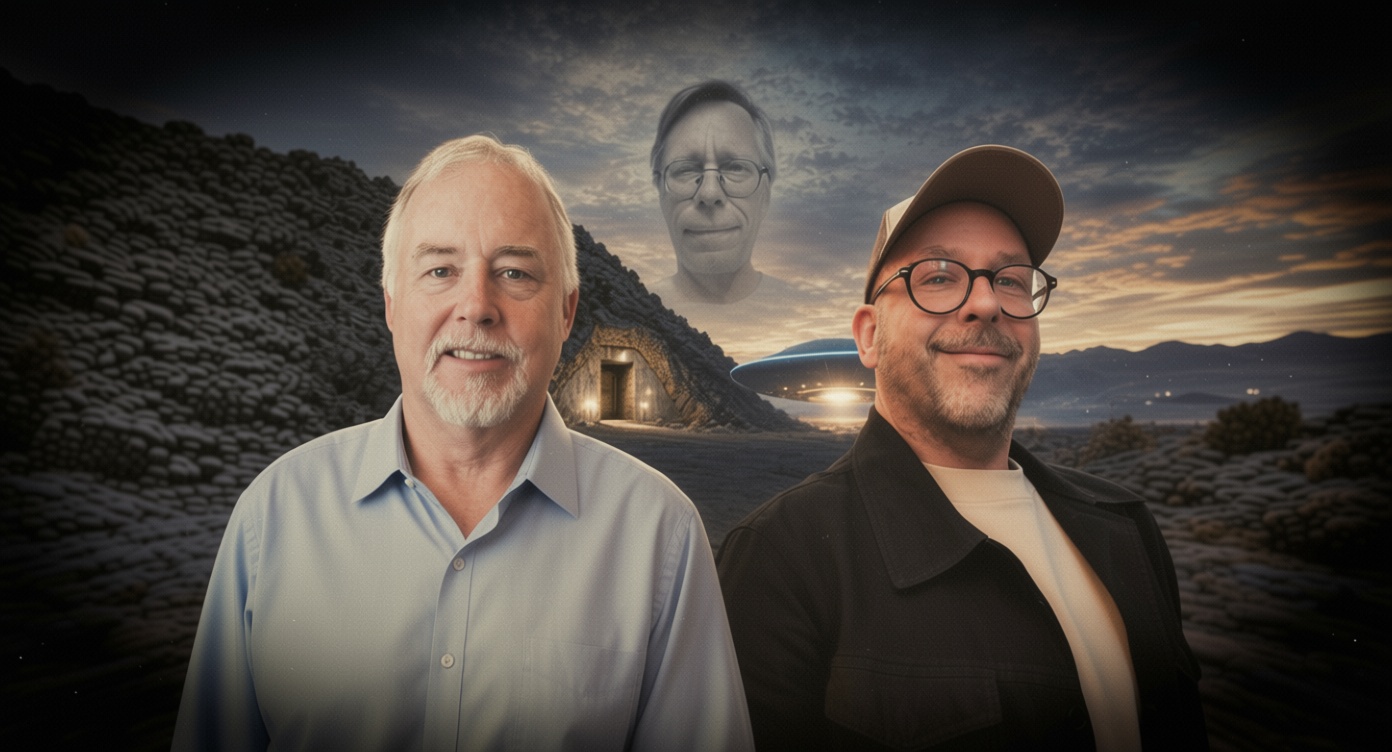
A recent episode of the Podcast UFO series has revisited one of the most enduring and disputed figures in modern UFO culture: Bob Lazar, who has claimed that he worked on advanced propulsion research at a secretive facility known as S-4 near Nevada’s Area 51. The Aug. 5, 2026, episode, titled “Bob Lazar: Whistleblower or Storyteller? Two Perspectives,” runs for approximately 89 minutes and features filmmaker Luigi Vendittelli, whose documentary S4: The Bob Lazar Story examines Lazar’s allegations and the controversy surrounding his background.
The program approaches the subject as a credibility dispute rather than a settled account. Lazar has long maintained that he was recruited to work on the reverse engineering of extraterrestrial technology, including a propulsion system involving the element reportedly identified as “Element 115.” His story helped bring Area 51 and alleged secret UFO programs into mainstream public discussion, but researchers and journalists have questioned his claimed education, employment history and the lack of independently verified documentation supporting his account.
A Contentious Examination of Lazar
Vendittelli’s documentary is presented as an effort to explore both Lazar’s claims and the evidence used to challenge them. The interview also includes a sometimes confrontational discussion with Martin Willis, reflecting the broader divide among UFO commentators over whether Lazar should be regarded as a whistleblower, an unreliable narrator or a figure whose story contains elements of both personal experience and later elaboration.
That disagreement is central to the episode’s wider significance. Lazar’s story remains influential, but influence is not the same as verification. Accounts of classified work are difficult to assess when records are unavailable, yet extraordinary claims require corroboration, particularly when they involve non-human technology and secret government facilities. The episode therefore places emphasis on testimony, documentary evidence and the standards used to evaluate competing narratives.
British Cases and Police Investigations
The program also broadens its focus beyond the United States through an interview with Roy Teague, a former British police inspector. Teague discusses British UFO cases and the role of police officers in investigating reports involving unusual lights, objects and alleged encounters.
His perspective offers a law-enforcement view of a subject often dominated by military claims and civilian eyewitness testimony. Police investigations generally prioritize witness reliability, physical evidence, timelines and alternative explanations—criteria that can be applied to UFO reports without assuming in advance that the objects are extraterrestrial. Teague’s contribution consequently provides context for how unusual sightings have been handled within Britain’s institutional framework.
Science, Research and Personal Experience
Physicist Matthew Szydagis contributes a further perspective focused on the scientific study of unidentified anomalous phenomena, or UAP. The discussion covers his research roles, his views on the state of UAP science and his personal background in the subject. Szydagis has been associated with efforts to bring scientific methods, data analysis and transparent investigation to a field frequently criticized for anecdotal evidence and weak documentation.
The episode’s combination of contested testimony, police casework and physics underscores the difference between reporting an unexplained observation and establishing its cause. The Spreaker page identifies the published transcript as automatically generated and cautions that it may contain inaccuracies; listeners should therefore consult the original audio when evaluating specific statements. Taken together, the interviews present UFO research as an unsettled area in which cultural impact, personal testimony and scientific evidence continue to intersect—but do not necessarily lead to the same conclusions.


