Overview
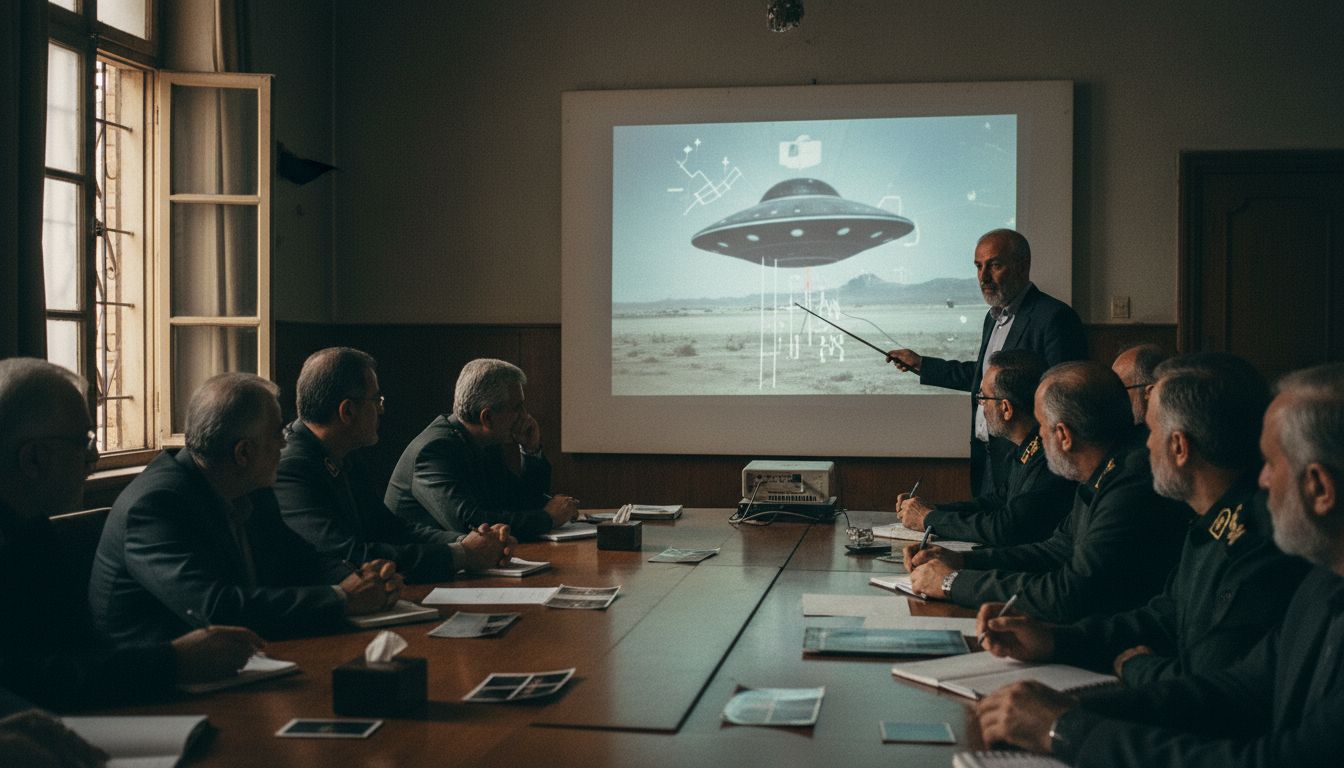
As tensions between Iran and the United States continue to shape regional security, an unusual piece of old Iranian media content has resurfaced as part of a broader information struggle. In 2014, Iran’s semi-official Fars News Agency published an extraordinary claim that the United States had been under the influence of a secret extraterrestrial “shadow government” since 1945. The story, which cited alleged alien contacts and references to former NSA contractor Edward Snowden, was never backed by verifiable evidence. Still, in the context of a high-stakes conflict, the narrative has renewed relevance not because it proves anything about aliens or UFOs, but because it illustrates how UAP and conspiracy claims can be weaponized for political effect.
The 2014 claim and what it alleged
The Fars report went far beyond standard political criticism. It suggested that alien forces secretly controlled U.S. policy, tied the alleged arrangement to President Dwight D. Eisenhower, and implied that secret documents had surfaced through Snowden. At the time, the claims drew international attention precisely because they blended UFO mythology, intelligence intrigue and anti-U.S. messaging into a single story. Reporting by Radio Free Europe/Radio Liberty documented the publication and the allegations, underscoring how far the narrative strayed from established facts. No verified evidence has ever shown that the U.S. government partnered with extraterrestrials, nor has any credible material confirmed Iran possessed alien technology or “UAP files” of its own.
Why the story matters now
What gives the claim new leverage is the environment in which it is being revisited. In wartime or crisis conditions, governments and state-linked media often look for narratives that can influence public opinion, unsettle adversaries, or distract from military and diplomatic realities. In that sense, unproven disclosure claims—especially those involving aliens, secret programs, or hidden alliances—can become useful tools of propaganda, pressure and psychological warfare. Even when the claims are implausible, they can travel quickly through media ecosystems that reward sensationalism and distrust, making them effective in shaping perception among domestic and foreign audiences alike.
Information warfare and UAP narratives
The episode also highlights a broader trend in modern geopolitics: UAP-related stories are no longer confined to fringe speculation. They can be repurposed as instruments in strategic messaging, particularly when governments seek to cast rivals as secretive, manipulative or technologically superior. For Iran, a story about alien influence over Washington is not necessarily about persuading audiences that extraterrestrials exist. Instead, it can function as a rhetorical device that reinforces suspicion of U.S. power and portrays American institutions as opaque or deceptive. That makes the narrative useful even without factual support.
The larger takeaway
There is no credible evidence that Iran holds verified UAP materials or that the United States has any alien partnership hidden behind its foreign policy. But the story’s endurance reveals something important about the current information landscape: extraordinary claims can gain strategic value when they intersect with conflict. In an era of rapid disinformation, even the most improbable conspiracy can be turned into a political asset if it resonates with existing fears and grievances. For journalists and policymakers alike, the lesson is clear—such claims should be treated not as evidence of extraterrestrial contact, but as a case study in how myth and statecraft can collide during moments of geopolitical stress.


