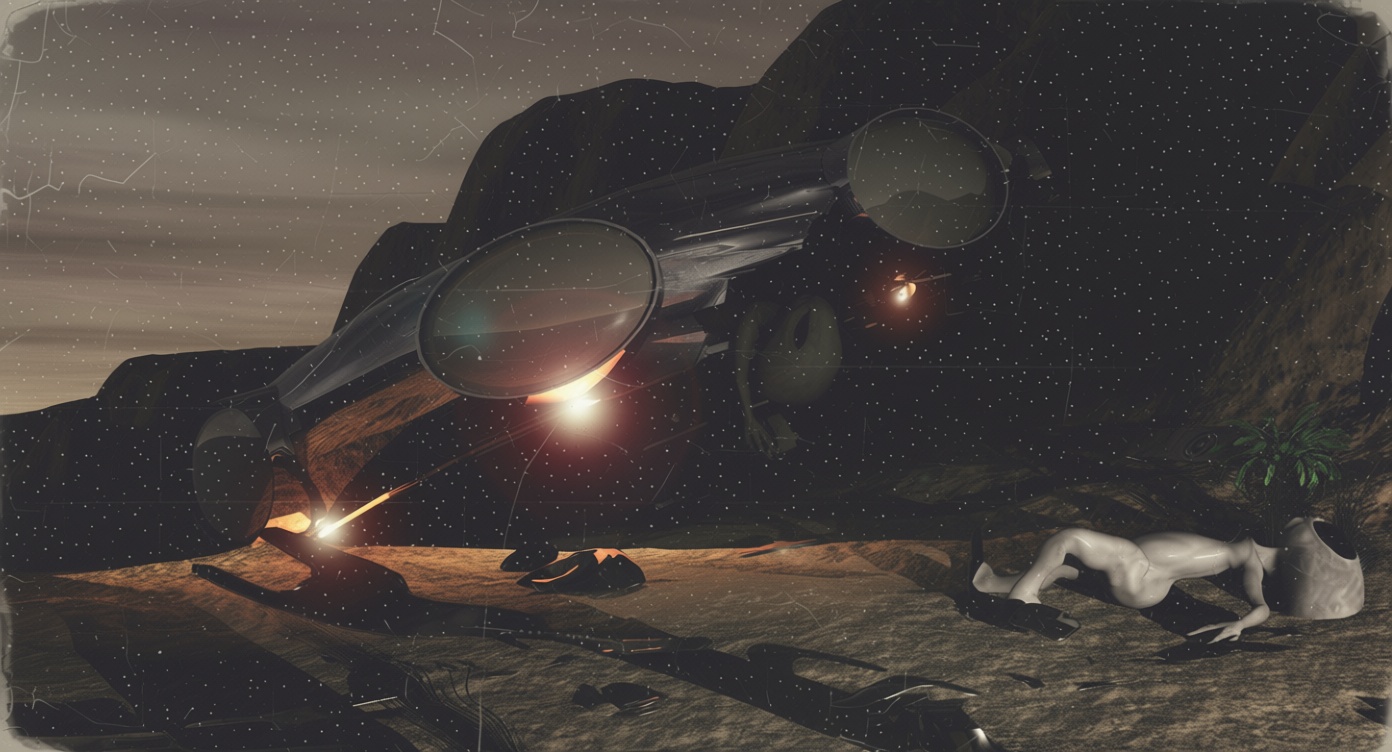
For many of Israel’s UFO‑research circles, the quiet suburb of Kadima in the Sharon plain has become a de‑facto field site for unexplained aerial phenomena. Over the past three decades, residents and visitors have reported glowing orbs, sudden flashes of light that plunge to the ground, and circular depressions in grass that some claim are the imprint of a landing craft. The story has moved beyond local folklore; recent coverage by Ynetnews has turned Kadima into a modest pilgrimage destination for believers, while also prompting a surge of curiosity‑driven tourism to the town’s wooded outskirts.
The phenomenon was put under a journalist’s eye on a daylight tour led by Danny Yaakov, a 76‑year‑old artist who has spent decades cataloguing sightings in the area. Yaakov, who describes Kadima Forest as “a center for UFO sightings,” points to a cluster of reports that peaked between 1993 and 1998, when several witnesses described “blinding lights” and “large, orange‑glowing objects” that appeared to hover before vanishing. The tour’s first stop was a field near the former home of Ziporet Carmel, a local figure whose 1992 account of a “glowing orange crate” landing in the grass is still cited by enthusiasts. Photographs taken at the site show shallow, circular marks and, according to Yaakov, fragments of an unknown residue that have been collected by amateur investigators for laboratory analysis.
One of the most detailed recollections comes from Yoram Turbatian, a 68‑year‑old retired defense‑industry engineer who arrived at the scene after a friend alerted him to the “clear landing circle.” Turbatian told the group, “When we got there we saw something unusual, a perfect circle scorched into the turf, as if a heavy object had pressed down and lifted off in an instant.” He added that the ground was still warm to the touch, and that a faint metallic smell lingered for several minutes. Ziporet Carmel, who was home at the time, recalled waking to “a large, glowing orange crate, like a box of oranges, sitting outside my window,” describing the object as emitting a low hum before disappearing. Neither Carmel nor Turbatian reported physical injury, but both said the experience left a lasting impression that motivated them to track subsequent reports in the region.
The influx of UFO hunters has had a noticeable economic impact on Kadima. Small businesses along the main road now offer “UFO‑tour” packages, souvenir shops sell replica landing circles, and a local café has introduced a “cosmic latte” named after the town’s most famous sighting. Yet not everyone welcomes the attention. Long‑time residents such as municipal council member Rivka Levy note that “the media attention is a double‑edged sword; it brings visitors, but it also fuels rumors that distract from everyday community concerns.” Skeptics, including Dr. Amit Golan of the Israel Institute of Applied Physics, caution that “most of the physical evidence presented—soil discoloration, unusual residues—can be explained by natural phenomena or human activity, and the lack of corroborating radar data makes definitive conclusions impossible.” The Israeli Defence Forces’ recent establishment of a UAP (Unidentified Aerial Phenomena) task force, modeled after similar initiatives in the United States, has yet to release any official findings on Kadima, leaving the debate largely in the public sphere.
Kadima’s rise as Israel’s most talked‑about UFO hotspot reflects a broader global pattern where isolated reports evolve into cultural touchstones, drawing both earnest investigators and casual tourists. While the town’s glowing circles and eyewitness testimonies continue to intrigue a niche audience, the absence of verifiable scientific data keeps the story firmly in the realm of anecdote. Whether Kadima will ever produce conclusive proof of extraterrestrial activity remains uncertain, but its place in the contemporary discourse on unidentified aerial phenomena underscores how local legends can capture national imagination—and, for a small community, reshape its economic and social landscape.