Overview
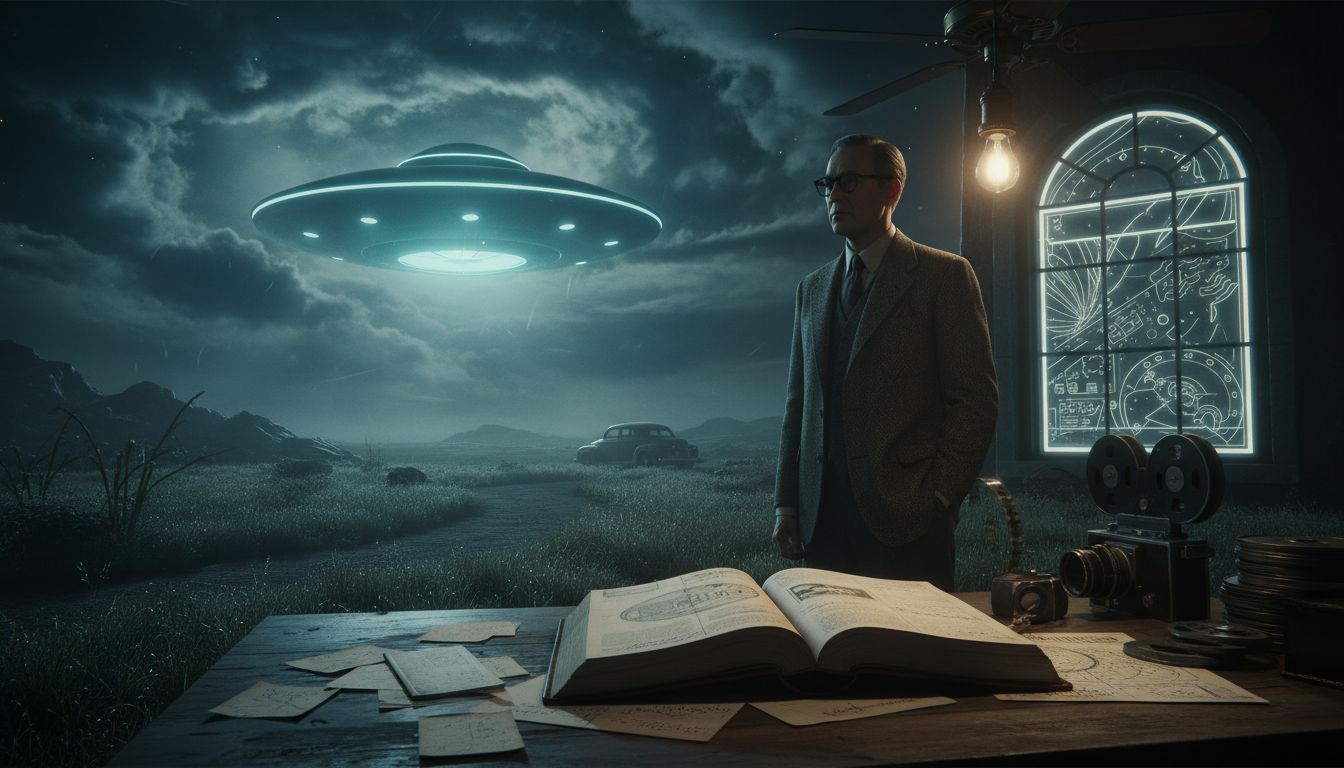
The Telegraph’s profile of J. Allen Hynek revisits one of the more unusual careers in 20th-century science: an astronomer who moved from the academic mainstream into the controversial world of UFO research, and in doing so helped shape both modern ufology and popular culture. Hynek is best known today not only for his work cataloguing unexplained aerial sightings, but also for his role in influencing the public conversation around extraterrestrial life — including the thinking of filmmaker Steven Spielberg, whose interest in aliens and UFOs was deepened by Hynek’s example.
Hynek’s path was far from conventional. Trained as a respected scientist, he entered the UFO debate from a position of skepticism, not belief. Yet the more he studied reports of unusual sightings, the more he became convinced that the subject deserved serious attention rather than ridicule. That shift made him a distinctive figure: a scientist willing to engage with claims that many of his peers preferred to dismiss. In the decades that followed, he became one of the most recognizable names in the field, a bridge between scientific method and an area of public fascination often treated as fringe.
From Academic Astronomer to UFO Investigator
Hynek’s reputation was first forged in astronomy, but it was his association with government UFO investigations that brought him into the spotlight. Most notably, he worked as a consultant on the U.S. Air Force’s Project Blue Book, the official program that examined UFO reports during the Cold War era. At the time, the subject was steeped in suspicion, with sightings often framed as either mass delusion, misidentification, or Cold War paranoia. Hynek’s role was initially to help debunk cases, yet over time he became increasingly uneasy with simplistic explanations.
What made Hynek important, according to the Telegraph profile, was not that he “proved” aliens existed — he did not — but that he insisted some reports remained genuinely unexplained. He helped move the discussion away from mockery and toward careful classification, contributing ideas that would become central to UFO literature, including his well-known system for categorizing close encounters. In that sense, Hynek helped establish a vocabulary for a debate that had long been dismissed as unserious.
The Spielberg Connection
Hynek’s influence extended far beyond scientific circles. His work and public persona helped inspire a generation of filmmakers and writers who saw UFOs not simply as tabloid material, but as a legitimate source of wonder and narrative possibility. Among them was Steven Spielberg, who would later draw on UFO themes in films such as Close Encounters of the Third Kind. Hynek’s seriousness and measured approach appears to have been part of what persuaded Spielberg that the subject could be treated with intellectual respect, rather than as a joke.
That cultural influence is a key part of Hynek’s legacy. He became, in effect, a rare scientist whose name mattered in both scientific and cinematic worlds. His presence lent credibility to the idea that unexplained phenomena could be examined thoughtfully, and his work helped shape the tone of later UFO storytelling — curious, open-ended, and grounded in the possibility that the universe might hold surprises.
A Lasting Legacy
Hynek’s story remains relevant because it captures a recurring tension in UAP reporting: the gap between institutional skepticism and public fascination. Decades before today’s hearings, declassified files, and renewed government interest in UAPs, Hynek was arguing that unexplained sightings should be studied rather than ignored. That stance made him controversial in some quarters, but it also made him influential.
The Telegraph’s profile suggests that Hynek’s true legacy lies in this dual role. He was both a scientist and a cultural catalyst, a man who helped legitimize a subject many preferred to keep at the margins. Whether viewed as a pioneer, a provocateur, or simply a careful investigator, J. Allen Hynek left an imprint that still shapes how UFOs are discussed — in science, in government, and in Hollywood.