Overview
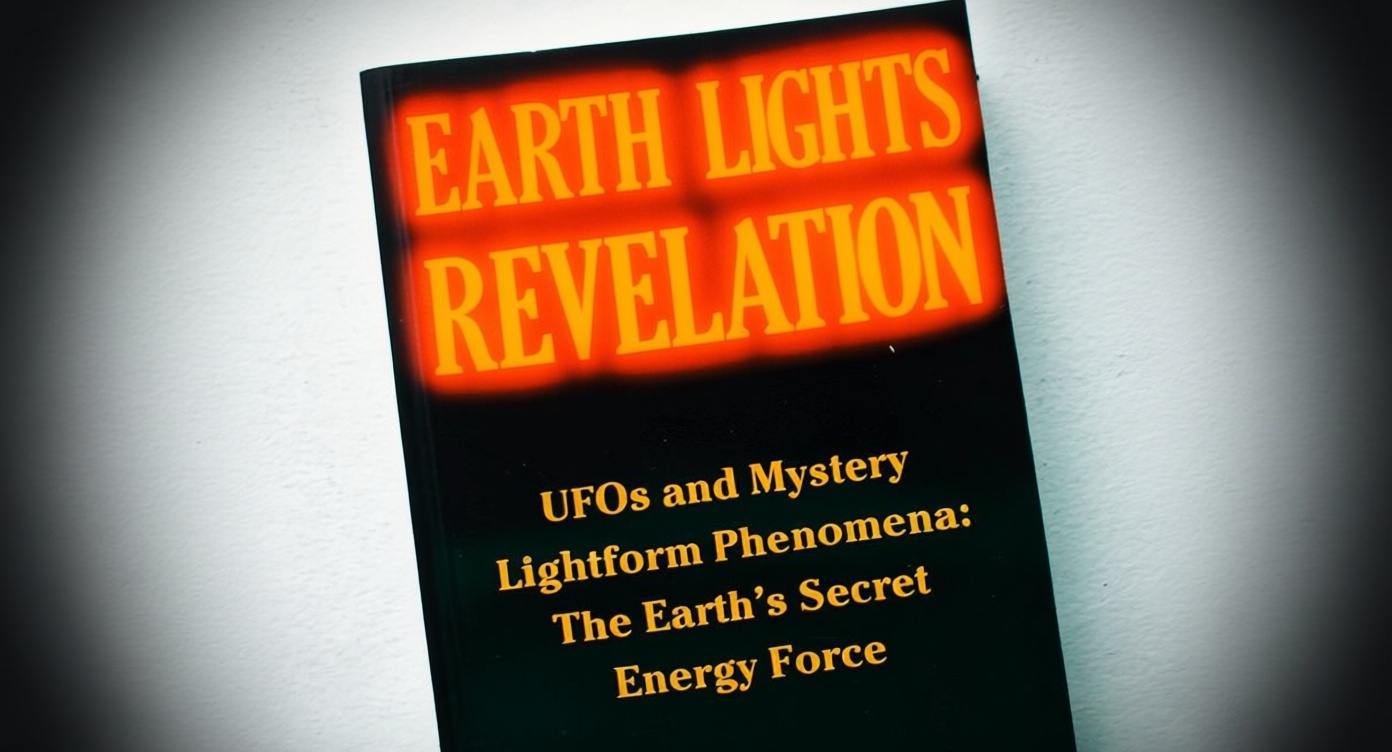
Researcher Jack Hunter and author Paul Devereux explored reports of unusual lights, their possible relationship to geological conditions, and the ways such experiences have been interpreted across cultures. The conversation focused on “Earth Lights,” a term Devereux has used to describe anomalous, often unstructured luminous displays that may appear in particular environmental settings. While the speakers acknowledged that some sightings can be explained by vehicle lights, reflections or misidentification, they argued that a residual category remains poorly understood.
Hunter described seeing small, firefly-like lights in the woods at Lily Dale, New York, a spiritualist community. He said the lights appeared to respond to activity by observers, including singing and expressions of interest. He also recalled a separate incident near Llandrindod Wells in Mid-Wales, where a bright, flickering light reportedly moved through repeated “loop-the-loop” patterns. George Hansen, author of The Trickster and the Paranormal, was mentioned in connection with the Lily Dale experience.
Personal Experiences and Historical Accounts
Devereux recounted seeing an orange ball of light during childhood and a later incident in May 1967 near Keston Ponds in Kent, England. He described the object as a large, pulsating orange rectangle hovering over a field. These experiences informed his long-standing interest in anomalous lights and his argument that at least some may be intrinsic to the Earth rather than evidence of extraterrestrial craft.
The discussion also considered the cultural history of such reports. In Wales, unusual lights were traditionally associated with “Canwyll Corff,” or “Corpse Candles,” and were sometimes interpreted as omens of death. Devereux cited accounts of spark-like displays in Germany’s Black Forest, including observations discussed by author Nigel Pennick, and suggested that these phenomena may have contributed to older folklore, including possible influences on Christmas-tree traditions.
Geological and Ecological Theories
Devereux linked reported light activity to fault lines, mineral-rich regions, underground water pressure and other geophysical conditions. Cornwall, for example, was cited for historical accounts in which miners associated unusual lights with copper-bearing areas. Granite-rich regions were also discussed because of their low-level gamma radiation, while reservoirs and sites involving pressure on subterranean faults were presented as possible locations for electrical or electromagnetic effects.
Hessdalen, Norway, served as a central example. The valley has hosted long-running monitoring efforts aimed at documenting recurring luminous phenomena. Devereux said water pressure acting on underground fault systems could be one factor involved. Hunter added an ecological perspective, proposing that lights may be associated with particular habitats, such as marshes and bogs, and could shift as landscapes are drained, developed or otherwise altered.
Broader UAP Context
The program also revisited the 2006 report of a disc-shaped object seen over Chicago’s O’Hare International Airport, along with claims and speculation concerning alleged alien materials and government disclosure. The discussion treated those subjects as contested areas requiring evidence rather than as established facts. Devereux also referred to locations such as Marfa, Texas, where investigations have found a mixture of conventional sources—including vehicle lights and reflections—and incidents that remain unexplained.
The conversation concluded that Earth Lights merit systematic scientific investigation, while emphasizing that extraordinary interpretations should not replace careful observation. It ended with an account from a Vietnam veteran describing his first 24 hours at Cu Chi in 1968, providing a contrasting firsthand perspective on an anomalous and intensely remembered experience. Together, the segments underscored the importance of distinguishing documented observation from interpretation when examining unusual events.