Overview
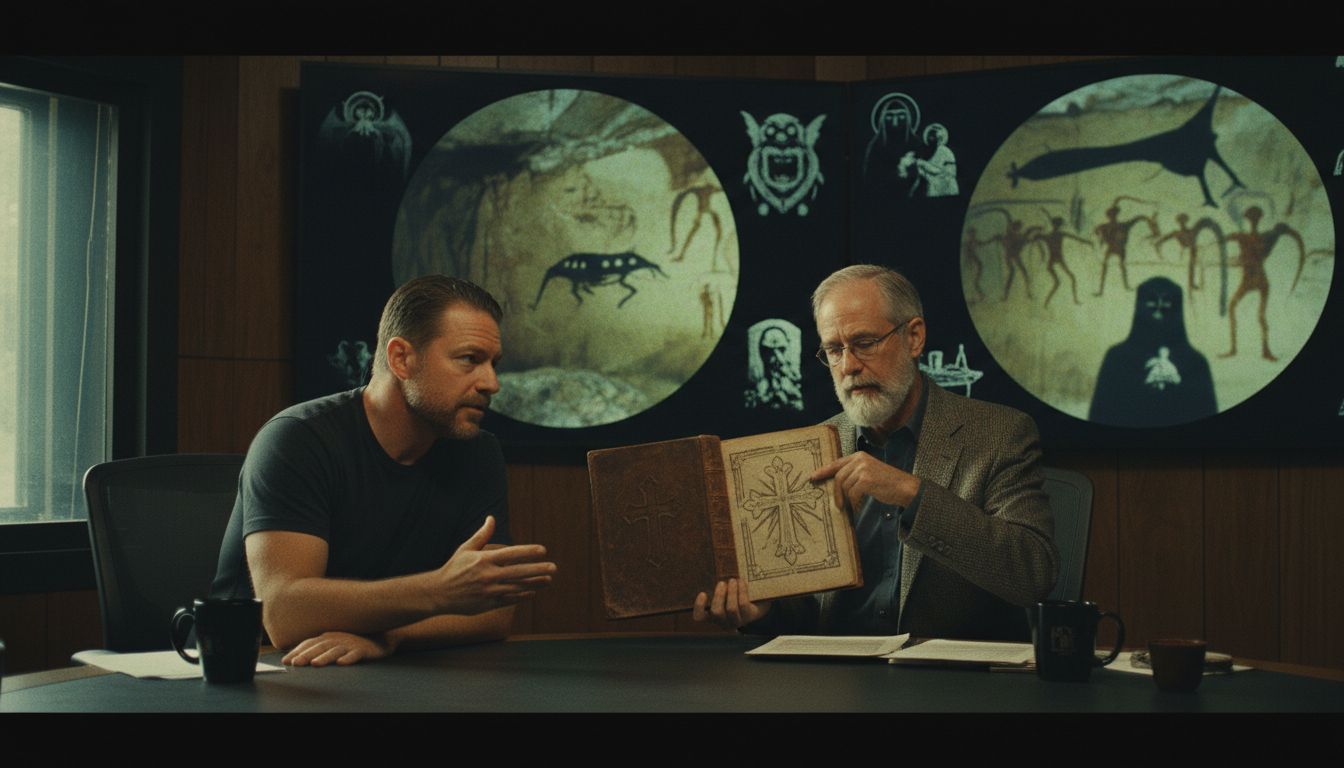
On a recent episode of The Joe Rogan Experience, the conversation around UFOs, or UAPs, shifted away from the familiar idea of extraterrestrial visitors and toward something more unsettling: the possibility that the phenomenon is ancient, real, and potentially dangerous. Rather than treating unidentified objects as merely advanced craft from another world, the discussion framed them as an intelligence or presence that could predate modern human understanding and sit outside conventional scientific categories.
That framing drew in references to Catholic theology and to remarks by J.D. Vance, who has suggested in public discussion that the phenomenon could be demonic in nature. Rogan did not endorse that conclusion, but he also did not dismiss the broader concern. Instead, he described the pattern surrounding UFO reports as disturbing enough to make him reconsider whether to attempt any kind of contact himself, including through so-called psionic protocols often associated with experimental or consciousness-based approaches to UAP interaction.
From “Aliens” to Something Older
The most notable shift in the discussion was the move away from the conventional “little green men” framework. In Rogan’s telling, the UFO issue has become harder to reduce to a simple story about visitors from another planet. The conversation instead suggested a possibility that the phenomenon may have been interacting with humanity for a very long time, appearing in forms that change with the era and the observer’s expectations.
That idea places the subject in a far stranger category than typical science-fiction speculation. If the phenomenon is ancient, the implications are broader than whether a craft is manufactured technology or an unknown atmospheric event. It raises questions about consciousness, perception, and whether human culture has been interpreting the same underlying mystery through different religious and technological lenses for centuries.
Theology, Politics, and Public Skepticism
The inclusion of Catholic theology in the discussion underscores how the UFO debate continues to spill beyond aviation, intelligence, and defense circles into philosophy and religion. For some believers, the notion that an apparently nonhuman force could be malevolent fits within older frameworks about deception, spirits, and unseen entities. Vance’s comment that the phenomenon may be demonic reflects that worldview, even if it remains far outside mainstream scientific consensus.
Rogan, by contrast, remained skeptical of the demon label. His response was not to affirm a supernatural explanation, but to acknowledge that the available evidence and anecdotal reports are strange enough to warrant caution. That position reflects a broader pattern in contemporary UAP discourse: even figures who are open to unusual explanations often stop short of embracing the most extreme ones without stronger evidence.
A Cautious Reassessment
What made the exchange notable was Rogan’s apparent willingness to reconsider active engagement with the phenomenon. The idea of making contact through psionic methods has long occupied the fringe of UFO research, where some enthusiasts believe altered states of consciousness may influence encounters. Rogan’s hesitation suggests that, even among those curious about the topic, there is growing discomfort with the idea that contact might invite consequences that are not well understood.
In that sense, the discussion captured the current state of the UFO/UAP conversation: more serious, more speculative, and more uneasy than before. As public attention increases and prominent voices weigh in, the question is no longer just whether something is out there, but what it is, what it wants, and whether attempting to engage with it could be a mistake.


