Overview
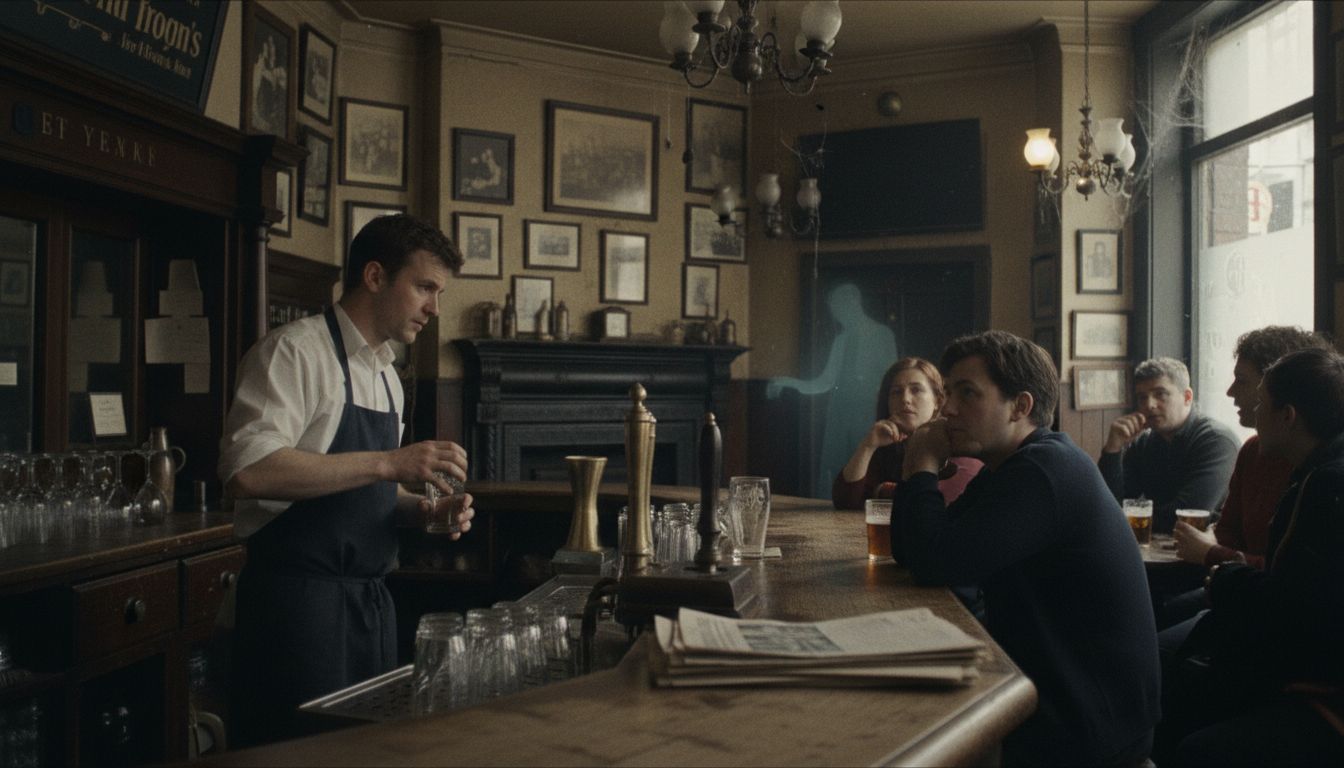
On Poolbeg Street in Dublin’s literary quarter, John Mulligan’s pub—often referred to simply as Mulligan’s—has long been known for more than its stout and Victorian charm. The historic bar, first opened at its current location in 1854, is a regular stop on Dublin’s haunted pub crawl and has built a reputation over decades for reported ghostly activity. Staff and owners have described incidents ranging from glasses and bottles flying off shelves to unexplained footsteps and knocks in the building, stories that have helped cement the pub’s place in local folklore.
A Historic Dublin Landmark
Mulligan’s history stretches back even further than its Poolbeg Street address. According to accounts tied to the pub’s past, the business had already been operating on Thomas Street since 1782 before relocating to the current site. Its connection to Dublin’s artistic and journalistic circles has also contributed to its enduring fame. Situated near the former Theatre Royal, the pub became a gathering place for writers, poets, actors, and journalists, and its literary pedigree was later reinforced when James Joyce immortalized it in his short story Counterparts. That legacy has made the bar both a cultural landmark and, in local storytelling, a setting where the past seems to linger.
Reported Paranormal Activity
The ghost stories attached to Mulligan’s are based largely on the experiences of staff and people connected to the bar rather than any formal investigation. Writer Declan Dunne, who documented the pub’s history, said the accounts he gathered came from employees and owners over the years. One of the most widely repeated stories involves a bottle of brandy reportedly flying off a shelf. As Dunne recounted from co-owner Gary Cusack’s account, “A barman saw a bottle of brandy flying off the shelf. It went quite a distance onto the sink and didn’t break.” Cusack also described staying above the pub and hearing footsteps when no one else was present.
Other staff have described equally unsettling encounters in the cellar, where one employee said he saw a figure seated on a barrel. According to Christy Hynes, the apparition appeared calm and detached: “He wasn’t even looking at me. He was looking straight ahead as if he was minding his own business. I just felt cold.” Another incident, also relayed by Dunne in his book, involved a knock from beneath the cellar hatch while two staff members stood above it. Both reportedly felt and heard the same sound, but when they checked the cellar, no one was there.
Why the Stories Endure
Like many historic pubs, Mulligan’s occupies a space where memory, architecture, and atmosphere reinforce one another. Old wooden interiors, a long working history, and generations of patrons create the kind of setting in which unexplained noises and mislaid objects can quickly become part of a larger narrative. In Dublin, where ghost tales often overlap with literary tradition, such stories can take on a life of their own. Mulligan’s has become not just a pub with a reputation for hauntings, but a place where the city’s cultural past and its paranormal folklore are closely intertwined.
A Pub at the Center of Dublin Folklore
Whether viewed as genuine haunting or enduring folklore, the stories surrounding John Mulligan’s continue to draw curiosity. The pub remains an anchor point on Dublin’s haunted pub circuit, where visitors come as much for the history as for the possibility of a supernatural encounter. What is clear is that the tales have become part of the establishment’s identity, passed down through staff accounts, local retellings, and published histories. In a city rich with literary and historic landmarks, Mulligan’s stands out as a place where the line between legend and lived experience is intentionally, and perhaps irresistibly, blurred.