Overview
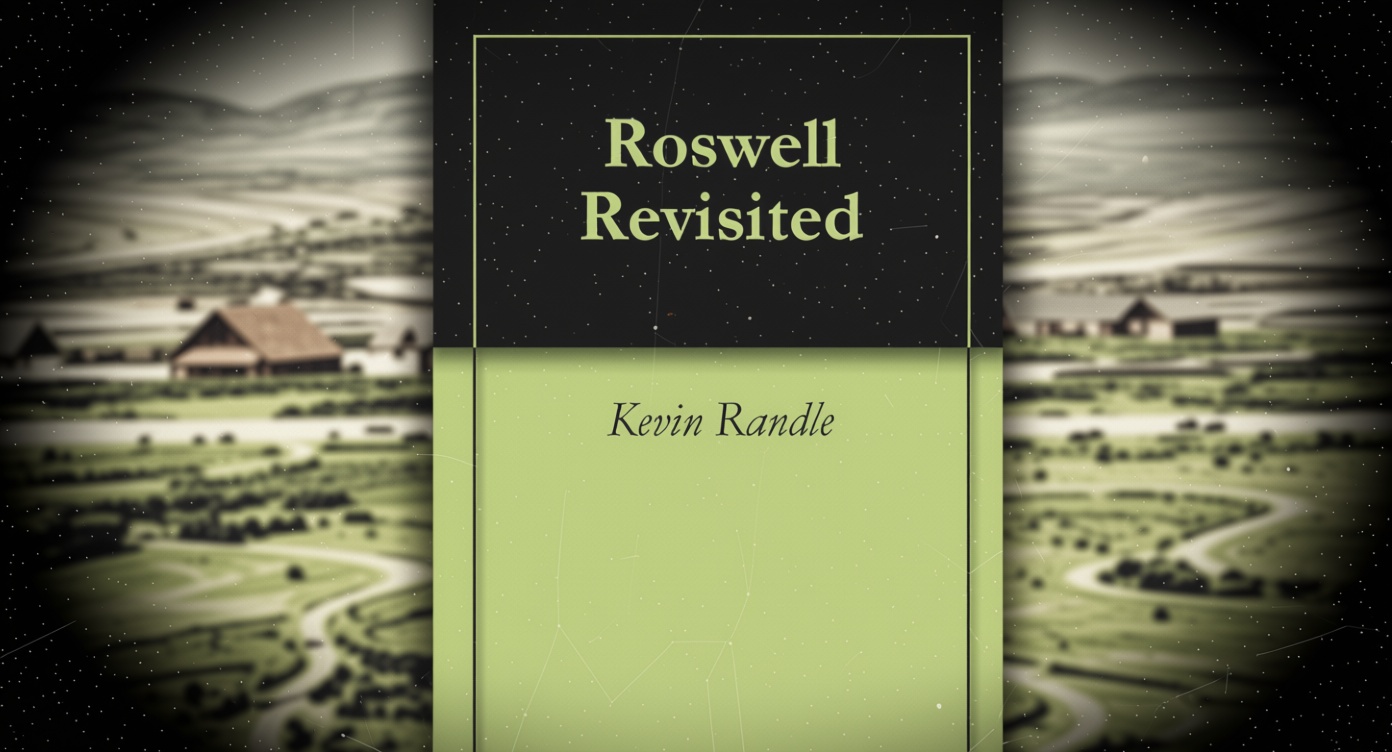
Veteran UFO researcher and author Kevin Randle is preparing to release his latest book, UFO Sightings and Alien Visitation: Fact vs Falsehoods, a project he says evolved significantly from its original concept before publication. In a post on his blog, Randle described the book as one that will likely “annoy believers and skeptics alike,” reflecting his long-standing approach to controversial cases in the UFO field: skeptical enough to challenge weak claims, but open enough to revisit some of the subject’s most enduring mysteries.
The new book is set to be available on Amazon beginning August 24, 2026, and Randle says it spans a broad range of topics, including some of the best-known incidents in UFO history. His remarks suggest the work is not a simple rehash of familiar narratives, but rather a more expansive attempt to weigh evidence, expose contradictions, and update older cases with newly discussed material.
Key Cases Revisited
Among the chapters Randle highlights is one on the Kingman UFO crash, which he subtitled “Anatomy of an Investigation.” He says the section includes material not widely published before, while also acknowledging that the story’s original source, Arthur Stansel, may not be fully reliable. That caveat fits Randle’s broader pattern of treating famous crash-retrieval claims with caution, even when he believes the underlying investigation merits closer attention.
The book also returns to the 1973 Pascagoula abduction of Charles Hickson and Calvin Parker, one of the most famous reported encounters in American ufology. Randle says he interviewed both men and includes documentation that changes the complexion of the case. He credited researchers Philip Mantle and Irene Scott with identifying additional witnesses, saying their work strengthens the story’s credibility. The book further revisits the 1980 Rendlesham Forest incident, with Randle saying he has clarified confusion over the number of nights involved after speaking with John Burroughs, Jim Penniston, and Charles Halt.
Wider Scope and New Information
Randle also points to a new interpretation of Project Moon Dust, the Cold War-era U.S. military program often linked in UFO lore to aerial anomaly tracking and recovery efforts. He said the revised understanding came not from his own digging, but from researcher Brad Sparks, and suggested the project did in fact have a UFO component, though “not what we thought.” That kind of reassessment appears central to the book’s appeal: it seeks to reframe well-known cases with a mix of archival detail, witness testimony, and corrections to older assumptions.
According to Randle, the final product was shaped under the guidance of Roger Jänecke of Visible Ink, which he credits with helping turn a book he initially disliked into something more substantial. He argues that it offers something for both sides of the UFO debate, a notable claim given the polarizing nature of the subject. A recent review, as noted in related coverage, praised the book’s broader scope and level of detail, underscoring its ambition beyond a single-case narrative.
Continuing Roswell Debate
The book’s release also arrives amid renewed conversation around classic UFO cases such as Roswell and Trinity, both of which continue to attract attention from researchers, critics, and longtime observers. In follow-up discussion surrounding the broader topic, there has been renewed scrutiny of Roswell nurse photographs, while another item celebrated the fact that the Roswell Daily Record will continue publishing — a reminder that the city most closely associated with UFO lore remains part of an active media and historical conversation.
For Randle, the latest book appears designed to keep that conversation going. He says he welcomes criticism, but asks readers who rate the book poorly to explain why, noting that negative reactions can stem from issues unrelated to the writing or content. In a field where disagreement is often the norm, that invitation may be the most revealing detail of all: the book is meant not to settle every argument, but to reopen them with more evidence on the table.