Overview
Library and Archives Canada has updated its searchable collection of records concerning unidentified flying objects, offering public access to more than 9,000 documents spanning the 1930s through 2009. The archive brings together government records related to reported UFO sightings and investigations, making it one of the country’s most substantial publicly searchable collections on the subject.
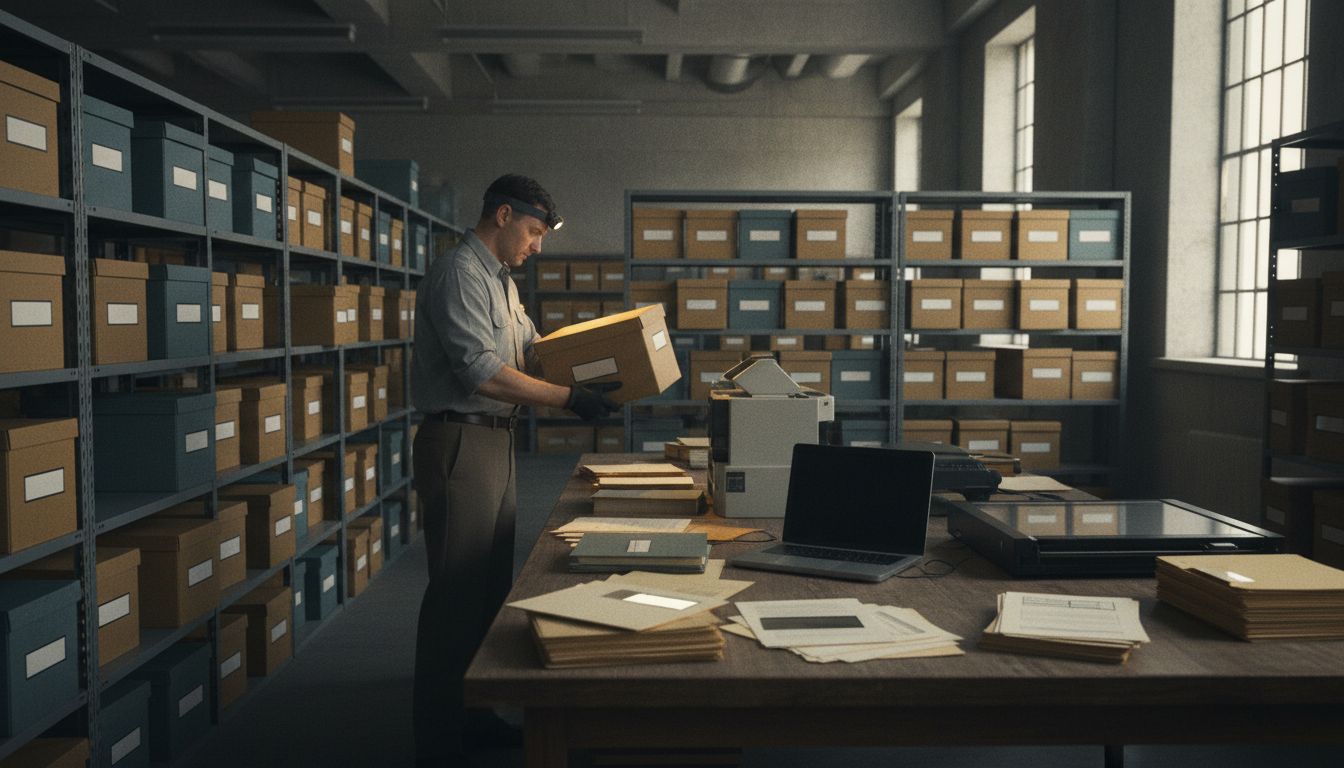
The update appears to concern the organization and accessibility of existing archival material rather than the release of a new tranche of classified files. Available information indicates that the records are primarily digitized documents drawn from federal departments and agencies that received, recorded or reviewed reports of unusual aerial activity.
What the Collection Contains
The archive’s material comes mainly from the National Research Council, the Department of National Defence, the Royal Canadian Mounted Police and the Department of Transport. Such records can include correspondence, sighting reports, administrative files and interdepartmental communications, although the specific contents and level of detail vary from document to document.
The date range is significant. Records beginning in the 1930s cover decades in which reports of unusual aircraft were increasingly handled through official channels, particularly during and after the Second World War. The collection also extends through the Cold War and into the early 21st century, when public and government interest in unidentified aerial observations continued despite advances in radar, aviation and satellite-based monitoring.
No Evidence of a New Declassification
The material currently associated with the update does not appear to be newly declassified, according to the information accompanying the archive. Instead, the development is best understood as an improvement to the online discovery and research process. Digitization and searchable catalogues can make long-existing records substantially easier for journalists, historians and members of the public to locate.
That distinction matters because the appearance of a large online collection can sometimes be misinterpreted as evidence that governments have recently disclosed previously secret information. In this case, there is no indication that the update represents a new policy announcement, a fresh investigation or a formal finding that any sighting involved extraterrestrial technology.
Access and Research Context
The collection is hosted through Library and Archives Canada’s online search system. However, the source page reviewed for this report displayed a browser-validation screen rather than the archive results, indicating that automated access protections or a CAPTCHA may be required before users can proceed. Researchers should therefore consult the official catalogue directly and review individual record descriptions, dates and source agencies before drawing conclusions.
As with other historical UFO archives, the documents should be assessed in context. A report being preserved by a government department does not necessarily mean officials confirmed the object’s unusual nature. Many sightings may ultimately have involved conventional aircraft, weather phenomena, astronomical objects, atmospheric effects, misidentification or incomplete information.
Why the Archive Matters
Even without newly released revelations, the updated dataset provides a valuable record of how Canadian institutions responded to unexplained aerial reports over time. It can help researchers trace changes in reporting practices, public concern and government coordination, while allowing individual cases to be compared with aviation and historical records.
The archive also reflects a broader shift toward publicly searchable government documentation. Its significance lies less in proving a particular explanation for UFO sightings than in making the underlying paper trail more accessible. Further conclusions will depend on careful examination of the documents themselves, rather than on the existence of the collection alone.