Overview
During the 1970s and 1980s, ranchers across the American West and Midwest reported finding cattle and other livestock dead under unusual circumstances. Carcasses were sometimes missing eyes, tongues, ears, udders, reproductive organs, rectal tissue or sections of hide. Owners frequently described little visible blood, few tracks and no obvious signs of a struggle, creating concern that the animals had been deliberately killed or subjected to unknown procedures.
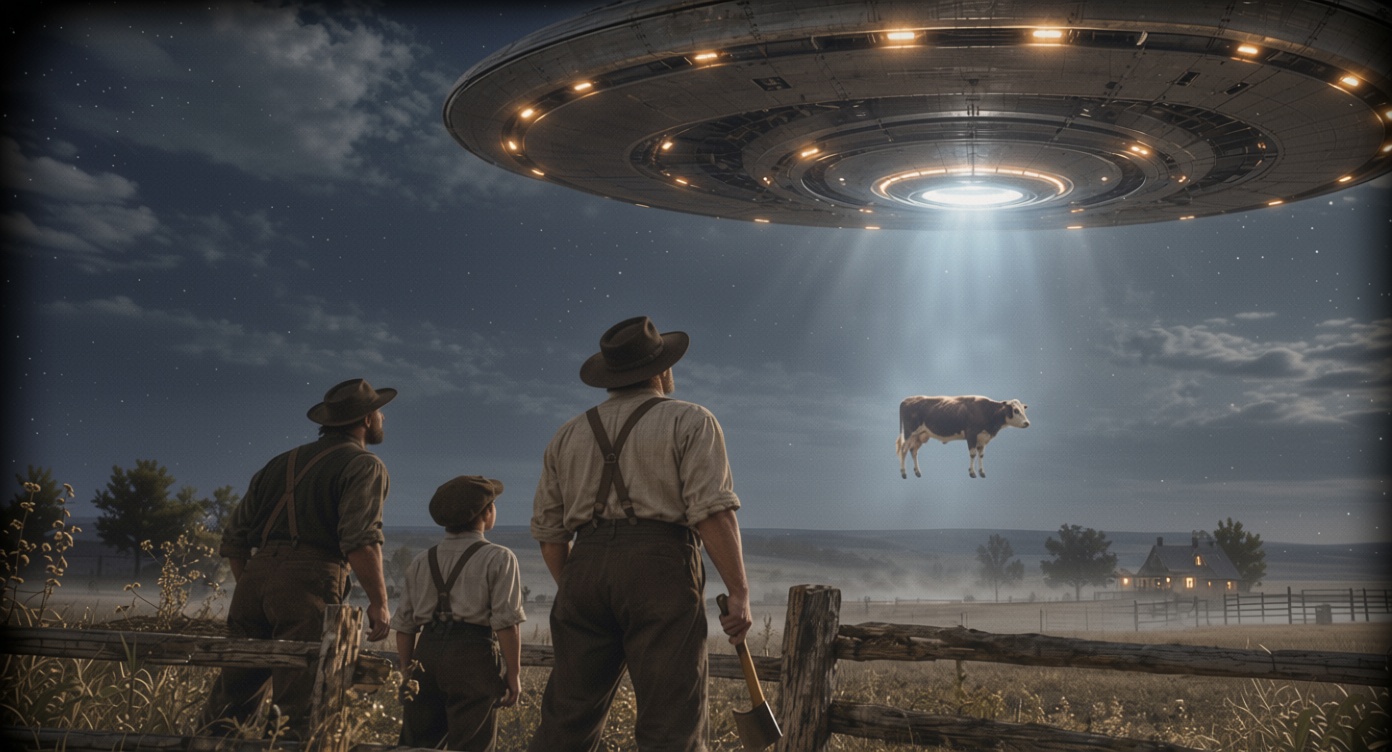
The reports became widely known as “cattle mutilations” and soon entered the broader debate over UFOs and alleged extraterrestrial activity. Although similar incidents had been reported before the 1970s, the phenomenon gained national attention during the middle of that decade. Colorado emerged as a central focus after ranchers reported nearly 200 cases between April and October 1975.
Investigations Expand
The scale of the Colorado reports prompted political involvement. Senator Floyd Haskell asked the FBI to investigate, and reports soon spread beyond the state to New Mexico, Kansas, Nebraska, Wyoming, Montana, South Dakota, Oklahoma, Texas and other parts of the region. The incidents attracted attention from law-enforcement agencies, veterinarians, researchers and UFO investigators, each approaching the evidence with different assumptions.
For ranchers familiar with the normal effects of disease, predators, weather and decomposition, some carcasses appeared highly unusual. They described wounds with edges that seemed smooth or precise, and in certain cases believed tissue had been removed in circular patterns. Claims that animals had been “drained” of blood became particularly influential in arguments that the deaths could not have resulted from ordinary scavenging.
However, investigators faced a significant evidentiary problem: a carcass’s condition several days after death may not reveal how the animal died. As a body dries, the hide can contract, while decomposition changes the appearance of wounds and exposes soft tissue. Insects, birds and mammals also tend to consume accessible areas—including the eyes, tongue, lips, reproductive organs and tissue around natural openings. Their feeding can leave damage that appears sharply defined, especially after the surrounding tissue has deteriorated.
Scientific Explanations
A 1989 study published in the Canadian Veterinary Journal examined alleged cattle-mutilation cases in Alberta and compared the reported injuries with documented scavenging behavior. The researchers concluded that the cases they studied were consistent with postmortem scavenging. They also emphasized that scavenging should be ruled out before investigators attribute the damage to human intervention or other extraordinary causes.
That conclusion does not necessarily explain every report made during the period. Some incidents lacked complete veterinary examinations, reliable timelines or controlled forensic documentation, making retrospective interpretation difficult. Human activity—including deliberate mutilation, theft or staged scenes—was also proposed in some cases, while predators, insects and environmental exposure remained more conventional possibilities.
The Extraterrestrial Theory
The unusual appearance of some carcasses helped connect the reports to UFO culture. Supporters of the extraterrestrial explanation argued that the selective removal of organs, apparent precision of the wounds and lack of visible tracks suggested biological experimentation or technologically advanced intervention. The idea became one of the enduring claims associated with alleged alien activity.
Yet no conclusive scientific evidence has established extraterrestrial involvement. The documented fact is that livestock were found dead and, in many instances, significantly damaged. The cause of that damage varied—or remained uncertain—from case to case. The history of the mutilation reports therefore illustrates the importance of distinguishing between an unexplained observation and proof of a specific explanation.