Overview
A local ghost story is drawing attention back to Sjømannsskolen, the former Maritime School in Oslo, where some observers now wonder whether the spirit of Anne Brandfjell still lingers. The question comes from a recent article that treats the building less as a conventional historic site and more as a place where memory, folklore and reported apparitions overlap. The central claim is simple but unresolved: is the ghost of Anne Brandfjell haunting the old school at Kongsveien 30, or is this another case of a treasured local legend taking on a life of its own?
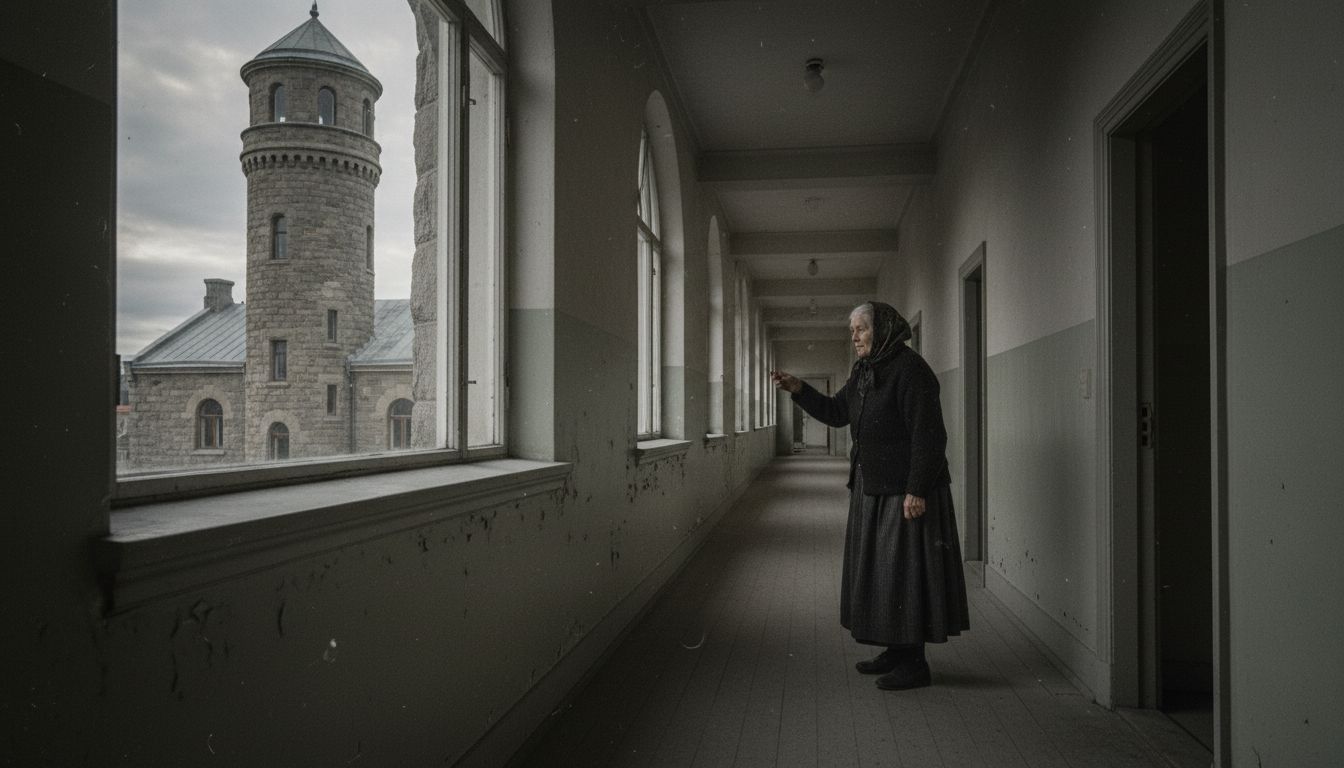
The building itself helps explain why the story persists. Constructed in 1917 for the Oslo Maritime School, the four-story structure has long stood above Grønlia in the Ekeberg hillside, giving it a castle-like presence that suits a ghost tale. Although the school left the building in 1989, the name Sjømannsskolen remains associated with the site. In the article’s telling, the building is more than an abandoned institutional shell; it is a place where the past still feels close enough to touch.
Who Was Anne Brandfjell?
At the center of the story is Anne-Marie Andersdatter, better known as Anne Brandfjell, a Norwegian fortune teller, healer and “wise woman” born in 1815 in Vardal, now part of Gjøvik, and said to have died in 1905 in Christiania, the former name for Oslo. According to the source, she was taught by Elseby Hansdatter Unsethagen and Vis-Knut from Gausdal, figures associated with traditional folk knowledge. She later came to Christiania in 1841 as a maid to goldsmith and jeweler Hermann Øiset, and married stonemason Christen Evensen in 1849.
The article places Brandfjell in the landscape of Brannfjell, the ridge from which her name became attached in local vernacular. It describes her as someone people sought out for physical suffering, grief and illness, and says she was remembered for offering practical help to those in need. One of the most striking legends attached to her is that she once treated a man believed to be dead and somehow revived him. Before her death, the story adds, she passed her knowledge on to another young woman, suggesting a tradition of folk healing that continued beyond her lifetime.
The Haunting Claim
It is from that tradition of local belief that the haunting narrative emerges. According to the article, students and staff at the old school have spoken of a calm presence in the hallways, doors that open softly, and footsteps without urgency. The tone is notably restrained: rather than presenting dramatic poltergeist activity, the story suggests a quiet, persistent atmosphere that fits the building’s age and its long human history. That ambiguity is part of the appeal. The reported phenomena are not framed as proof, but as impressions—details that invite speculation without settling the matter.
An Unresolved Local Mystery
For now, the haunting remains unverified and unresolved, resting in the space between oral tradition and local curiosity. The article does not provide hard evidence, witness interviews, or formal investigation results. Instead, it presents Sjømannsskolen as a place where history and folklore blur, and where the memory of a respected folk healer may have become attached to the building through generations of retelling. Whether one sees the story as paranormal fact, cultural inheritance, or simply a compelling Oslo ghost tale, it reflects a broader truth: old places often gather stories, and some of those stories refuse to fade.