Overview
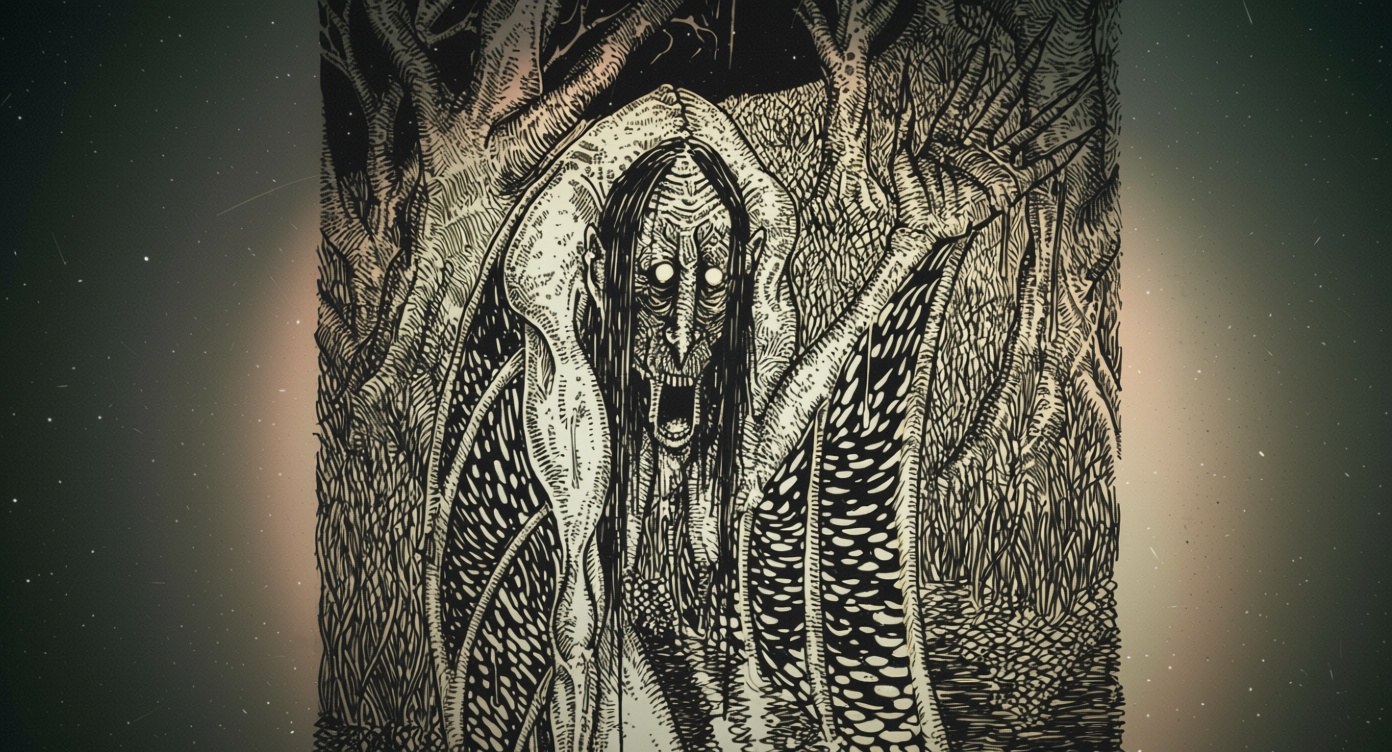
A regional folklore account describes the Uhaml as a faceless or formless forest spirit said to appear after dark beneath dense woodland cover. The legend, presented by the folklore publication Moon Mausoleum on Oct. 13, 2026, portrays the entity as a threatening presence rather than a clearly defined creature. According to the account, the safest response was to leave the forest as quickly as possible.
The story is associated with German-speaking communities in former Bohemia and Silesia—areas that today largely fall within the Czech Republic and Poland. These regions were historically shaped by dense forests, marshes, mining settlements and old trade routes. The source notes that many communities had German cultural and linguistic influences, particularly following medieval settlement, before major demographic changes and the expulsion of most Germans after World War II.
A Spirit Without a Fixed Form
Unlike legends centered on a particular ghost or haunted location, the Uhaml was described as a presence that could emerge anywhere in the darkness. Folklore offered no consistent physical description. In some versions, it appeared as a fleeting shape or movement at the edge of vision; in others, it could not be seen at all and was perceived only as an unseen force.
The account characterizes the Uhaml as something between a ghost and a monster, and says the figure was often considered female despite its lack of a defined body or face. Some traditions reportedly likened it to a demonic bird while also attributing horse-like feet to it. Its most recognizable feature was said to be its call: a sound resembling “Uhuhu,” similar to the cry of an owl. People who imitated that call were believed to risk attracting the spirit and being chased.
Folklore and Unexplained Misfortune
The Uhaml legend appears to have served more than a purely entertainment purpose. In earlier centuries, communities sometimes used supernatural explanations for events that were difficult to understand or investigate. According to the source, overturned carriages, travelers who vanished between settlements, hunters who failed to return and sudden nighttime deaths could be attributed to the spirit.
Such stories also functioned as warnings about the hazards of traveling after sunset. Forests in the region could be difficult to navigate, while darkness, poor weather, wild animals and uneven terrain posed genuine risks. A tale about an invisible being that pursued people through the woods may therefore have reinforced practical caution, especially among children and travelers.
The Owl Connection
The name “Uhaml” has more than one proposed explanation. One possibility links it to a Silesian dialectal form related to the standard German word “unheimlich,” meaning eerie or uncanny. The source also suggests a connection to the Eurasian eagle-owl, known in German as the “Uhu,” a name associated with its distinctive call.
Historically, the eagle-owl’s cry was sometimes interpreted in parts of Europe as an omen of death, accidents or other misfortune. That symbolism may have helped shape the Uhaml’s identity as a night-dwelling forest spirit. The account also notes that owls have held very different meanings elsewhere, including sacred associations in some Mongolian and Turkic traditions, underscoring how cultural interpretations of the same animal can vary.
Protective Customs
The source describes traditional attempts to protect against the Uhaml, including leaving three chips of wood or a loaf of bread in a home’s parlor. The supplied account ends while explaining this practice, so its precise folkloric meaning is unclear. What remains consistent is the legend’s central warning: avoid provoking or imitating the spirit, and if it is encountered in the forest at night, escape by reaching open ground. As with other supernatural traditions, the Uhaml is best understood as a product of local history, landscape and oral storytelling—not as evidence of a documented creature.