Overview
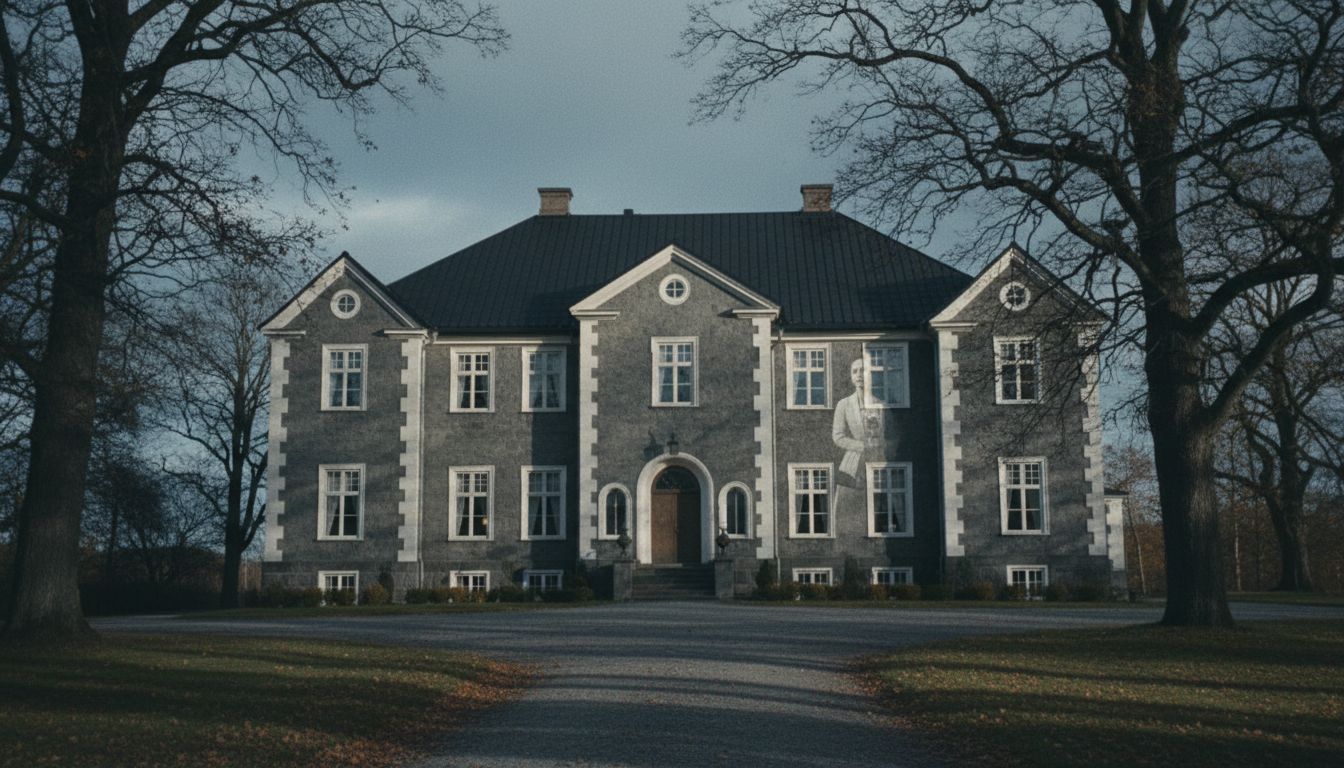
Losby Manor, known locally as Losby Gods, occupies a quiet stretch of countryside just outside Oslo, but its reputation extends beyond aristocratic weekends and polished hospitality. Once a gathering place for Norway’s elite — and a retreat for kings and queens — the estate is also said to be home to a collection of lingering spirits. Among them, the best-known figure is the Lady of Losby, a woman remembered for her devotion to the manor and now, according to local lore, for never quite leaving it.
A manor shaped by power and history
The estate’s history reaches back far beyond the manor house itself. A sawmill was operating on the property’s three farms as early as the 16th century, and by the mid-1800s the site had evolved into a grand country estate built around 1850. In its later years, Losby became associated with powerful timber barons from Oslo, while also drawing royal attention. The source material notes that King Haakon enjoyed the property so much that his bed remains at the manor today — notably longer than most, a practical detail reflecting the king’s height, which was nearly two meters.
Ghost stories in the east wing
One of the manor’s most persistent legends concerns a former estate manager said to have died by suicide in the east wing during the 19th century. According to the story, he hanged himself in his room by the bed pole, and his presence is still felt in the area now known as the Blue Room. Visitors and staff have long described the room as unusually cold, a detail that has helped sustain the ghost narrative. Another piece of folklore links the same part of the property to horses and carriages: animals traveling the road below the east wing were reportedly so unsettled by the house that they would sometimes refuse to pass it.
The Lady of Losby
If the manager’s spirit is the estate’s darker legend, Kathrine Boeck is its most enduring and sympathetic phantom. Married into the manor in 1893, she became deeply associated with the property and is remembered as “the Lady on the Manor.” Widowed, and later guiding the estate through both its prosperous years and the war, she reportedly managed Losby with precision, dignity, and a strong sense of order. She died in 1958, but local accounts say she remains present in the details she helped shape, from the interior style of the house to the atmosphere that still defines it.
A place where heritage and haunting overlap
Today, Losby Manor functions as a refined hotel surrounded by woods and open land, offering visitors a polished version of rural Norway’s past. Yet the estate’s appeal lies partly in the tension between that elegance and the stories attached to it. The property also sits within a landscape rich in legend, including references to the ancestral father of the jotne, Hyme, said to have lived nearby. Whether approached as history, folklore, or heritage tourism, Losby Gods remains a place where Norway’s elite past and its ghostly reputation continue to overlap — and where the quiet after dark still invites speculation.