Overview
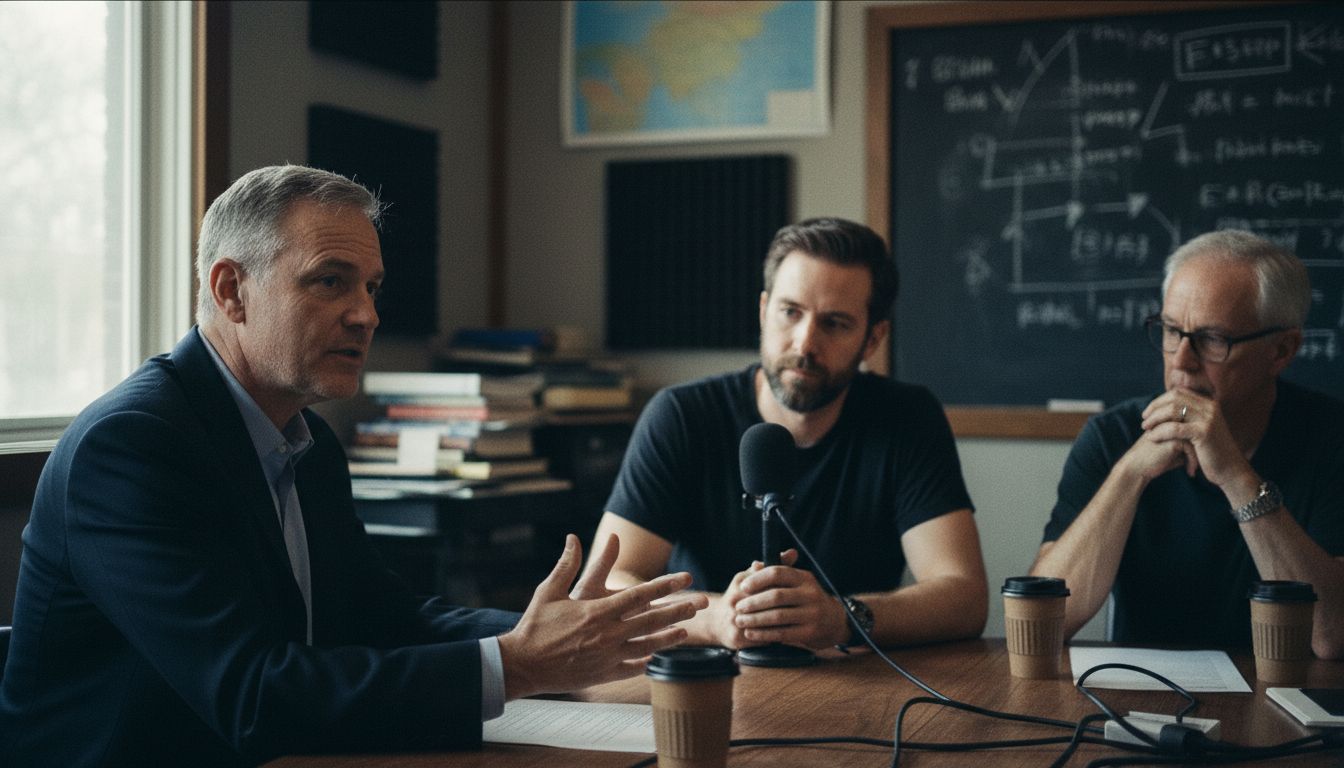
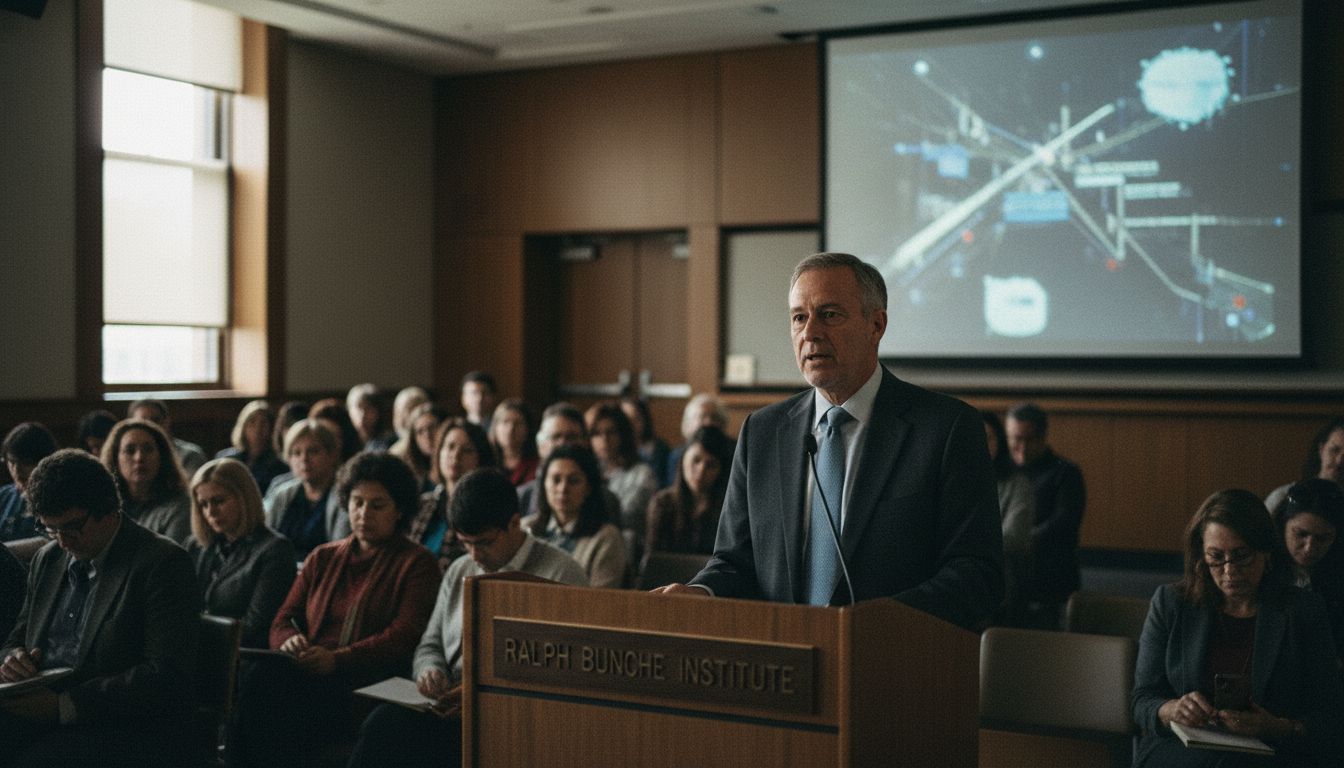
At the Ralph Bunche Institute, the inaugural podcast for the Project on UAP Studies and International Security brought together Dr. Eli Karetny and Lue Elizondo, the former Pentagon counterintelligence officer who once led the Advanced Aerospace Threat Identification Program (AATIP). Their discussion focused on how the U.S. government’s approach to Unidentified Anomalous Phenomena (UAP) has changed since 2017, and what that shift could mean for national security, international relations, and the broader disclosure debate.
Elizondo argued that UAPs are no longer being treated as a fringe topic. According to the conversation, the release of the 2017 New York Times report helped erode the long-standing stigma surrounding the issue, opening the door to academic research and more formal government scrutiny. Karetny framed that transition as a process of “securitization,” in which a subject becomes treated as a security concern through official statements, policy changes, and public acknowledgment.
UAP as a Security Issue
A major theme of the interview was the idea that UAP should be understood not only as an aviation or science problem, but as a national security matter. Karetny pointed to the 2021 Office of the Director of National Intelligence (ODNI) report as a significant “speech act” that helped legitimize the issue inside government. The creation of AARO, the Pentagon office tasked with investigating UAP, was also presented as evidence that the subject has moved into a more formal policy environment.
Elizondo maintained that disclosure is not optional in the long term. He described it as “unavoidable”, saying the government has allegedly studied the phenomena in secret for decades while publicly denying the extent of its interest. He also linked the issue to international security, warning that the way governments respond could determine whether the topic becomes a source of instability or cooperation.
Global Interest and Strategic Risks
The conversation also highlighted what Elizondo described as growing international attention. He said Japan has sought bilateral information-sharing arrangements, while several South American countries are reportedly investigating UAP as well. He also referenced China’s involvement through what he called a “five-continents initiative” at the United Nations, suggesting that the issue is increasingly global rather than confined to the United States.
One of the more striking claims in the discussion involved “Project Interloper,” an AATIP-era concept reportedly designed to draw UAPs into specific areas for observation. Elizondo said the phenomena appear to show persistent interest in nuclear technology, propulsion, weaponry, and large bodies of water. He cautioned, however, against approaching UAP with a simplistic “friend or foe” mentality, arguing that shooting down unknown craft could amount to dangerous provocation.
NHI, Communication, and Human Intent
The interview moved beyond hardware and sensors toward the possibility of non-human intelligence (NHI). Elizondo and Karetny discussed whether UAP should be treated as an intelligence problem requiring an understanding of intent, communication, and strategic behavior. That framing echoes the work of scholars such as Alexander Wendt, whose research on sovereignty and NHI was mentioned during the discussion.
Elizondo closed on a note of caution and restraint. He suggested that humanity’s own behavior may shape any future interaction, saying the goal should be to act like a “good neighbor” rather than a threat. While he emphasized the need to be prepared to defend against unknown capabilities, he argued that curiosity, discipline, and openness may be more constructive than confrontation in navigating the realities of UAP disclosure.