Overview
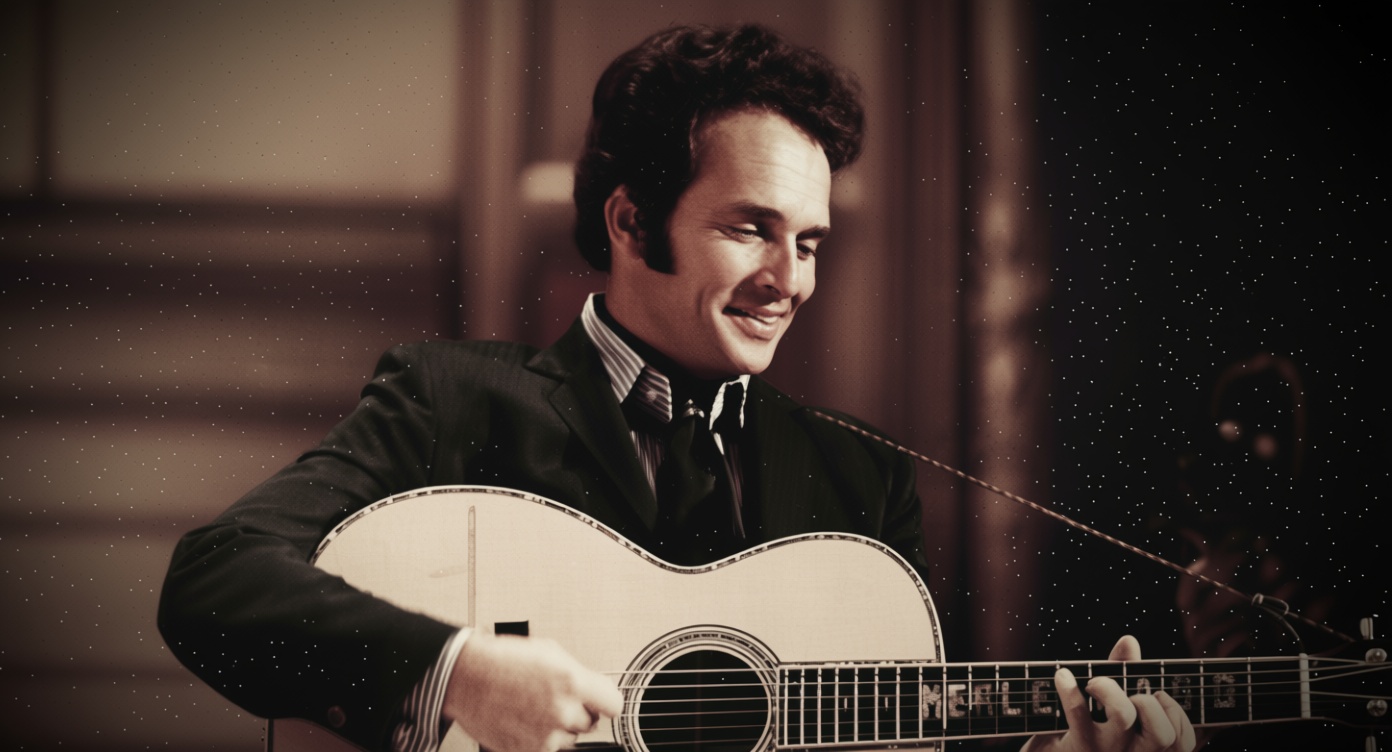
Merle Haggard, one of country music’s most influential outlaw voices, carried a lifelong skepticism of authority that extended well beyond politics and into the realm of UFOs. According to a 2003 Chicago Tribune interview cited in the source material, Haggard treated the topic with unusual seriousness, describing the phenomenon as “the biggest thing to happen since Christ” and insisting that extraterrestrial events may have shaped modern life in ways most people overlook. That conviction was not a passing curiosity: it became part of his public persona in the 2000s, alongside his criticism of George W. Bush’s Iraq War policies in songs such as “That’s the News.”
Haggard’s willingness to embrace such an unconventional belief fit naturally with his image as an outlaw country standard-bearer. He was known for distrust of institutions and for speaking plainly about subjects many mainstream artists avoided. But his UFO fascination went further than a provocative soundbite. He repeatedly suggested that technology such as laser beams and computers may have originated from recovered spacecraft technology, a theory long associated with Roswell lore and broader fringe interpretations of the postwar scientific boom.
Roswell and the UFO Festival
The country legend’s fascination became especially visible in 2003, when he launched a new music festival in Roswell, New Mexico, the town forever linked to the famous 1947 incident involving strange debris discovered on the property of rancher W.W. “Mack” Brazel. Although the U.S. government later said the object was a military weather balloon, the episode became the centerpiece of decades of speculation about an alleged alien craft crash, turning Roswell into the symbolic home of American UFO culture.
Haggard, who was 10 years old when the Roswell incident occurred, did not hide his belief in the extraterrestrial explanation. Speaking to the Chicago Tribune, he dismissed the idea that skepticism should silence him, saying he did not mind being called a “nut.” He also argued that, before the Roswell crash, Americans had “nothing” in terms of advanced technology, and then suddenly had access to major scientific breakthroughs. While historians would strongly dispute that claim, it underscored how deeply Haggard had absorbed the mythology surrounding the incident.
The festival itself was not merely a novelty act. Haggard framed it as a way to bring together two audiences that he believed overlapped more than people assumed: country fans and UFO believers. “It’s sort of a kooky idea of mine that there might be a lot of people that like country music that also have suspicions about what went on in Roswell,” he said at the time. The event became part of the larger annual Roswell UFO Festival, placing Haggard’s name alongside the town’s enduring extraterrestrial reputation.
A belief that outlived the joke
Haggard’s Roswell experiment continued into 2004, and the festival reportedly featured guests including Marty Stuart and his friend Willie Nelson, reinforcing that the project was rooted not just in curiosity but in his broader musical network. While the UFO angle drew attention, it was his seriousness that stood out most. In an era before conspiracy culture dominated social media, Haggard was already engaging publicly with one of America’s most enduring mysteries.
In the end, Haggard’s UFO obsession reflects a familiar thread in his career: a deep suspicion of official explanations and a willingness to follow his own instincts, no matter how unconventional they sounded. For a singer who built his legacy on defiance, Roswell offered more than a festival stop. It gave him a stage for one of his most personal beliefs, and a reminder that even country icons can become unexpected advocates for the unexplained.