Overview
A routine evening walk along a Michigan beach turned into a reported encounter with something the witnesses could not easily explain. According to a report filed with the Bigfoot Field Researchers Organization (BFRO) and highlighted by Coast to Coast AM, two sisters—Diane Ward and Denise—said they saw a large, humanlike figure near a driftwood pile along the shore of Lake Superior on May 19, near the Whitefish Point Lighthouse. The sisters have not claimed certainty that they encountered Sasquatch, but the experience has placed their account squarely within the long-running and often contested catalog of North American Bigfoot sightings.
What the Sisters Say They Saw
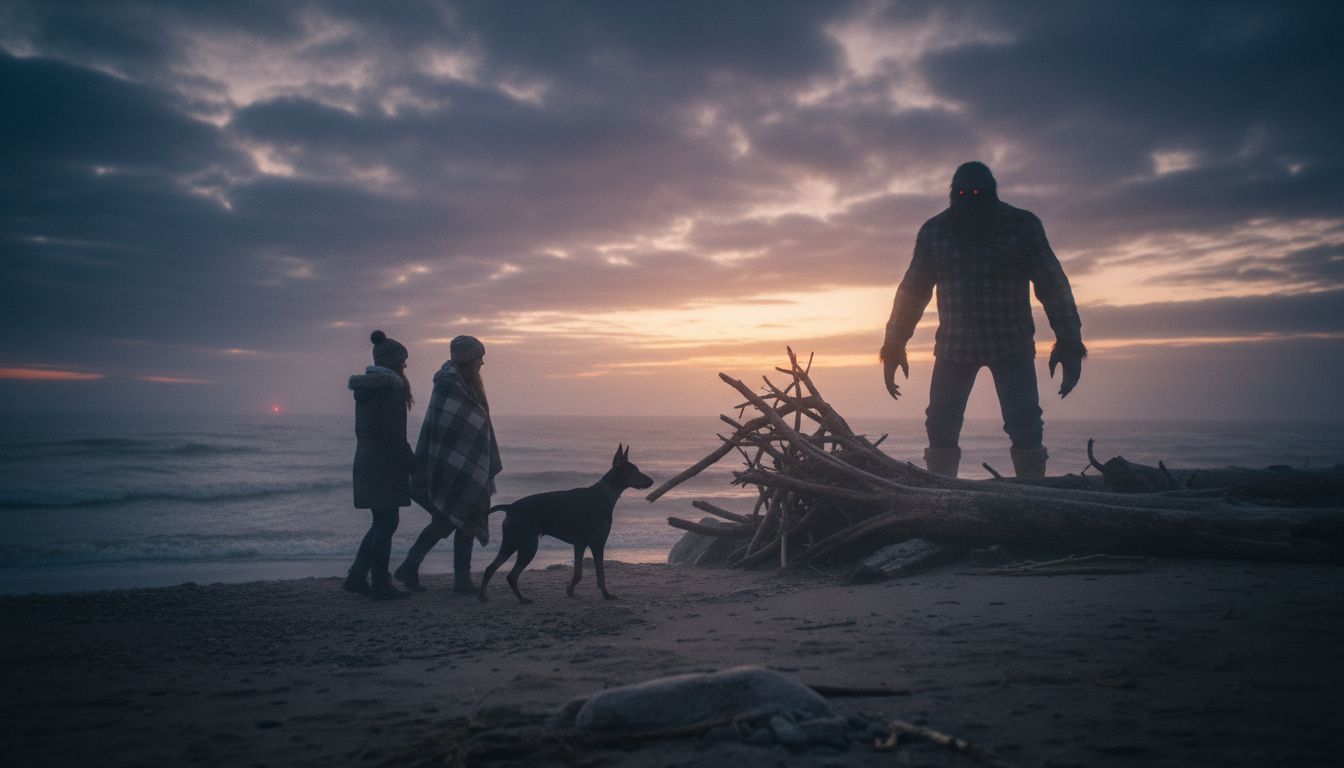
The encounter reportedly began at dusk, while Ward was walking her Doberman along the beach with her sister. As they approached a large pile of driftwood, the dog abruptly stopped and refused to move forward, suggesting to the witnesses that something in the area had alarmed it. Ward then turned on a flashlight and says she saw a “distinct moving silhouette of what appeared to be a large man bent over” behind the driftwood. When she alerted her sister, Denise also saw the figure in the same area.
The report says the figure seemed to rise as if it were trying to climb over the driftwood, then ducked back down when illuminated. Ward and Denise described the being as briefly popping its head up over the pile “a couple of times,” as though monitoring their movements. While the sisters did not obtain a clear, prolonged look, Ward later characterized the figure as having “the build of a very big lumberjack with no neck.” Concerned by the dog’s reaction and the figure’s size and silence, the pair said they “ran and got the hell out of there.”
A Familiar Pattern in Bigfoot Reporting
The sighting fits a familiar pattern in Bigfoot lore: a fleeting glimpse at twilight, a large and upright figure, uncertainty over what was actually observed, and an animal reacting before the humans fully understand what is happening. Reports like this often capture public attention precisely because they sit between experience and interpretation. Witnesses describe something concrete—a shape, movement, a posture—yet the identity of that figure remains unresolved.
That ambiguity is central to how Bigfoot stories persist. Supporters see such accounts as evidence that an undocumented primate or other unknown creature may still inhabit remote wilderness areas. Skeptics, by contrast, often point to poor lighting, stress, distance, or the human tendency to interpret shadows and movement in ways shaped by expectation and folklore. In this case, the dusk lighting, the driftwood obstructing the view, and the brief nature of the sighting all leave room for competing explanations.
Why the Story Resonates
Beyond the question of whether the sisters encountered Sasquatch, the report reflects a deeper cultural fascination with the idea that something wild and undiscovered may still exist close to home. Beachfront wilderness along the Great Lakes can feel isolated and expansive, especially at dusk, and that setting lends itself to mystery. Stories like this continue to resonate because they mix fear, curiosity, and the possibility of the unknown in a way that is both personal and universal.
For now, the Michigan account remains just that: a possible Sasquatch sighting, not a confirmed one. But like many Bigfoot reports before it, it has added another anecdote to an enduring debate—one that continues to invite both skepticism and wonder.