Overview
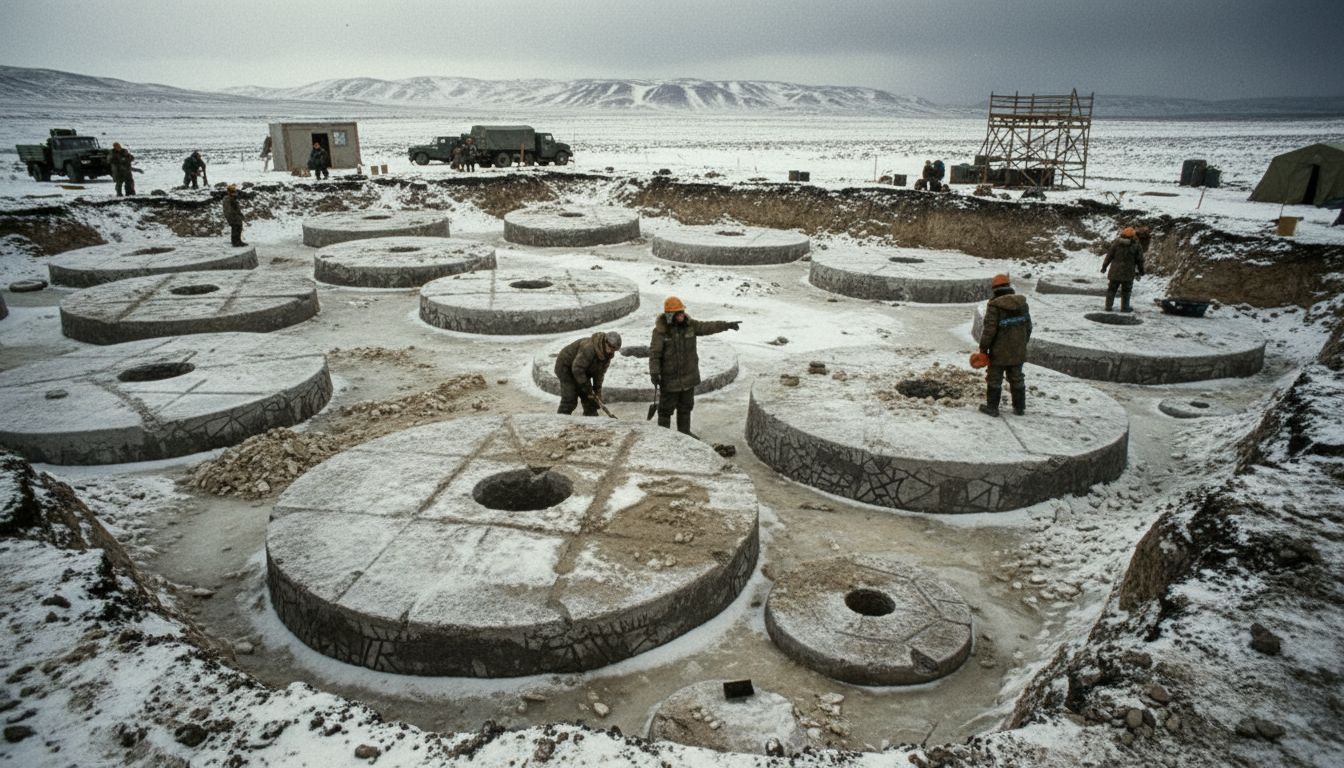
A recent archaeological find in Russia has ignited a familiar mix of curiosity, debate, and online speculation after researchers reportedly uncovered more than a dozen giant stone discs. The discovery, highlighted in a post by Ancient Origins, quickly spread beyond archaeology circles and into wider social media conversations, where users on #ufotwitter linked the artifacts to everything from lost ancient technologies to extraterrestrial activity. While the scale and appearance of the discs have fueled dramatic theories, the available reporting points to a more measured reality: experts and enthusiasts alike are still weighing whether the objects are ancient carvings, purpose-made stone features, or natural formations.
The stones have drawn attention precisely because they sit at the intersection of archaeology and mystery. Large, circular rock features often inspire speculation when their purpose is not immediately clear, especially in remote or poorly documented regions. In this case, the fact that there are over a dozen of the discs has only deepened the intrigue, suggesting either a repeated human pattern or a geological process capable of producing multiple similar shapes. Without a full excavation report or peer-reviewed analysis in the source material, however, the find remains best understood as an unresolved archaeological puzzle rather than a confirmed anomaly.
Competing Explanations
As with many discoveries that go viral online, the interpretations range widely. Some observers have been quick to suggest an alien connection, a claim that typically gains traction whenever unusual objects appear in ancient contexts. Others have pushed back against that framing, arguing that extraordinary claims require extraordinary evidence and that the discs may ultimately fit within known archaeological or geological patterns. The most conservative explanation is that they are natural rock formations shaped by erosion, weathering, or other environmental forces. A second possibility is that they are human-made carvings or markers, perhaps tied to rituals, territorial boundaries, or practical land use.
This tension between speculation and evidence is not unusual in archaeology, particularly when a find lacks immediate context. The size of the discs may be striking, but size alone does not determine origin or function. What matters most are details such as stratigraphy, tool marks, material composition, and surrounding artifacts—the kinds of evidence that can distinguish a deliberate construction from a geological curiosity. Until those findings are made public, any definitive explanation would be premature.
Social Media Amplification
The reaction online illustrates how quickly ancient discoveries can become part of broader cultural debates about the unexplained. On platforms like X, especially within communities focused on ancient mysteries and UFO-related content, the discs were discussed as potential evidence of forgotten knowledge or nonhuman influence. That kind of speculation is familiar territory in the digital age, where striking images and ambiguous discoveries often spread faster than the scientific process needed to verify them.
At the same time, the viral response also reflects a genuine public fascination with the past. Finds that appear unusual can capture attention far beyond academic audiences, prompting people to ask who made them, why they exist, and what they reveal about early societies. Even when the most sensational theories are unlikely, the excitement they generate can draw new interest to archaeology and the methods used to interpret ancient remains.
What Comes Next
For now, the giant stone discs remain an open question. If further research confirms they are man-made, they could add an important chapter to the archaeology of the region and offer insight into ancient engineering or symbolic practices. If they prove to be natural, they will still serve as a reminder of how easily unfamiliar landscapes can be mistaken for evidence of the extraordinary. Either way, the discovery underscores a recurring truth in archaeology: the line between mystery and meaning is often determined by careful investigation, not online speculation.