Reported Discovery
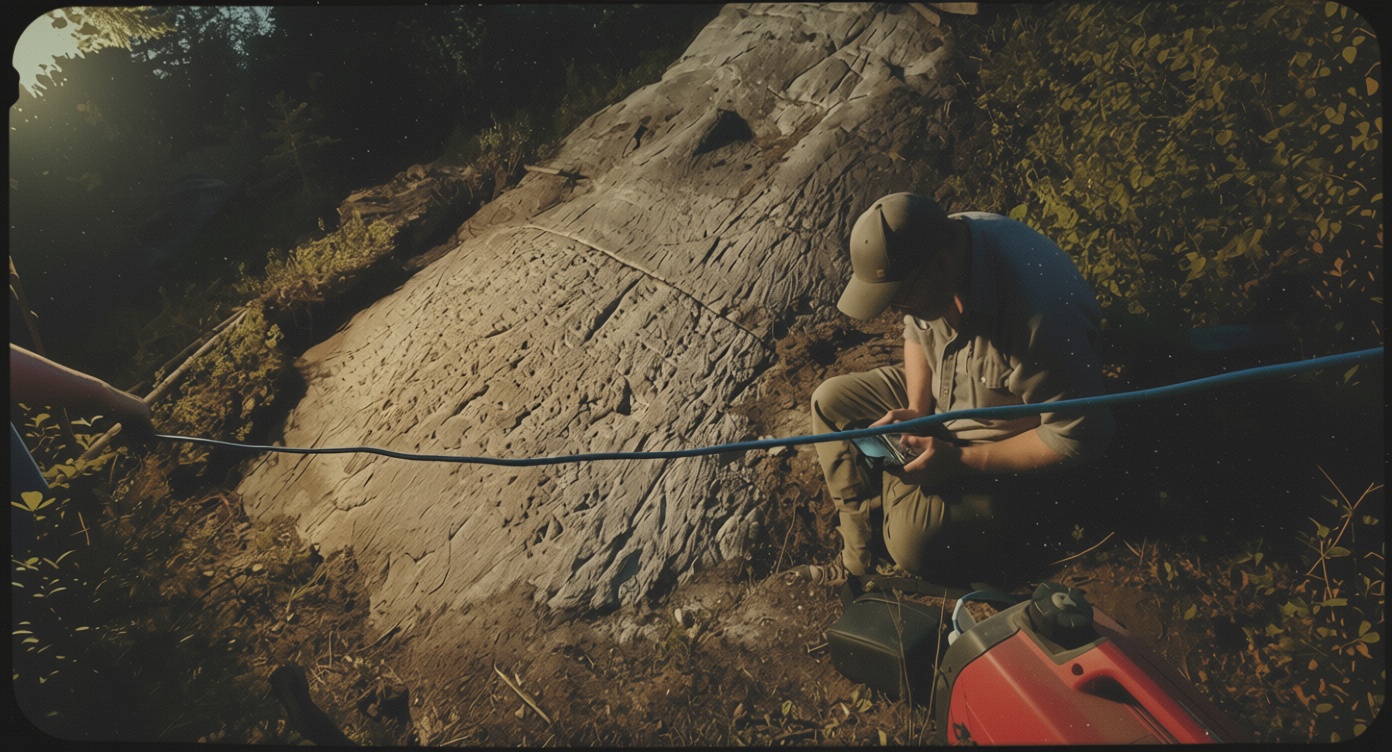
A report published October 21 describes a purported runestone found in the wilderness near Wawa, Ontario, after a fallen tree allegedly exposed a section of previously buried bedrock. According to the account, the stone contains 255 runic symbols carved across an area measuring approximately 1.2 by 1.5 metres. The carving is also said to include an image of a boat carrying 16 figures, along with 14 X-shaped marks.
The material attributes the discovery to archaeologist Ryan Primrose, identified as director of the Ontario Centre for Archaeological Education. It says the site first came to his attention in 2018 and that researchers studied the markings for several years before the discovery was discussed publicly. However, the available source material does not provide precise coordinates, photographs sufficient for independent assessment, excavation records or details of any formal heritage authority review.
Alleged Runic Inscription
The report says the symbols were identified as belonging to a Scandinavian runic alphabet, prompting initial speculation that the carving might be connected to the Viking Age. That interpretation reportedly changed after Henrik Williams, an emeritus professor at Sweden’s Uppsala University and a specialist in runology, examined the inscription.
According to the account, Williams concluded that the markings represent the Lord’s Prayer written in Swedish using runes. The text was allegedly connected to a runic version of the prayer dating to 1611 and later reproduced in the 19th century. Primrose is quoted describing the discovery as “among the least expected finds” of his career, while Williams reportedly estimated that the deeply incised inscription could have taken one person “a couple of weeks” to complete.
Those claims, if confirmed, would place the carving well after the medieval period and make it approximately two centuries old rather than evidence of a pre-Columbian Norse presence in Ontario. The distinction is important: runes continued to be used in later Scandinavian contexts, and the presence of runic writing alone does not establish a Viking connection.
Possible Hudson’s Bay Company Link
The report proposes a possible connection to Swedish workers employed by the Hudson’s Bay Company during the 19th century. A trading post at Michipicoten, located relatively close to the reported discovery area, is cited as a potential link between the carving and Scandinavian personnel working in the region.
Under that interpretation, the inscription may have been created in the early to mid-1800s by a Swedish worker stationed at, or travelling near, the trading post. Possible explanations include private religious devotion, a makeshift place of worship or a memorial connected to an individual or group. The reason the carving was made—and why it may later have been covered by soil—remains unresolved.
Verification Still Needed
The discovery should be treated cautiously until the underlying evidence is independently documented. The supplied material does not identify a published archaeological report, laboratory dating, peer-reviewed runological analysis or confirmation from Ontario heritage officials. It also does not explain how the alleged inscription was authenticated, whether the site has been surveyed for associated artifacts or whether the stone remains accessible for examination.
A documented Swedish religious inscription from the trading-post era could nevertheless be historically significant, particularly if it sheds light on the lives of workers in remote Hudson’s Bay Company settlements. For now, the reported carving represents an intriguing but unverified archaeological claim, with its authenticity, precise location, date and historical context still requiring independent scrutiny.