Overview
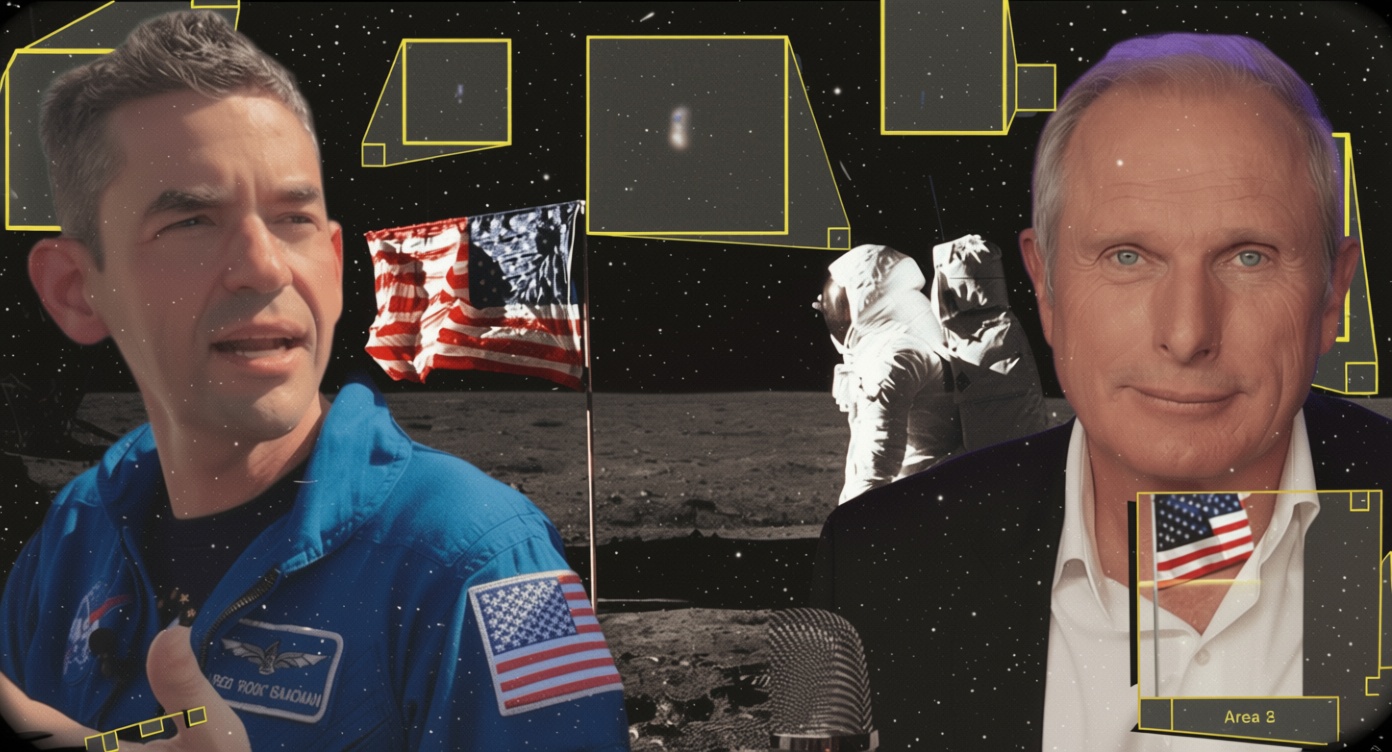
A dispute over the completeness of publicly available UAP records has emerged between NASA Administrator Jared Isaacman and journalist Ross Coulthart. In a NewsNation interview with Nancy Loo, Isaacman said NASA had released all of the UAP data available to the agency. Coulthart challenged that statement during the latest episode of Reality Check, arguing that significant records from earlier human-spaceflight programs remain inaccessible or have not been fully published.
The disagreement centers on what qualifies as “UAP data” and which records fall within NASA’s responsibility. NASA has increasingly focused on the scientific study of unidentified anomalous phenomena, while Coulthart contends that historical material held by NASA or associated government agencies should also be examined and disclosed. The competing positions highlight continuing uncertainty over the scope of government transparency on UAP-related information.
Records Under Dispute
According to the NewsNation report, Coulthart pointed specifically to records connected with the Apollo, Gemini and Skylab programs. He said those archives contain material that has not yet been released in full, challenging the premise that NASA has made all relevant data public. The report does not establish whether the disputed records contain evidence of unexplained objects, or whether they are simply archival materials that have not been reviewed, digitized or cleared for public release.
Coulthart also addressed the Apollo 17 “blue dots” film, which remains under review by the Pentagon and NASA. The imagery has attracted attention among UAP researchers, but its meaning remains unresolved. No conclusion was presented in the report that the objects shown are extraterrestrial or otherwise anomalous. The continued review illustrates the broader difficulty of distinguishing genuine unknowns from camera artifacts, reflections, processing issues or other conventional explanations.
Other Claims Examined
The episode also examined a new claim by Jake Barber involving a cylindrical “mothership” that allegedly released smaller, egg-shaped craft. Coulthart compared the account with reports from the well-known 1976 Tehran incident, in which Iranian military pilots reported encounters with unusual objects. The comparison is presented as part of Coulthart’s analysis, not as confirmation that the modern claim and the historical case describe the same phenomenon.
NewsNation’s program additionally discussed a Defense Intelligence Agency announcement that it had located missing files. The source material does not specify the precise contents of those files or indicate whether their recovery changes the government’s public understanding of UAP. Their mention nevertheless underscores a recurring issue in UAP reporting: records can be dispersed across agencies, classified, improperly cataloged or difficult for outside researchers to access.
Artificial Intelligence and UAP Research
Coulthart and co-host Meagan Medick also considered whether artificial intelligence could help analyze the UAP phenomenon. One topic was research by Dr. Beatrice Villarroel involving possible transient objects in geostationary orbit. The discussion raised the prospect of using automated systems to monitor large volumes of astronomical and sensor data for patterns that human investigators might miss.
The report further considered whether an autonomous monitoring system could be observing Earth. That idea remains speculative, and no evidence was presented establishing that such a system exists. More broadly, AI could assist with categorizing observations, comparing flight and satellite data, and identifying recurring anomalies, but it cannot by itself determine the origin of an unexplained sighting. Independent verification, reliable sensor records and transparent methodologies remain essential to evaluating UAP claims.
Why the Dispute Matters
The disagreement between Isaacman and Coulthart reflects a larger divide over transparency, archival access and the definition of UAP evidence. NASA’s position, as reported by NewsNation, is that its available UAP data has been released. Coulthart’s counterargument is that older space-program records still warrant disclosure and examination. Until the specific records are identified, reviewed and made available for independent assessment, the competing claims cannot be conclusively resolved.
The Reality Check episode therefore presents an ongoing debate rather than a settled finding. Reports involving the Apollo 17 film, recovered government files and alleged spacecraft should be treated as claims requiring documentation and corroboration. For researchers and the public, the central question remains not only what agencies say they have released, but also what records exist, who controls them and whether qualified investigators can independently evaluate the underlying evidence.