Overview
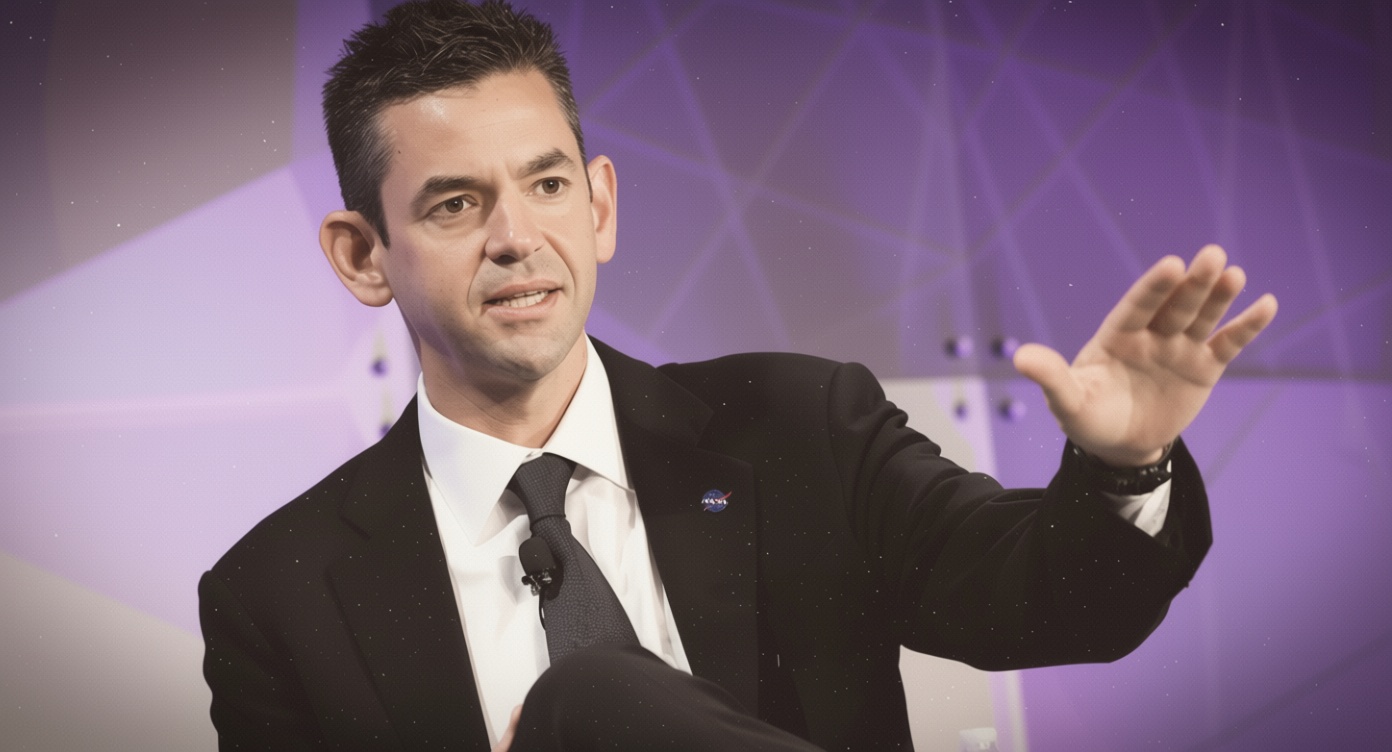
NASA chief Jared Isaacman says investigations into unidentified anomalous phenomena (UAP) should begin with an open mind, including the possibility—however unproven—that some cases could have an extraterrestrial explanation. Speaking in a recent interview with NewsNation, Isaacman said no explanation should be ruled out before the available evidence is assessed, ranging from natural phenomena and classified military systems to technology originating beyond Earth.
“My position going into each of these cases is: first of all, you need to keep an open mind,” Isaacman said in response to questions from host Blake Burman about reports by military personnel and pilots of objects displaying unusual flight characteristics. He emphasized, however, that he was not claiming that reported UAP are alien spacecraft.
Why NASA Could Be Involved
Isaacman argued that NASA should participate in investigating UAP reports when they involve phenomena that cannot be explained by known technology or natural processes. The agency’s mandate includes studying the origins of life and determining whether humanity is alone in the universe, he noted. If a particular case were eventually shown to involve an extraterrestrial civilization, NASA would have an important scientific role in examining it.
The term UAP has increasingly replaced “UFO” in official U.S. discussions. It is intended to cover a broader range of unexplained observations, potentially involving events in the atmosphere, the ocean, space or other environments. The shift in terminology also reflects an effort by government agencies to treat such reports as matters of aviation safety, national security and scientific inquiry rather than solely as popular-culture subjects.
A Possible “Sputnik Moment”
Although Isaacman said extraterrestrial origins should not be dismissed, he identified unknown natural phenomena and tests of advanced technology as more likely explanations. He compared the current interest in UAP to the shock experienced by the United States after the Soviet Union launched Sputnik, the first artificial satellite, in 1957.
“This could be a Sputnik moment,” Isaacman said, suggesting that some sightings could involve secret systems developed by a U.S. adversary. Possibilities could include advanced low-observability platforms or unfamiliar propulsion technologies being tested in the atmosphere. Such a development, if confirmed, would raise national-security concerns even if it had no connection to extraterrestrial life.
Isaacman also pointed to the limits of current scientific knowledge. Saturn’s moon Enceladus and Jupiter’s moon Europa are both believed to contain subsurface oceans, yet scientists still cannot say with certainty whether life exists there. That uncertainty, he said, makes it premature either to affirm or categorically reject claims about life elsewhere in the solar system—or beyond it.
New Reporting Channel and Existing Protections
The U.S. government has also introduced a new channel for submitting UAP-related information, including reports from individuals who may possess knowledge of unusual incidents or classified programs. The initiative is intended to make it easier for current or former personnel to provide information through authorized channels, while addressing concerns about retaliation and improper disclosure.
However, Robert Powell of the Scientific Coalition for UAP Studies said the measure largely expands an option that was already available under a 2023 law. His assessment places the announcement in context: the new mechanism may improve access and visibility, but it does not necessarily represent an entirely new legal framework for UAP whistleblowers.
Together, the reporting channel and Isaacman’s comments reflect a cautious shift in official U.S. policy. Authorities are increasingly willing to examine unexplained observations without immediately assigning them an extraordinary cause, while stressing that evidence—not speculation—must determine the conclusion.