Overview
A new interview with Kevin Knuth, identified as a member of the UAP Advisory Council, examines how unidentified anomalous phenomena research might be brought into the scientific mainstream. The conversation appears in The Short Version episode titled “Skies ‘wide open’: Bringing UAP studies into the scientific mainstream,” published June 1, 2026. The episode’s extended material focuses less on definitive explanations for UAP and more on the challenges of studying reports that remain poorly understood.
Knuth emphasizes that many questions surrounding UAP cannot currently be answered with confidence. One issue raised by the hosts concerns the apparent contradiction between alleged interstellar capability and repeated reports of objects being seen by ordinary observers. If a technologically advanced intelligence could travel vast distances between stars, the hosts ask, why would it allow itself to be detected?
The Limits of Current Knowledge
Knuth’s response was cautious: “The answer to that question isn’t knowable right now.” He characterized the issue as one of many areas in which limited evidence can encourage speculation about the motives of entities whose existence has not been established.
The discussion places that uncertainty within a broader argument about scientific progress. The episode notes that what science can credibly explain at any particular moment represents only a fraction of what may ultimately be knowable. The hosts compare contemporary speculation about UAP with the early development of physics, when researchers were attempting to understand forces and structures inside the atom that could not yet be directly observed.
That comparison does not establish that UAP reports involve extraterrestrial technology. Instead, it frames the subject as a field in which wonder and unanswered questions may motivate research, but do not substitute for evidence. Knuth and his colleagues are presented as attempting to investigate some of those gaps through a more rigorous scientific approach.
Why Would a Highly Advanced Craft Be Visible?
In an excerpt from the interview that was not included in the final edit, the host suggests that a vehicle capable of interstellar travel could presumably avoid detection if it wanted to remain hidden. Knuth agrees that this is possible, saying such a craft “could probably hide quite easily.”
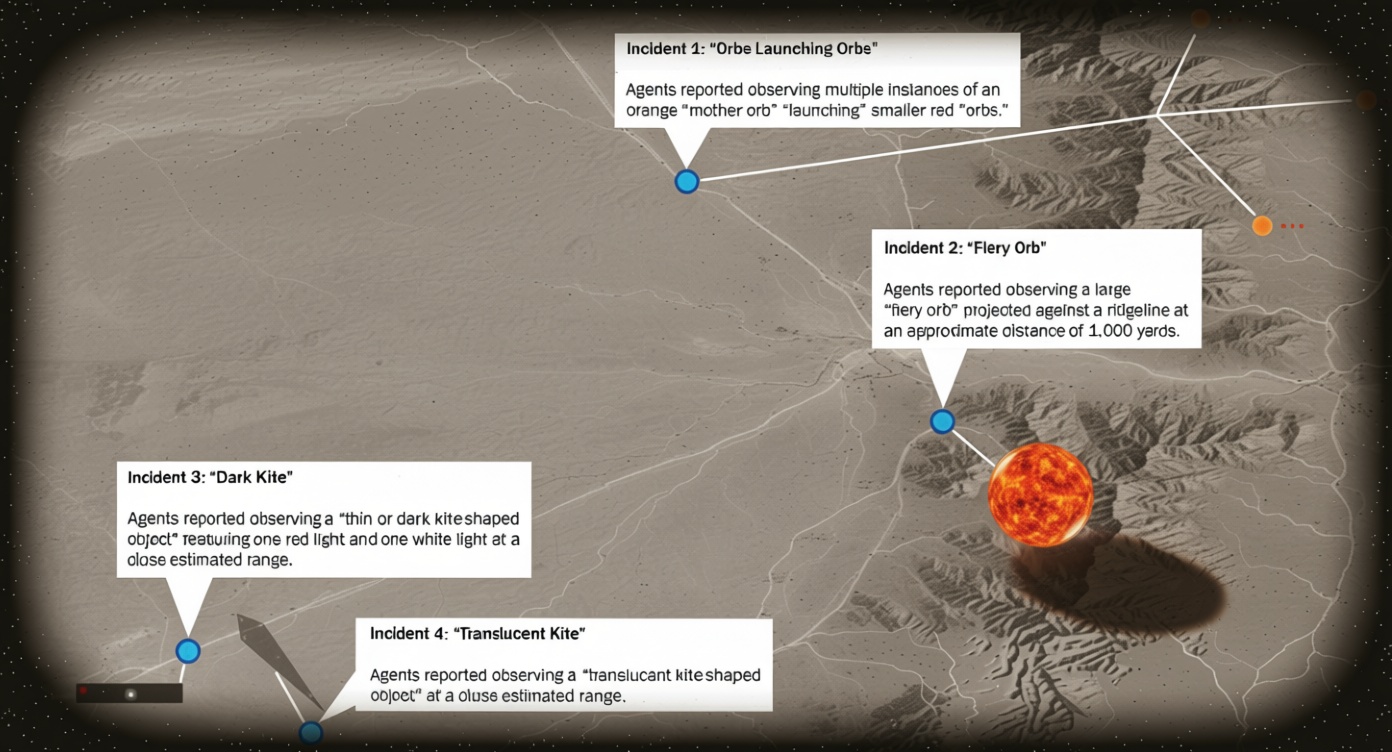
The conversation then turns to reports of objects displaying extremely bright lights. Knuth says that, assuming the sightings involve another civilization or “another peoples,” it is difficult to understand why such craft would operate with lights that are sometimes so bright that observers cannot determine what is producing them. He describes the illumination as potentially “inhumanly bright,” while acknowledging that the nature of the objects remains uncertain.
Knuth recounts a suggestion from a neighbor who had watched a presentation he gave at the 2023 Sol Foundation conference. The neighbor proposed that a craft might use bright lights “if you wanted to be seen but you didn’t want to be observed.” Knuth called the idea interesting and said it offered one possible explanation for why something might attract attention without revealing its identity or capabilities.
Scientific Context and Caution
The interview does not present that interpretation as a finding. Rather, it illustrates how easily UAP discussions can move from an observation—such as reports of bright lights—to hypotheses about intent. The episode repeatedly underscores that the available information is insufficient to determine whether such sightings involve advanced aircraft, natural phenomena, human technology, misidentifications, or something else.
As background, the program points listeners toward a 2017 New York Times investigation concerning a Pentagon UFO program, an article that Knuth and others have credited with helping bring UAP discussions into wider public and scientific debate. The interview’s central message is that mainstream study requires disciplined investigation alongside a clear acknowledgment of uncertainty.