A Historic Village With a Paranormal Reputation
New Salem, Illinois, is best known as the frontier settlement where Abraham Lincoln lived and worked before entering politics. Today, the reconstructed village is also associated with reports of unexplained sightings, including a woman dressed in white, a man wearing a tall hat, sudden cold spots and footsteps heard without an apparent source. The accounts have helped give the Lincoln’s New Salem State Historic Site a place in Illinois’s heritage and haunted-tourism landscape, although there is no official evidence that the location is haunted.
New Salem was founded around 1828 along the Sangamon River as a mill town and transportation stop. Its founders hoped that a dam, gristmill and sawmill would attract farmers, merchants and river traffic. The settlement lasted only about 12 years before declining, but its brief history became significant because Lincoln arrived in 1831 after helping free a flatboat lodged at the mill dam. He remained in New Salem for approximately six years, working a series of jobs, studying law and beginning the public career that would eventually lead to the White House.
The Story of Elizabeth Herndon
The most frequently repeated ghost story is connected to Elizabeth Herndon, a resident who was shot and killed in 1833 when her husband’s rifle reportedly discharged. Historical retellings describe the death as accidental, but some people at the time believed it may not have been. The uncertainty surrounding the incident appears to have contributed to later folklore about Herndon’s spirit remaining near the village.
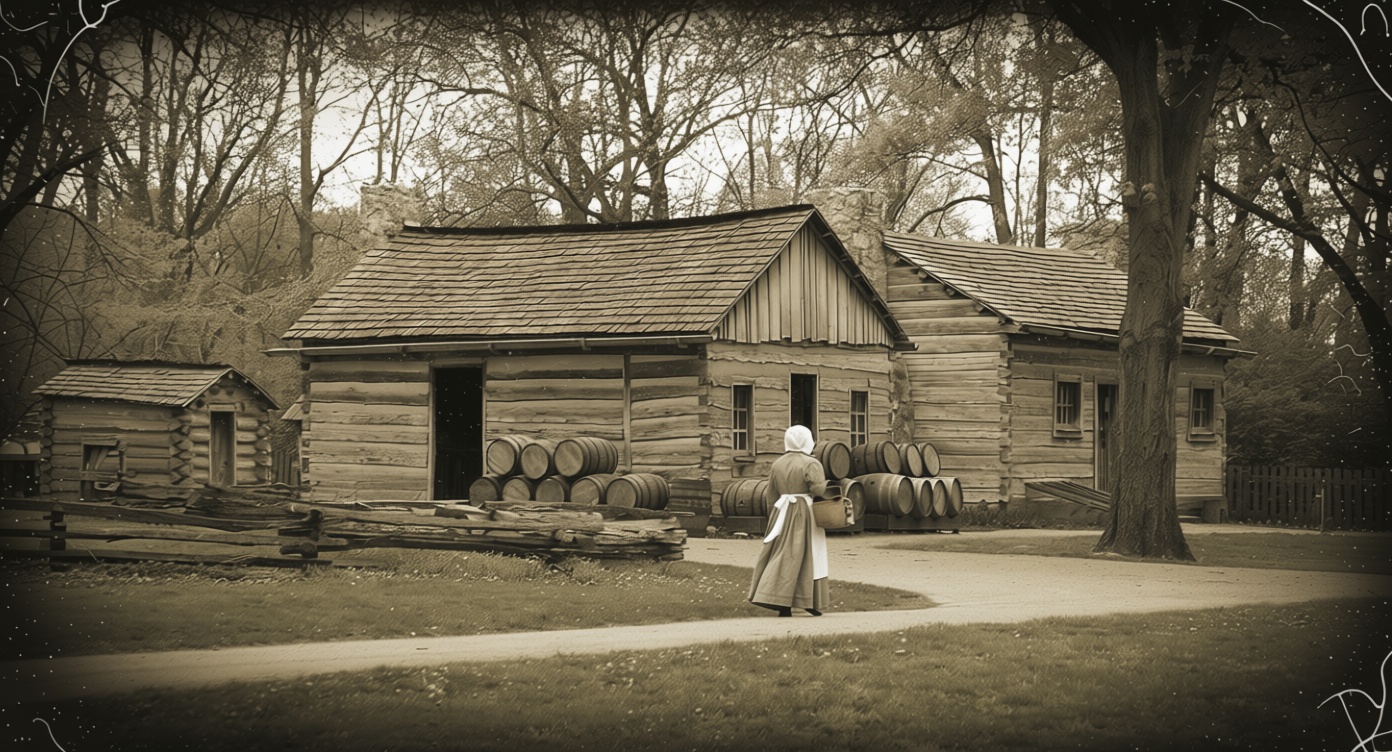
Visitors who associate the apparition with Herndon generally describe a woman in white or pale clothing appearing briefly among the reconstructed buildings or along the village’s wooded paths. The account resembles the widespread “White Lady” tradition, in which a woman who died violently or under tragic circumstances is said to return to a location connected with her life or death. No definitive evidence identifies the reported apparition as Herndon, and the connection is based largely on local storytelling and speculation.
Reports of a Man in a Tall Hat
Other witnesses have described seeing a tall man in dark clothing and a high hat. Because of New Salem’s connection to Lincoln, some visitors have suggested that the figure could be the former resident himself. The resemblance to popular images of Lincoln has made the theory especially attractive to tourists, but available accounts do not establish the man’s identity. The source material does not identify any historical record linking the figure to Lincoln, and the reports remain anecdotal.
The same caution applies to claims of cold patches, phantom footsteps and fleeting silhouettes. Guides and staff associated with the historic site reportedly deny that New Salem is haunted, emphasizing its documented history and educational mission rather than paranormal explanations. The reconstructed setting—log cabins, split-rail fences, dirt paths and wooded terrain—can also create conditions in which shadows, echoes, changing temperatures and distant movement are easily misinterpreted.
Folklore, Memory and Tourism
Skeptical explanations range from suggestion and expectation to the influence of community memory. Visitors who arrive anticipating a ghost may be more likely to interpret an indistinct shape or unexplained sound as evidence of a supernatural presence. At the same time, legends can preserve attention on people who might otherwise disappear from the historical record. Herndon’s story, in particular, gives the village’s past a human and tragic dimension beyond its association with Lincoln.
New Salem’s ghost stories therefore occupy an uncertain space between documented history and cultural folklore. The reported sightings have not been verified, but they continue to shape how some visitors experience the site. By combining frontier history, Lincoln heritage and familiar White Lady imagery, the legend adds another layer to an Illinois landmark whose enduring appeal rests both on what is known about its past and on the mysteries visitors believe may still linger there.