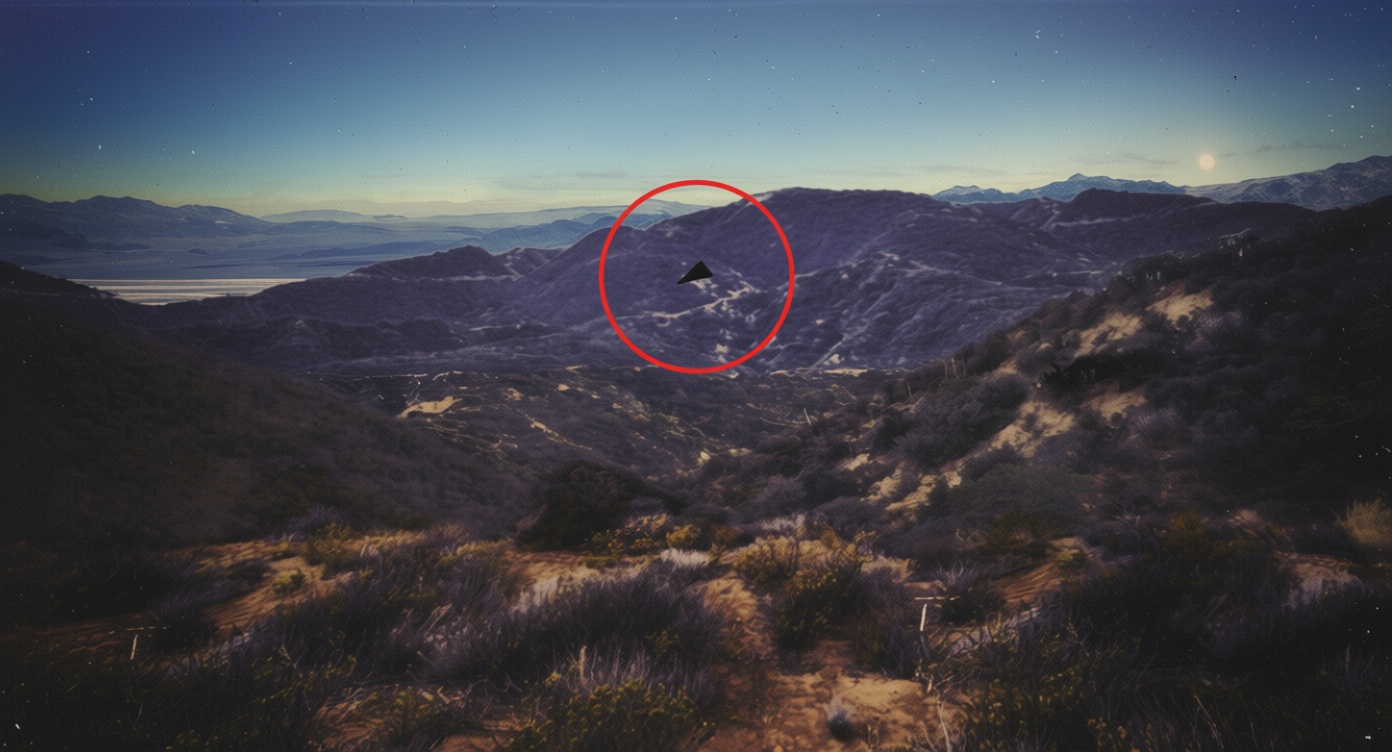
Overview
An opinion piece published by the New York Post on Oct. 26, 2026, argues that the U.S. government should provide clearer answers about reported UFO sightings. The article, titled “We deserve answers on UFO sightings from the government — if the truth is really out there,” presents the issue as one of public accountability and transparency.
The item does not report a new sighting, identify previously undisclosed evidence, or announce a government finding. Instead, it makes a broader argument that official agencies should explain what they know about unusual objects and incidents reported by military personnel, pilots and members of the public.
The Case for Greater Transparency
The central premise is that government institutions have a responsibility to address persistent questions surrounding unidentified aerial phenomena, or UAP—the term increasingly used by officials in place of “UFO.” Supporters of greater disclosure contend that unexplained sightings can raise legitimate concerns involving airspace security, military technology and aviation safety, regardless of whether the objects ultimately have an ordinary explanation.
The Post’s argument reflects public frustration over what critics characterize as limited or inconsistent official information. In many cases, sighting reports are incomplete, sensor data may be classified, and witnesses may describe events without enough detail to permit independent verification. Those limitations can leave the public with unanswered questions while also creating room for speculation.
What the Article Does—and Does Not—Establish
The source is clearly identified as an opinion article, rather than a reported investigation or an official government document. Its publication does not establish that extraterrestrial craft exist, that the government is concealing evidence of alien visitation, or that any particular sighting has been confirmed as anomalous.
It also offers no specific evidence or new findings about the incidents under discussion. Readers should therefore distinguish between the article’s call for answers and independently verified developments. An unexplained observation is not necessarily evidence of an extraterrestrial origin; it may result from a balloon, aircraft, drone, satellite, atmospheric effect, sensor error or incomplete information.
Broader Government Context
In recent years, U.S. officials have created or expanded formal channels for reviewing UAP reports. Such efforts have generally focused on collecting and analyzing information, determining whether sightings pose risks to national security or flight safety, and separating genuine unknowns from misidentifications and data problems.
Those reviews can be constrained by the sensitivity of military operations and intelligence sources. Releasing raw imagery, radar records or witness details may reveal surveillance capabilities or defense procedures. At the same time, excessive secrecy can undermine confidence in official conclusions, particularly when authorities acknowledge that some cases remain unresolved.
The Questions That Remain
The New York Post’s commentary ultimately calls for the government to explain what has been reported, how cases are investigated and why some information cannot be released. Those are questions that could be addressed through clearer reporting standards, fuller explanations of analytical methods and regular public updates—without treating uncertainty as proof of extraordinary claims.
For now, the article represents a demand for transparency rather than a disclosure of new information. Any assessment of UFO or UAP claims will continue to depend on verifiable evidence, reliable sensor data, corroborating witnesses and careful consideration of conventional explanations.