Overview
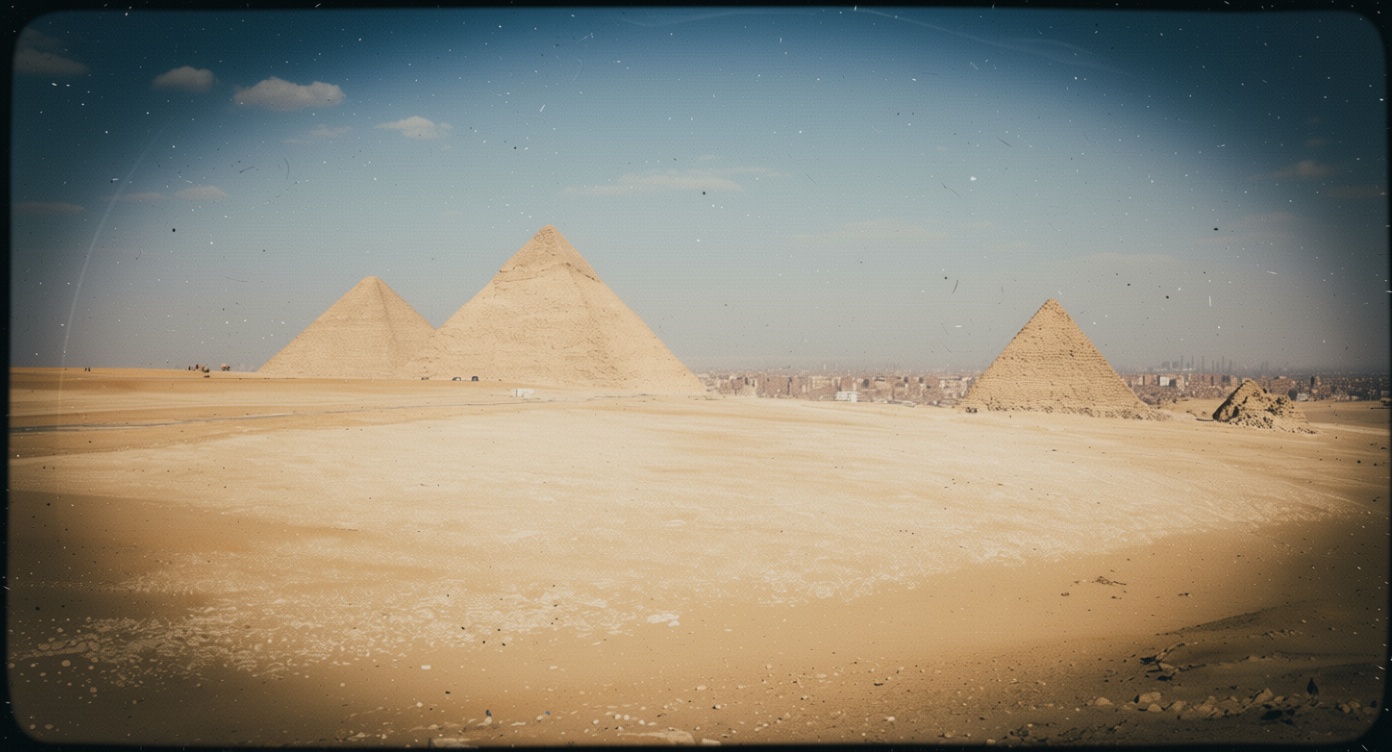
A controversial 2022 study that claimed satellite radar could detect hidden chambers and tunnels inside the Great Pyramid of Giza has been retracted, after the journal Remote Sensing said the paper contained “serious methodological flaws and statistical errors” that undermined its conclusions. The decision weakens one of the more extraordinary recent claims about the interior and substructure of the world’s most famous ancient monument, and it highlights how quickly speculative archaeology can spread when dressed in the language of advanced technology.
What the retracted study claimed
The paper, written by Italian researchers Filippo Biondi and Corrado Malanga, argued that a radar-based technique known as synthetic aperture radar Doppler tomography could analyze tiny changes in satellite signals to produce a map of structures hidden inside the Great Pyramid of Khufu. Published in a peer-reviewed journal that focuses on Earth-observation technologies, the study suggested the method could identify previously unknown rooms, corridors and other features without any physical intrusion into the pyramid.
The authors went further than a simple technical proof-of-concept. According to the paper, the technique could detect the pyramid “as if it were transparent like a crystal,” while still acknowledging that “only an on-site investigation can confirm” what the analysis appeared to show. The claims helped generate public fascination well beyond academic circles, especially after later discussions by the same researchers and collaborators extended the idea to the nearby Pyramid of Khafre, where they said they had found extensive shafts and tunnels beneath the structure.
Why the journal acted
Remote Sensing said it launched an investigation after a reader raised concerns about the study’s methods. On August 10, the journal formally retracted the article, citing problems serious enough to invalidate its conclusions. Biondi and Malanga disagreed with the retraction, according to the notice, though the journal said the article could not stand as published. Retraction Watch, which tracks scientific corrections and misconduct, reported that the authors did not respond to multiple requests for comment, and Newsweek said it also reached out by email.
The retraction is significant because the original paper had been used by some readers and online commentators as a scientific basis for increasingly bold theories about the Giza Plateau. Once the paper’s reliability was challenged, those interpretations became far less credible. That matters not only for the Great Pyramid, but also for the broader public conversation around ancient Egypt, where speculation often outpaces evidence.
Broader implications
The study’s collapse also demonstrates how high-profile archaeological claims can become viral before they are independently verified. Public interest surged in 2025 when the researchers and their collaborators announced additional findings at a news conference, including what they described as five connected structures near Khafre’s base and eight cylindrical shafts descending hundreds of meters. The claims drew global attention, fueled social-media debate, and even prompted YouTube creator MrBeast to offer help with an exploration effort. Other speculation — including talk of an alleged second Sphinx beneath the Giza Plateau — also circulated online, but none of it has been confirmed by mainstream archaeology.
More broadly, the episode is a reminder that archaeology is often revised through skepticism, peer review and re-analysis. As new discoveries continue at sites such as Karahan Tepe, and as long-running debates about places like Stonehenge and ancient mammoth hunting remain active, the field keeps showing the same pattern: bold theories can be compelling, but only evidence survives.