Overview
The National UFO Reporting Center (NUFORC) has reached a significant milestone, logging its 200,000th report after decades of collecting public sightings and anomalous experience accounts. The figure underscores the organization’s long-running role as one of the best-known clearinghouses for UFO and UAP reports in the United States, drawing submissions from witnesses who believe they saw something that could not be easily explained. NUFORC’s database has become a reference point for researchers, journalists, and enthusiasts tracking patterns in public sightings over time.
A long-running public archive
NUFORC has built its reputation by allowing ordinary witnesses to submit accounts directly, creating a large public record that spans everything from brief lights in the sky to more detailed descriptions of unusual craft-like objects and encounters. The 200,000-report threshold is notable not simply as a number, but as a marker of persistence: the organization has continued to gather reports even as public language around the subject has shifted from “UFO” to the broader and more government-adjacent term UAP, or unidentified anomalous phenomenon.
That shift reflects a wider change in how the topic is being discussed. What was once treated largely as a fringe issue now attracts more structured attention from lawmakers, defense officials, and mainstream media. Even so, NUFORC’s archive remains distinct because it centers on civilian witness testimony rather than military sensor data or official investigations. The center’s database is therefore useful less as proof of extraterrestrial visitation than as a snapshot of how people interpret unexplained events in real time.
Recent standout reports from August 2026
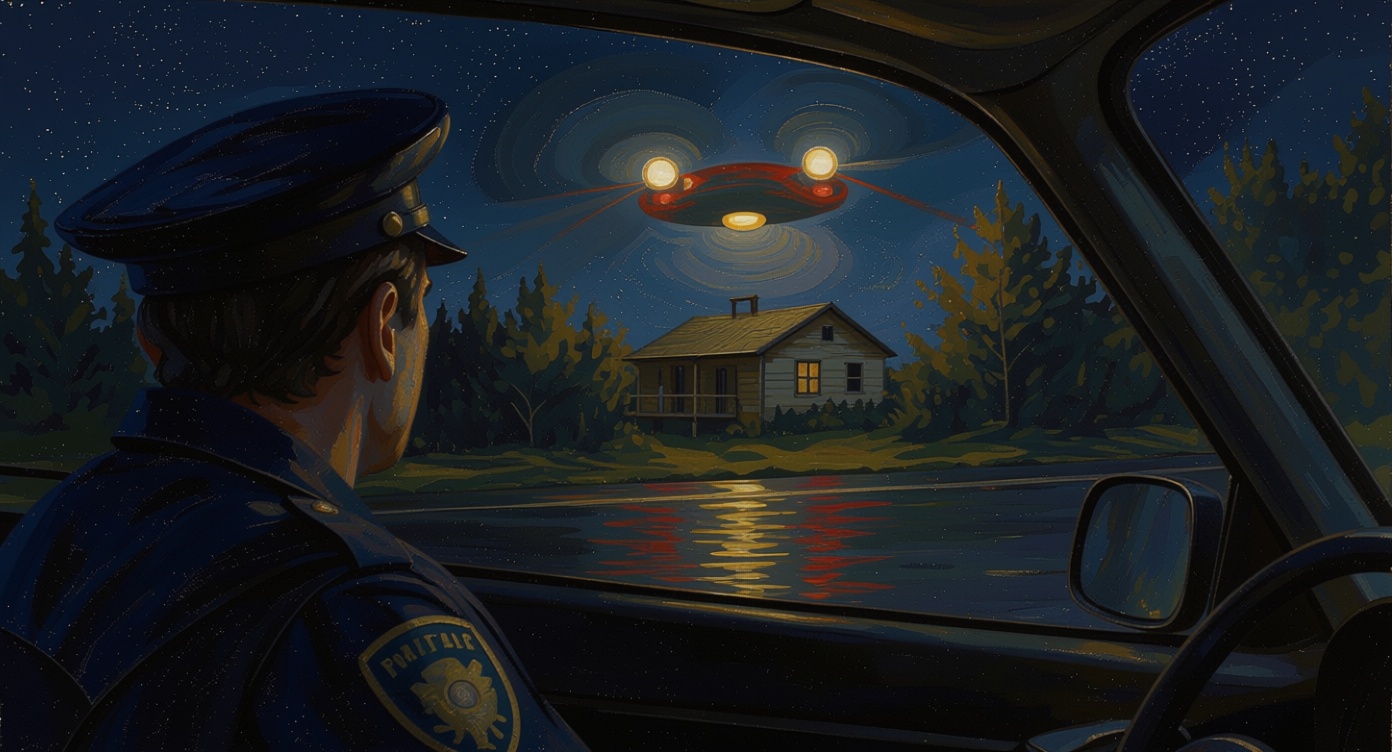
According to the summary accompanying the NUFORC milestone, recent reports from August 2026 included several notable sightings involving hovering objects and other anomalous experiences. While the details of each case were not included in the accessible source material, those categories are consistent with the kinds of reports that often draw attention on NUFORC’s site: objects that appear stationary or nearly stationary in the sky, movements that seem inconsistent with conventional aircraft, and witness descriptions of events that leave them uncertain about what they encountered.
Such reports often share a common pattern. Witnesses describe something visually striking, frequently at night or at a distance, and then struggle to reconcile the observation with familiar explanations such as drones, helicopters, satellites, balloons, or atmospheric effects. In some cases, reports go beyond visual sightings and describe a broader anomalous experience, suggesting that the witness interpreted the event as more than a simple airborne object. Those cases tend to be especially difficult to verify, but they remain central to the broader public conversation around UFO reporting.
Why the milestone matters
Reaching 200,000 reports does not resolve the question of what UFOs are, but it does show that the issue continues to resonate with the public. NUFORC’s archive is, in effect, a long-term record of uncertainty: a repository of moments when people saw something unusual and decided it was worth documenting. For researchers, the value lies in pattern recognition—frequency, geography, timing, and consistency across accounts—not in assuming every report points to the same cause.
As interest in UAPs continues, milestones like this one reinforce the importance of careful documentation and skepticism alike. The center’s growing database reflects both the persistence of unexplained sightings and the enduring human impulse to search for answers when the sky does not look quite ordinary.