Overview
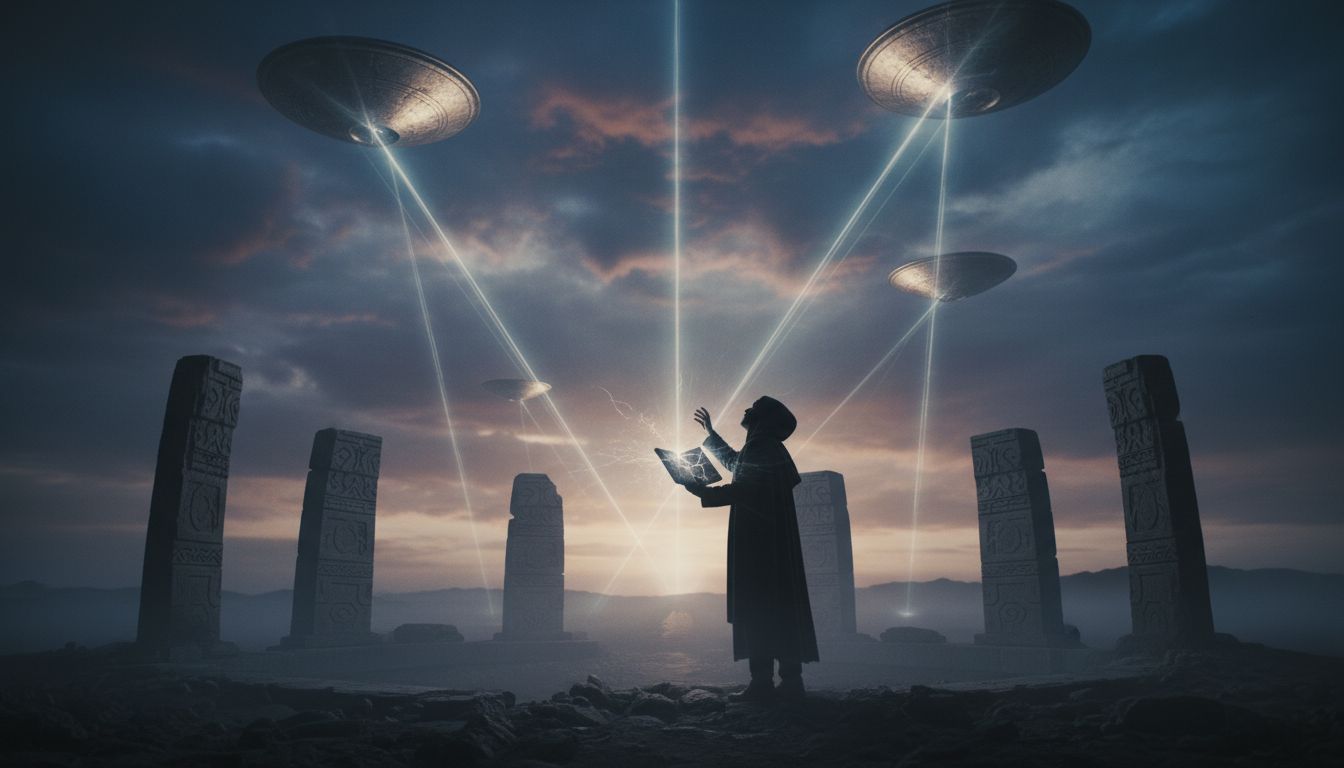
An opinion essay in The New York Times asks a question that sits at the uneasy intersection of science, belief and culture: could UFOs, or as they are now more often called, UAPs, begin to function in ways traditionally reserved for religion? The piece does not argue that unidentified aerial phenomena should replace faith communities or doctrine. Instead, it explores a broader cultural possibility — that encounters with the unexplained may increasingly shape how people search for meaning, imagine the cosmos and define humanity’s place within it.
The essay’s central idea is that mystery itself can become a source of belief. Throughout history, religions have offered frameworks for understanding what cannot be fully proven: creation, consciousness, morality, life after death and the possibility of beings beyond human comprehension. In the modern era, UFO sightings and reports of anomalous events have drawn a different kind of attention, fueled by technology, national security concerns and a growing public appetite for answers. The article suggests that if official institutions continue to acknowledge unresolved phenomena without providing complete explanations, those gaps may become fertile ground for quasi-spiritual interpretation.
UFOs, Meaning and the Human Need for Explanation
The piece also raises a deeper philosophical point: human beings do not merely want data; they want narratives. Whether through religious traditions or speculative accounts of extraterrestrial life, people often seek a story that places them in a larger universe. UFOs and UAPs, by their very nature, exist in that uncertain space between evidence and interpretation. For some, they represent a scientific puzzle. For others, they hint at intelligence beyond Earth. And for still others, they evoke the same sense of awe, humility and transcendence that religion has long provided.
That comparison does not mean the phenomena themselves are theological. Rather, the essay examines how public fascination with the unknown can assume a belief-like quality. In this sense, the question is not whether UFOs are religious, but whether the cultural response to them can begin to mirror religious longing. As traditional institutions struggle to command trust and certainty, unexplained aerial phenomena may offer a modern stage for ancient questions about origins, purpose and the possibility that human beings are not alone.
Faith, Skepticism and the Limits of Knowledge
The article’s argument is especially timely because interest in UAPs has shifted from fringe speculation to mainstream debate. Government hearings, declassified videos and renewed military attention have helped legitimize discussion of aerial anomalies, even as definitive answers remain elusive. That unresolved status creates a space where skepticism and faith often coexist. Some observers insist that extraordinary claims require extraordinary evidence. Others believe the very persistence of the mystery suggests something larger is at work.
By framing the issue as an opinion question rather than a factual claim, the Times essay highlights an enduring tension in modern life: what happens when institutions can confirm that something is real without being able to explain what it means? In that gap, religion has historically offered comfort, order and interpretation. The suggestion here is that UFOs may not replace religion outright, but they could begin to occupy part of the same cultural terrain — especially if they continue to evoke wonder, uncertainty and the hope of contact with something greater than ourselves.