Overview
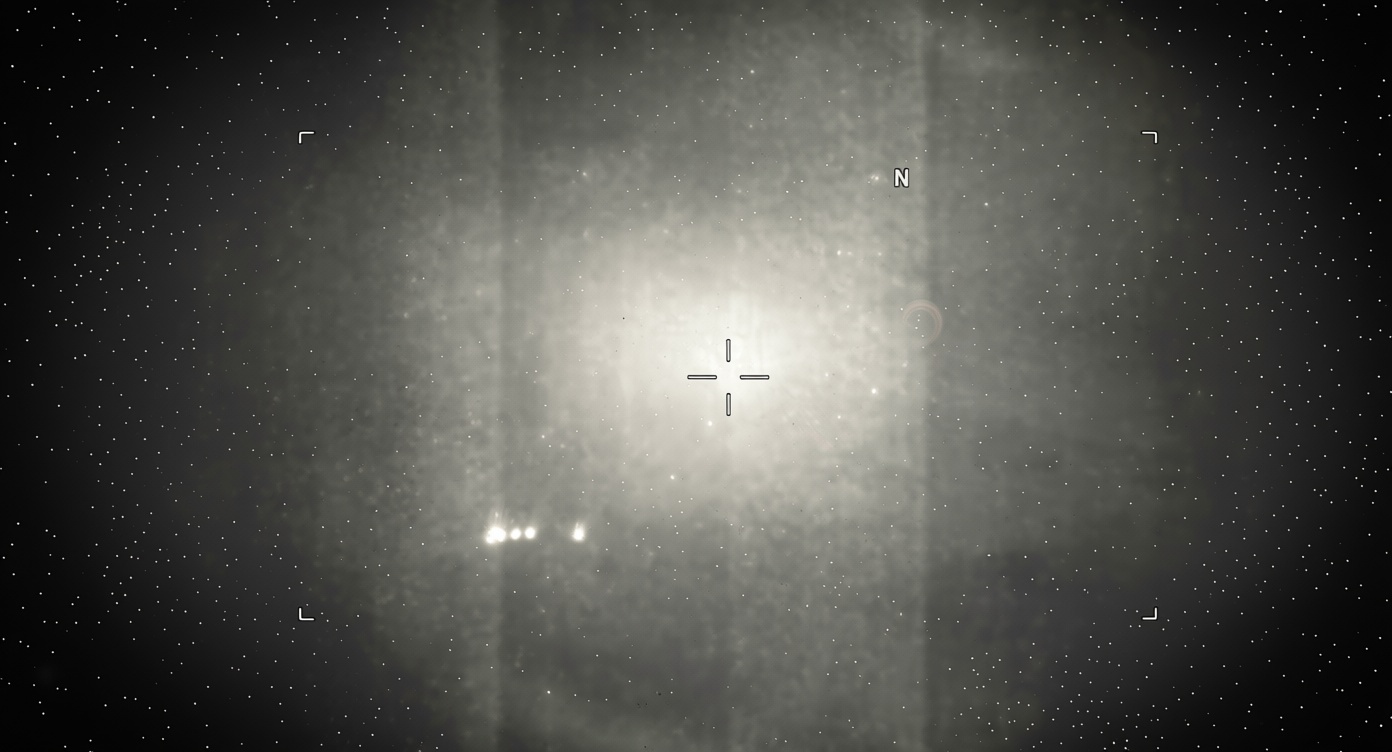
A video circulating in the UFO community revisits the wave of unidentified-object reports recorded in 1952, presenting the year as a pivotal moment in the history of U.S. military investigations. Produced by the channel “Angry Astronaut,” the presentation links Cold War-era sightings, radar encounters, photographic evidence and modern discussions of UAP disclosure. It also references Pentagon-released imagery described by proponents as showing six spheres traveling at approximately 480 mph, although the summary does not establish that the footage is directly connected to the events of 1952.
The presentation emphasizes that U.S. Air Force reporting reached an unprecedented level that year. Drawing on Project Blue Book records, it argues that 1952 produced the highest number of reported sightings—and the largest number of cases classified as unexplained—between 1947 and 1969. Captain Edward J. Ruppelt, the first head of Project Blue Book, is cited as telling military planners that approximately 20% of 800 closely examined cases remained unexplained. The video says many reports came from military personnel, radar operators and commercial pilots, including observations near sensitive facilities such as Los Alamos, White Sands and Camp Hood.
The Tremonton Film
One of the central cases discussed is the Tremonton, Utah, incident of July 2, 1952. Delbert C. Newhouse, a U.S. Navy chief warrant officer and experienced photographer, filmed what appeared to be between 10 and 14 bright objects moving across the sky. Contemporary explanations reportedly suggested the objects could have been birds, while later UFO researchers have argued that their formation and apparent speed were inconsistent with that interpretation.
The video refers to declassified Project Blue Book material and claims that internal analysts mathematically rejected birds or conventional aircraft as explanations. However, the strength of that conclusion depends on the underlying analysis, assumptions about distance and perspective, and the interpretation of the film itself. An unresolved case is not, by itself, proof of extraterrestrial origin, and the available historical record has supported differing assessments.
Washington Airspace Encounters
The presentation also focuses on a series of radar and visual sightings over Washington, D.C., during July 1952. According to the account, controllers at Washington National Airport and Andrews Air Force Base tracked unidentified targets near restricted airspace, prompting the deployment of F-94 Starfire interceptors. The objects were reportedly calculated to have reached extraordinary speeds and allegedly accelerated or disappeared as pilots approached.
The video states that Project Blue Book officer Major Dewey Fournet examined advanced propulsion concepts, including ideas later associated with “electrogravitics.” Those claims remain controversial. Military records confirm that the Washington incidents generated significant concern and official investigation, but explanations proposed over the years have included temperature inversions, radar anomalies, aircraft and misidentification. The precise performance figures cited in the presentation are not independently established in the summary.
Astronomical Claims and Context
Finally, the video connects the 1952 sightings to the so-called “Triple Transient,” three star-like points reportedly recorded on photographic plates at Palomar Observatory on July 19. It draws on work associated with Dr. Beatriz Villarroel and the VASCO project, arguing that the objects appeared and vanished within roughly 50 minutes and may have represented artificial structures in orbit.
Researchers have debated the nature of such historical photographic transients, and the claim that they were extraterrestrial spacecraft remains unverified. The video concludes that the combined evidence demonstrates a coordinated, non-human surveillance operation. That conclusion goes beyond what has been established by publicly available evidence, but the cases continue to attract interest because they illustrate both the limits of historical data and the enduring debate over how governments investigated unexplained aerial phenomena during the Cold War.