Overview
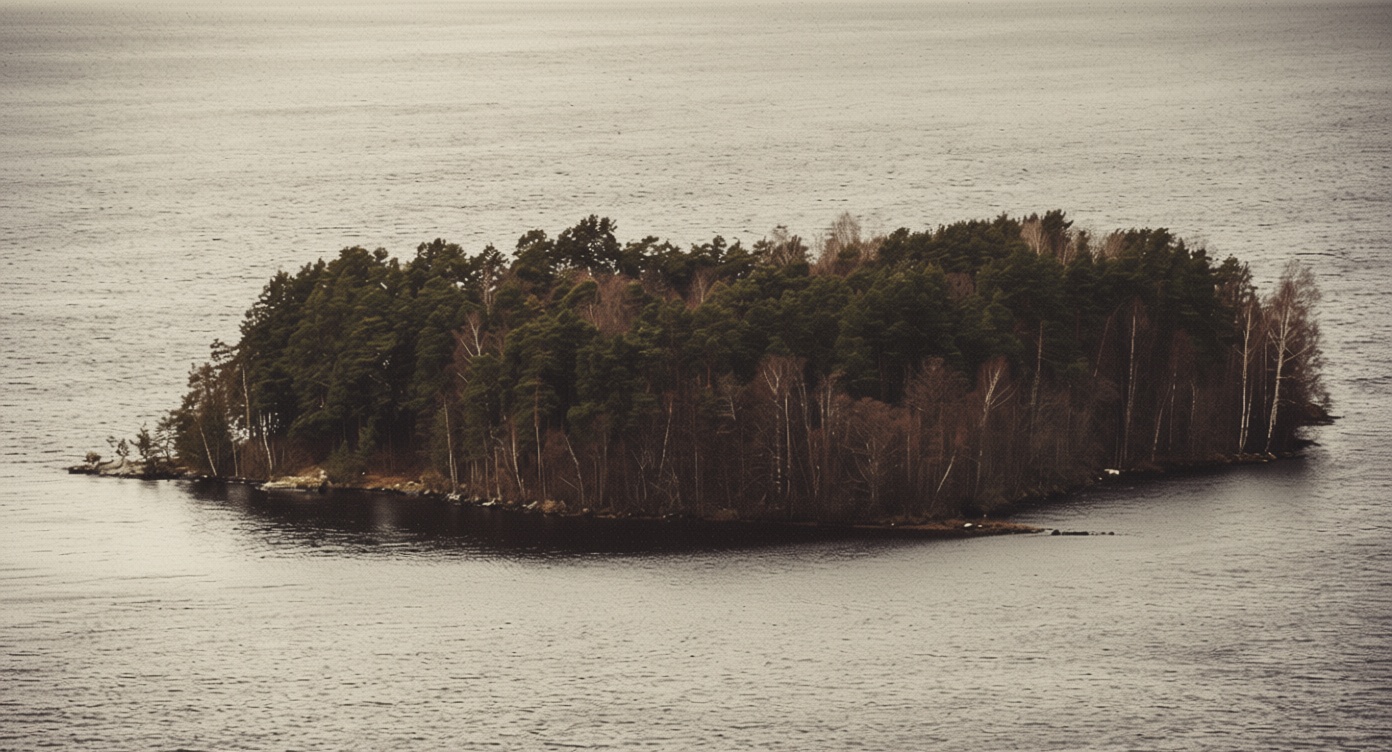
A mysterious forested “phantom island” briefly made headlines in British Columbia this summer after appearing in Williston Lake, a large reservoir in the province’s northeast, and then vanishing again within weeks. According to the account highlighted by Coast to Coast AM, the landmass covered roughly 105,000 square feet and was visible in July before disappearing by early August. While the fleeting sight sparked plenty of curiosity online, the most plausible explanation appears to be a natural one: a combination of high water levels, floating debris, and driftwood may have temporarily clustered together to form the illusion of a solid island.
The feature is especially striking because Williston Lake is not a natural body of water in the traditional sense, but a reservoir created by damming the Peace River system. Such large impoundments are known to produce shifting shorelines and occasional floating mats of vegetation and debris, particularly when water levels rise or fall quickly. In this case, the “island” was reportedly wooded, giving it the appearance of a stable piece of land rather than a loose aggregation of material. Yet by early August, it had drifted away or dispersed, leaving behind a reminder that reservoirs can produce surprisingly dramatic visual effects.
Likely Explanation
Experts and local observers have pointed to environmental conditions rather than anything unusual or unexplained. High water can loosen shoreline material, uproot trees, and sweep logs and brush into concentrated patches. Over time, those patches can become compact enough to resemble a small island when viewed from a distance, especially if they are covered with enough vegetation to look anchored. As the water shifts, however, the formation can break apart or migrate, making it seem as though the island appeared and disappeared overnight.
That practical explanation does not make the sight any less unusual. The phenomenon underscores how easily lakes and reservoirs can generate the kind of visual mystery that invites speculation. In a region already rich in wilderness lore, even an ordinary environmental event can take on a supernatural cast once a strange image circulates widely. The episode is a reminder that not every oddity needs a paranormal answer, but the natural world can still produce scenes that feel uncanny.
Folklore and Monster Lore
The Williston Lake sighting also fits neatly into a broader tradition of lake legends, including one of Canada’s most enduring tales: the “Guardian of Lake Ontario.” Reported in 1882, the creature was described as an eel-like sea serpent and has often been compared to other famous cryptid stories, from Scotland’s Loch Ness Monster to North American lake-beast sightings. Such accounts have long captivated the public because they sit at the intersection of folklore, eyewitness testimony, and the human tendency to search for patterns in the unexplained.
In that sense, the phantom island and the Guardian of Lake Ontario belong to the same cultural landscape. Both show how water can become a stage for mystery—sometimes because of genuine natural phenomena, and sometimes because people are drawn to stories that blur the line between fact and legend. The Williston Lake case may have a straightforward explanation, but it also demonstrates why lakes and reservoirs remain fertile ground for modern folklore: they can transform the ordinary into something that feels briefly extraordinary.