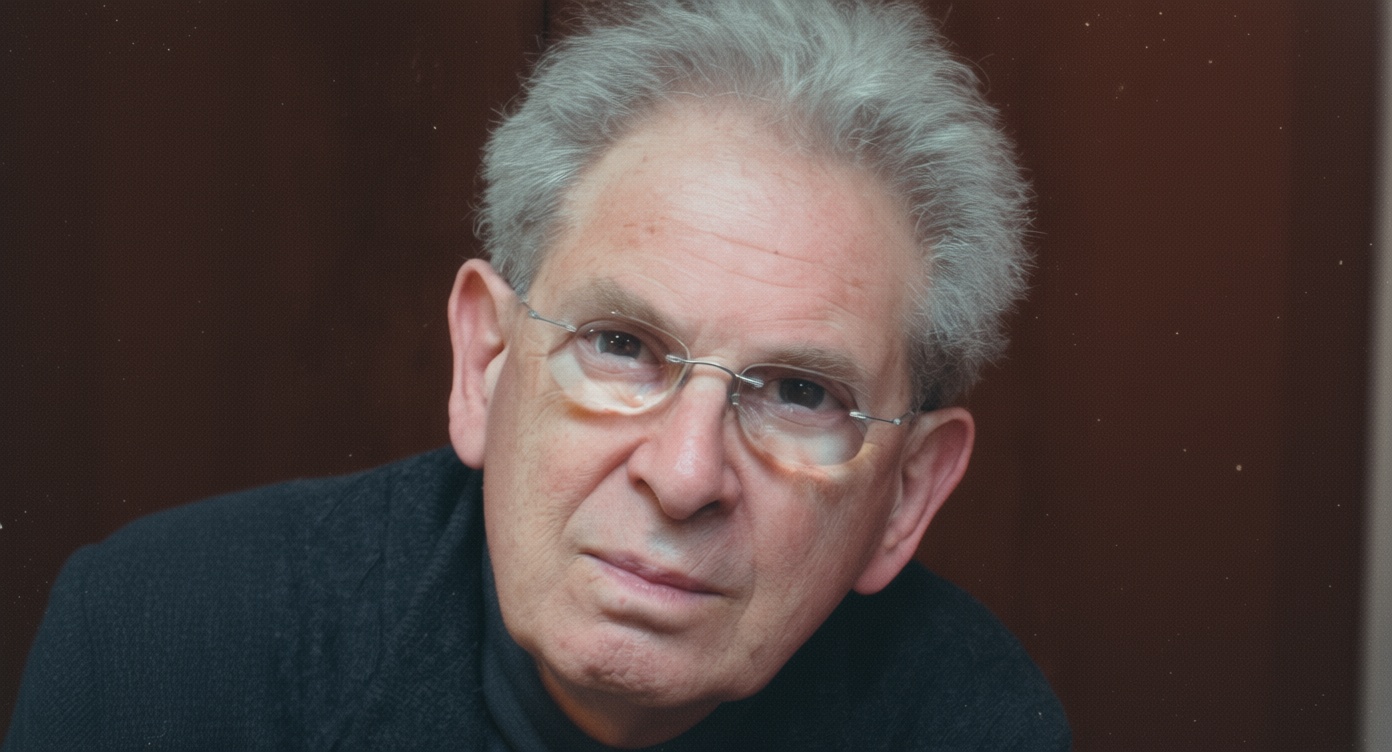
Russell Targ’s Legacy
Russell Targ, the laser physicist who helped establish one of the U.S. government’s most closely examined programs investigating alleged psychic perception, has died at 92. Targ’s death was confirmed by a source close to him, according to Unknown Country, and was acknowledged by the Society for Psychical Research on Nov. 20, 2026. The exact date, location and cause of death had not been independently verified at the time of publication.
Born April 11, 1934, in Chicago, Targ earned a physics degree from Queens College before pursuing graduate studies at Columbia University. His early career focused on conventional scientific research, including laser development, optical communications and plasma physics. According to a professional biography preserved in declassified CIA records, he later worked at Lockheed Martin on airborne laser systems designed to detect hazardous wind shear and atmospheric turbulence.
The Stanford Research Institute Program
Targ became internationally known after co-founding a research program with physicist Harold Puthoff at Stanford Research Institute, now SRI International, in 1972. The program investigated “remote viewing,” a term used to describe the purported ability to obtain information about distant or concealed locations without relying on ordinary sensory input.
The research attracted funding from U.S. intelligence agencies and ultimately became associated with the classified Stargate program. Targ and Puthoff published studies in outlets including Nature and Proceedings of the IEEE, bringing claims of extrasensory perception into scientific forums that generally emphasized reproducible, conventional explanations.
The existence of the government-funded research is well documented. Its scientific conclusions remain controversial, however. A CIA-commissioned evaluation published in 1995 concluded that remote viewing had not demonstrated adequate reliability or practical usefulness for intelligence operations. Supporters of Targ’s work have continued to argue that some experiments produced results that warranted further investigation, while critics have pointed to methodological concerns and a lack of consistent replication.
Research Beyond the Mainstream
Targ’s work placed him at the intersection of established physics, consciousness studies and claims of anomalous human experience. Although many researchers rejected the possibility that consciousness could perceive information beyond known sensory channels, Targ maintained that such questions should be examined experimentally rather than dismissed outright.
His books, including Mind-Reach, co-written with Puthoff, Limitless Mind and The Reality of ESP, helped introduce remote viewing and related ideas to a broad public audience. For people who reported unexplained experiences, Targ became a prominent advocate for a more open-minded approach—one grounded, in his view, in testing and observation rather than either automatic belief or reflexive skepticism.
His influence extended beyond the original SRI experiments. He remained active in discussions of consciousness and extraordinary experiences for decades, inspiring researchers and enthusiasts while also drawing criticism from scientists who questioned whether the underlying claims had met accepted evidentiary standards.
Bernie Haisch Also Reported Dead
The same report also noted the death of astrophysicist Bernhard Michael “Bernie” Haisch, who was known for his work on astrophysics, zero-point energy and questions at the boundary of science and unconventional research. Haisch co-edited the Journal of Scientific Exploration, a publication focused on subjects often excluded from mainstream scientific journals, including anomalous phenomena and disputed scientific claims.
As with Targ, the available report provided limited details about Haisch’s death, and independent confirmation of the date, location and cause was not immediately available. Together, the reported deaths mark the loss of two figures who spent much of their careers examining questions that challenged conventional boundaries—while their methods and conclusions remained subjects of continuing debate.


