Overview
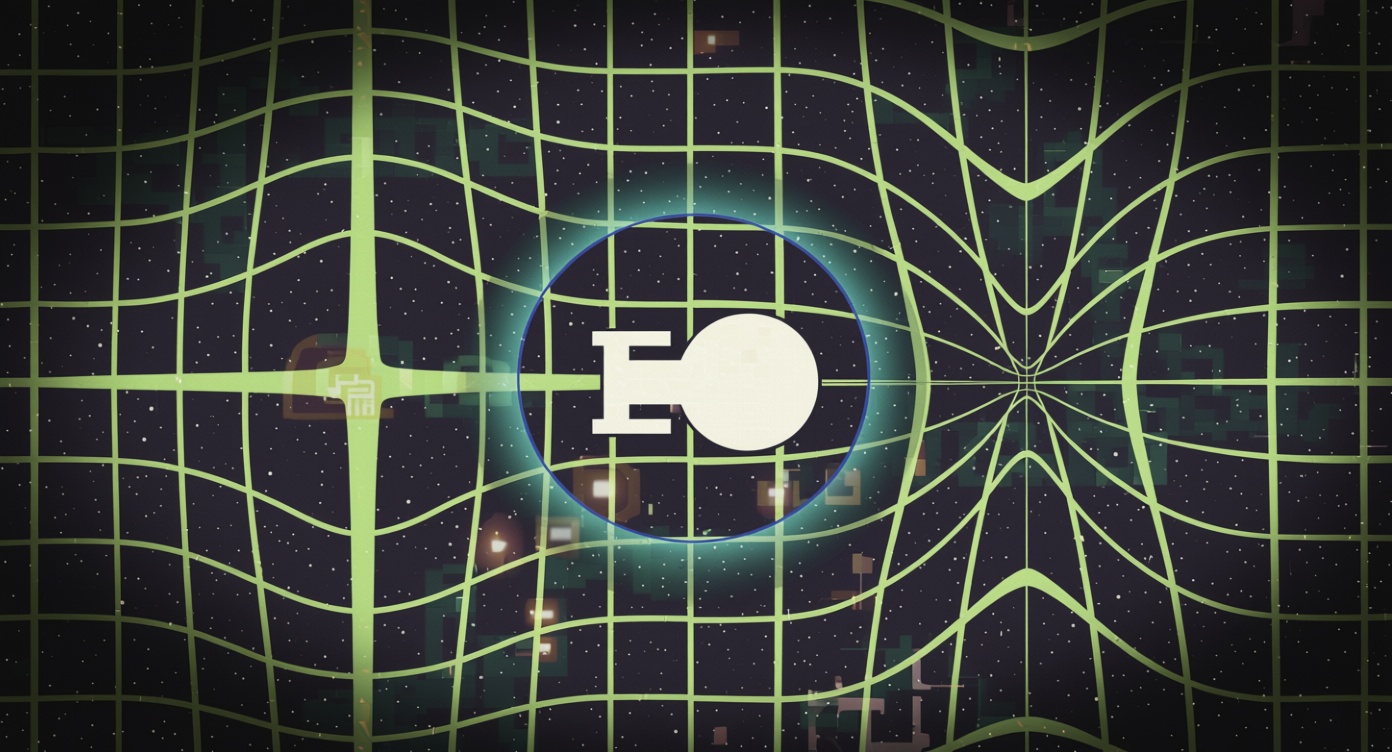
A new preprint by physicist Shaun Fell of the international think tank Applied Physics and Harvard astrophysicist Avi Loeb is drawing attention for suggesting that a subluminal warp-drive concept could offer a scientific framework for some unidentified anomalous phenomena, or UAP, described in recent Pentagon releases. The paper, posted to arXiv and not yet peer-reviewed, argues that if a craft were moving through Earth’s atmosphere via a warp-bubble mechanism rather than conventional propulsion, it could produce a highly unusual observational signature — including an extremely bright glow. The authors say that may help explain why some witnesses and military personnel have reported bright lights, triangles, and “orbs” in footage and testimony released through Pentagon channels.
What the paper suggests
Fell and Loeb do not claim their work proves alien visitation, extraterrestrial engineering, or the existence of operational warp drives. Instead, they frame the paper as a theoretical exercise in which general relativity is used to explore whether warp bubbles are physically permissible in principle. According to the authors, Einstein’s equations allow for configurations in which a tiny bubble-like surface could enclose a much larger craft, a setup that has long been a staple of science fiction but has remained purely speculative in scientific terms. Fell told The Debrief that “warp drives are a fantastic way to travel through the universe, and it makes sense to my human brain that aliens would find them advantageous too,” while stressing that the paper is not an assertion of fact, but an attempt to identify what such a technology might look like if it existed.
Scientific context and limitations
The idea of warp travel has circulated for decades, moving from the pages of science fiction to more serious theoretical discussion after Mexican physicist Miguel Alcubierre proposed a warp-drive solution in the 1990s. Even so, the concept remains fraught with enormous practical challenges, including the energy demands and the need for exotic conditions that have not been demonstrated in the laboratory. Fell and Loeb also note that extremely small warp bubbles could have weapon-like applications, underscoring that the paper is as much about the physics of hypothetical space-time engineering as it is about UAP interpretation. Still, the authors acknowledge that the study is not evidence that any reported object is operating by warp mechanics, and that many sightings can be attributed to mundane explanations such as aircraft, drones, atmospheric effects, sensor artifacts, or misidentification.
Loeb, skepticism and the UAP debate
The paper arrives at a moment when Loeb remains one of the most visible and polarizing scientists in UAP discussions, often prompting both interest and skepticism. The article raises the question of whether he is being pulled into a disinformation effort, a concern that has shadowed some high-profile UAP narratives in recent years. Loeb’s position, however, is that scientists should resist speculation without direct evidence and instead focus on what observations actually show. In his view, the critical question is not whether a reported object is alien, human-made, or something else entirely, but whether investigators can obtain firsthand, measurable data sufficient to determine its nature.
Why it matters
Even without proving anything about UAP origins, the paper reflects a broader shift in the conversation: some researchers are increasingly willing to examine extraordinary hypotheses using established physics, while still drawing a firm line between theory and evidence. That approach may not satisfy advocates who want definitive answers about Pentagon-released footage, but it does highlight an important scientific standard. If unusual objects are being observed in U.S. airspace, the path forward — according to Fell and Loeb — is careful measurement, not certainty by inference. In that sense, the warp-drive paper is less a declaration about aliens than a reminder that the UAP debate remains unresolved, and the most important evidence has yet to be found.