Overview
Two of the most frequently cited cases in UFO/UAP history are back in focus: the 1986 Japan Airlines Flight 1628 encounter over Alaska and the 1979 Val Johnson incident in Minnesota. Though separated by seven years and vastly different circumstances, both events have remained prominent because they involved trained professionals, apparent corroboration beyond a single witness, and official records that never produced a fully satisfying conventional explanation. In each case, investigators and researchers have pointed to a combination of pilot testimony, radar data, and physical evidence as the reason these incidents continue to attract attention decades later.
Japan Airlines Flight 1628 Over Alaska
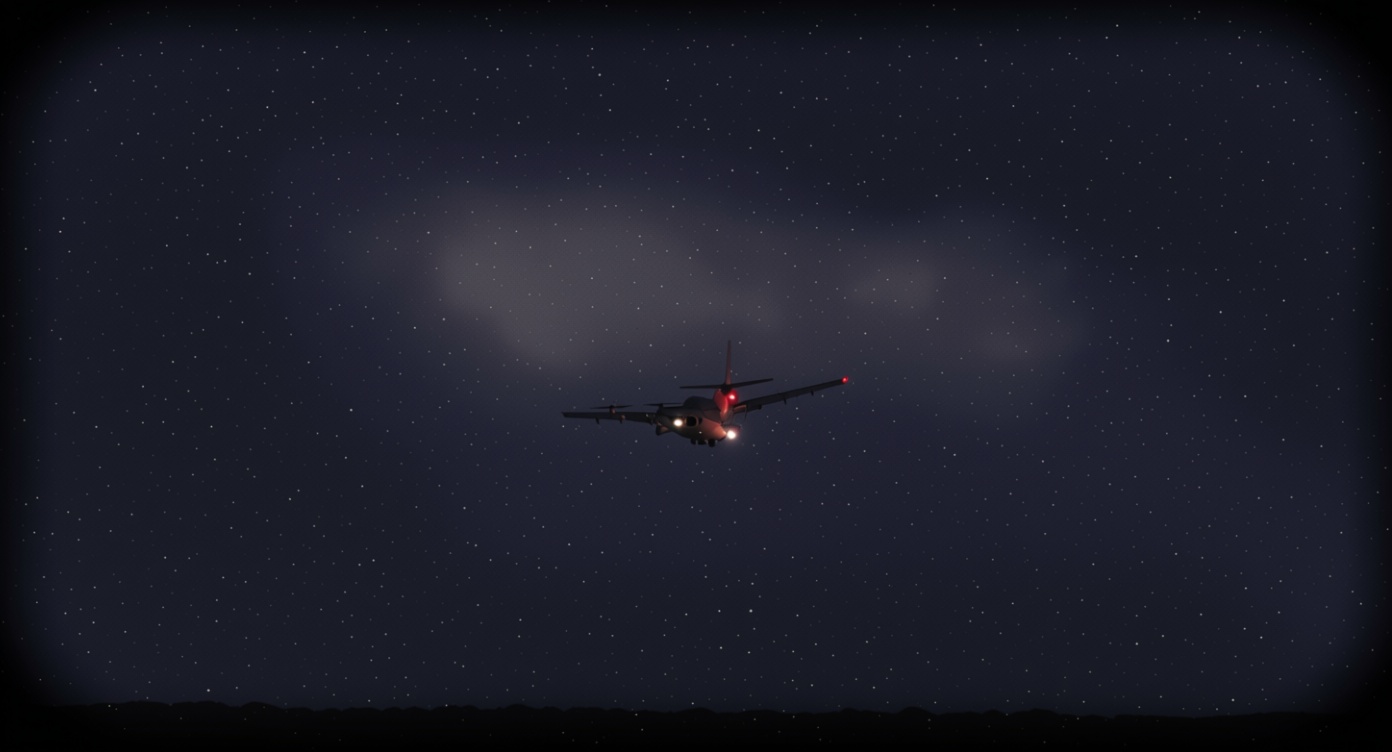
The JAL 1628 case unfolded on November 27, 1986, when a Japan Airlines cargo flight traveling from Paris to Tokyo was flying at roughly 35,000 feet over Alaska. Captain Kenju Terauchi, a veteran pilot and former fighter pilot, reported first seeing two sets of lights pacing the aircraft. According to the account, the lights were followed by what Terauchi described as a much larger object, which he later characterized as a kind of “mothership” — an extraordinary claim that placed the object at roughly four times the size of an aircraft carrier.
The crew said the object caused intense light and noticeable turbulence as it approached. The case gained further attention when John Callahan, a former FAA aviation technical specialist, said the object appeared on JAL’s weather radar as a “large blob.” Anchorage air traffic control and Elmendorf Air Force Base were reportedly contacted, and Callahan later said military personnel initially acknowledged an unidentified radar return. A United Airlines flight in the area later confirmed seeing the JAL aircraft, though it did not report the massive object described by Terauchi. Skeptical explanations, including the possibility of bright planets or reflections from ice crystals, were later offered, but the weather conditions reportedly did not strongly support those theories.
The Val Johnson Incident and Physical Evidence
The Val Johnson case, by contrast, involved a direct physical encounter. On August 27, 1979, Marshall County deputy sheriff Val Johnson was patrolling Highway 220 in Minnesota when he saw a bright light he initially believed could be a smuggling aircraft. As he accelerated to investigate, Johnson said the light moved directly toward his squad car. He later reported hearing a “cracking sound” before losing consciousness. When he was found, Johnson reportedly suffered from welder’s blindness, along with bruises and a concussion.
What made the incident especially notable was the condition of the vehicle. The squad car had a smashed headlight, a circular crack in the windshield, and a bent radio antenna. Researchers Mark Rodeghier of the Center for UFO Studies and investigator Chris Rutkowski have highlighted another unusual detail: both the car’s electric clock and Johnson’s mechanical wristwatch had stopped for exactly 14 minutes. Engineers later concluded the damage had been caused by a man-made force, but no debris, impact source, or secondary vehicle was ever identified. The official accident report ultimately described the cause as unknown origin.
Why These Cases Endure
What keeps both incidents in public discussion is not simply the UFO label, but the combination of experienced witnesses, contemporaneous reporting, and unresolved evidence. In the JAL case, the question remains whether the crew encountered an extraordinary aerial object or a misidentified natural phenomenon. In the Johnson case, the central mystery is how to account for the vehicle damage, the injuries, and the unexplained time discrepancy without a clear external source. While neither case has produced a universally accepted explanation, both remain part of the core archive of aviation and law enforcement encounters that researchers continue to examine closely.