Overview
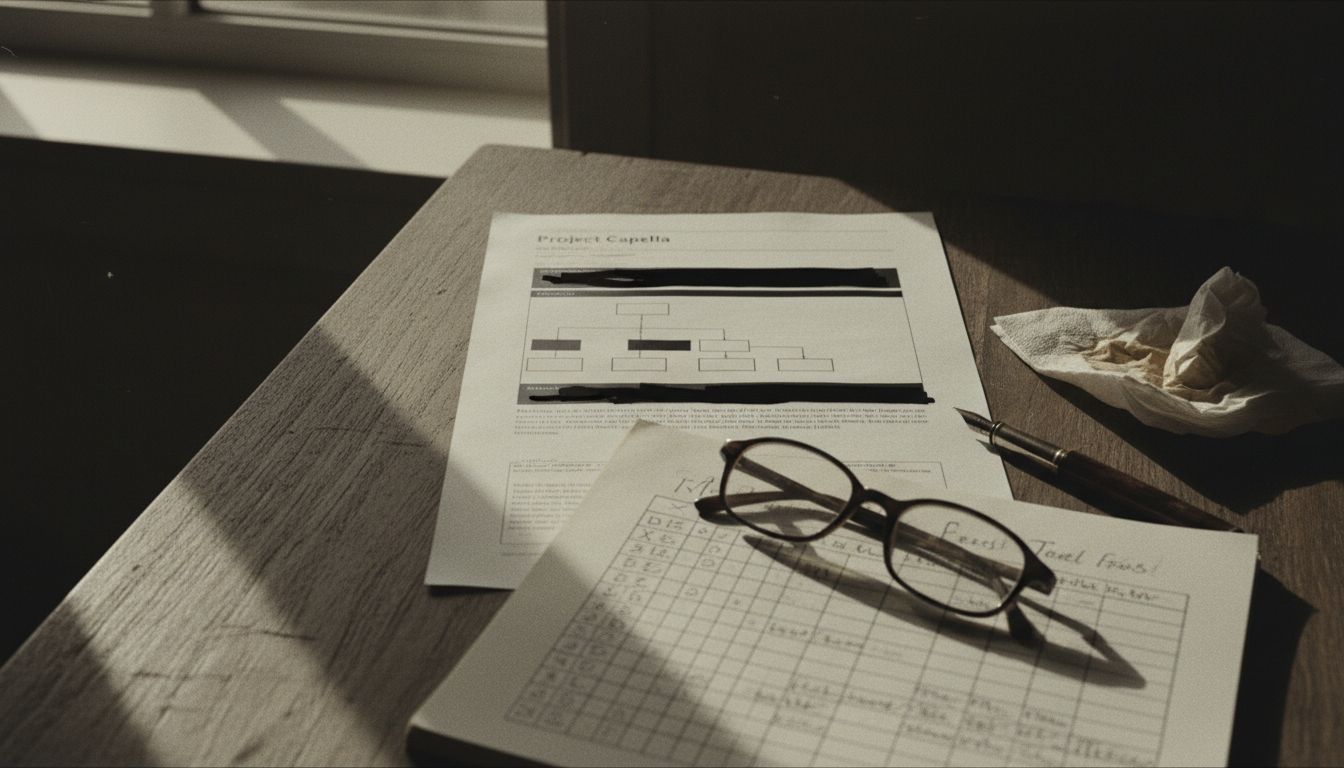
A partially redacted 42-page document titled “Project CAPELLA: Towards the development of a data warehouse in support of research on unusual aerial phenomena and related anomalies” describes a proposed system for collecting, classifying and analyzing reports of UAP and other unusual events. The document, identified as DOW-UAP-D167, is dated Dec. 10, 2008, and is presented as “Report no. 001” to Bigelow Aerospace Advanced Space Studies, LLC, or BAASS. It is available through a government-hosted document archive.
The report was prepared by Documatica Research, LLC, although the author’s name and other identifying information appear redacted or obscured in the released copy. Its stated objective was not to present individual sightings as proof of extraterrestrial activity, but to develop a structured information system capable of handling a wide range of reports and associated data.
Proposed Data System
The report says Capella would provide a methodology for the “capture, processing and retrieval” of information about unusual aerial phenomena. It outlines three technical areas: a classification system for reported sightings and reliability measures; models for information categories, including what it calls “high-strangeness data elements”; and proposed data structures and software platforms.
The document also discusses several long-term scenarios for acquiring and maintaining a geographically distributed data warehouse. Such a system, according to the report, would be designed to serve researchers with different information needs. The source material characterizes the proposal as involving an Excel database and, more broadly, raises questions about plans for a physical facility or bunker. However, the supplied text primarily documents the conceptual and technical framework for a database; the extent to which construction plans or specific software implementations were finalized is not clear from the excerpt.
Historical Context
Capella places itself within a longer history of attempts to organize UAP reports. It cites the U.S. Air Force’s use of the Battelle Memorial Institute in the 1950s to analyze Project Blue Book cases. Battelle reportedly used punched cards and a coding system to produce statistical findings later published as Blue Book Report 14.
The report says the Air Force did not subsequently create a computerized catalogue of all Project Blue Book files. Instead, private researchers developed their own databases, including catalogues of unidentified cases, vehicle-interference reports and alleged physical traces. It also references the Condon study at the University of Colorado, the UFOCAT catalogue maintained by the Center for UFO Studies, and the Magonia catalogue of close-encounter reports. These references frame Capella as an effort to modernize earlier cataloguing projects rather than as an entirely new concept.
Questions and Limitations
The document has prompted scrutiny over terminology and practicality. One question is whether “UAP” was commonly used in 2008, when “UFO” remained the dominant public and institutional term. The report’s language may reflect an attempt to use a broader, more neutral category for unexplained aerial observations, but the available material does not establish why that terminology was selected.
The source discussion also points to apparent gaps in budgeting, including the absence of clear provisions for furnishing offices or operating a completed facility. In addition, critics argue that some of the report’s claims are difficult to falsify because broad categories of unusual experiences can be incorporated into the proposed database without a clearly defined standard for disproving them. As a result, Project Capella is best understood as a historical proposal for organizing anomalous reports, not independent evidence that the reported phenomena had an extraordinary origin.