Overview
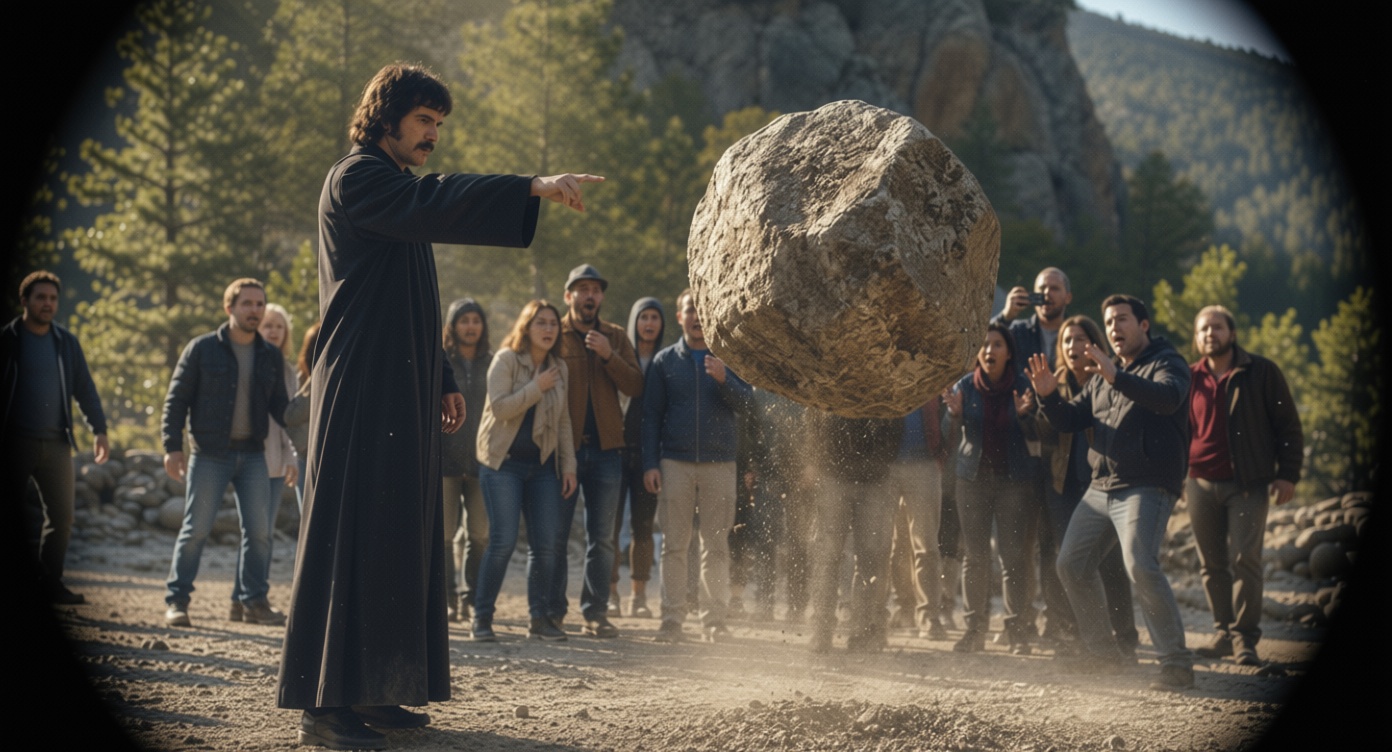
Psychokinesis, more commonly called telekinesis, refers to the alleged ability to move or influence physical objects using only the mind. The concept has long occupied a prominent place in paranormal lore, inspiring stories of spoon bending, levitation, and the influence of dice, coins, or even electrical devices. According to the source material, the term itself comes from Greek roots meaning roughly “mind movement,” while telekinesis literally suggests “movement at a distance.” Yet despite more than a century of fascination, science has not confirmed that humans can reliably produce these effects through thought alone.
Historical Roots
Interest in mind-over-matter claims surged in the 19th century alongside the rise of Spiritualism, a movement that centered on séances and claims of communication with the dead. Reports from that era described tables moving on their own, bells ringing without being touched, and objects appearing or disappearing in ways that seemed to defy ordinary explanation. Some observers attributed these events to spirits rather than to human agency, but the broader cultural impact was the same: it created fertile ground for modern psychokinesis claims. Over time, many of the most famous séance phenomena were exposed as tricks, deception, or misinterpretations, reinforcing the need for skepticism even when events appear extraordinary.
How Psychokinesis Is Claimed to Work
Psychokinesis is usually divided into several categories of alleged effects. The most familiar is the direct movement of an object without physical contact — for example, making a pencil roll across a table or causing a coin to shift position. Another widely recognized claim is metal bending, which became especially popular in the 20th century through public demonstrations and stage performances. Other accounts describe levitation, either of the practitioner or of surrounding objects. A less dramatic but more testable version focuses on influencing random systems, such as dice or random-number generators, where any effect would be subtle and visible only through statistical analysis rather than dramatic display.
Scientific Investigation and Limits
The source highlights the work of Joseph Banks Rhine, the Duke University researcher who became one of the most important figures in early parapsychology. Beginning in the 1930s, Rhine moved away from showy claims and instead used controlled experiments to test whether people could influence dice outcomes or other chance-based systems. This approach marked a shift toward measurable evidence: if a subject could repeatedly nudge results beyond what probability would predict, researchers could look for a meaningful statistical deviation. But while such studies helped formalize the debate, they did not establish a widely accepted scientific proof of psychokinesis. The central challenge remains consistency: the alleged effect has never been demonstrated reliably enough to satisfy mainstream scientific standards.
Why the Idea Endures
Even without confirmation, psychokinesis continues to fascinate the public because it sits at the intersection of imagination, belief, and the enduring hope that the mind may be stronger than ordinary experience suggests. Dramatic personal accounts, theatrical demonstrations, and centuries of paranormal storytelling have kept the subject alive in popular culture. But the source material draws a clear line between fascination and evidence: extraordinary claims are not the same as verified phenomena. For now, telekinesis remains one of the most famous — and most unconfirmed — claims in paranormal research.