Overview
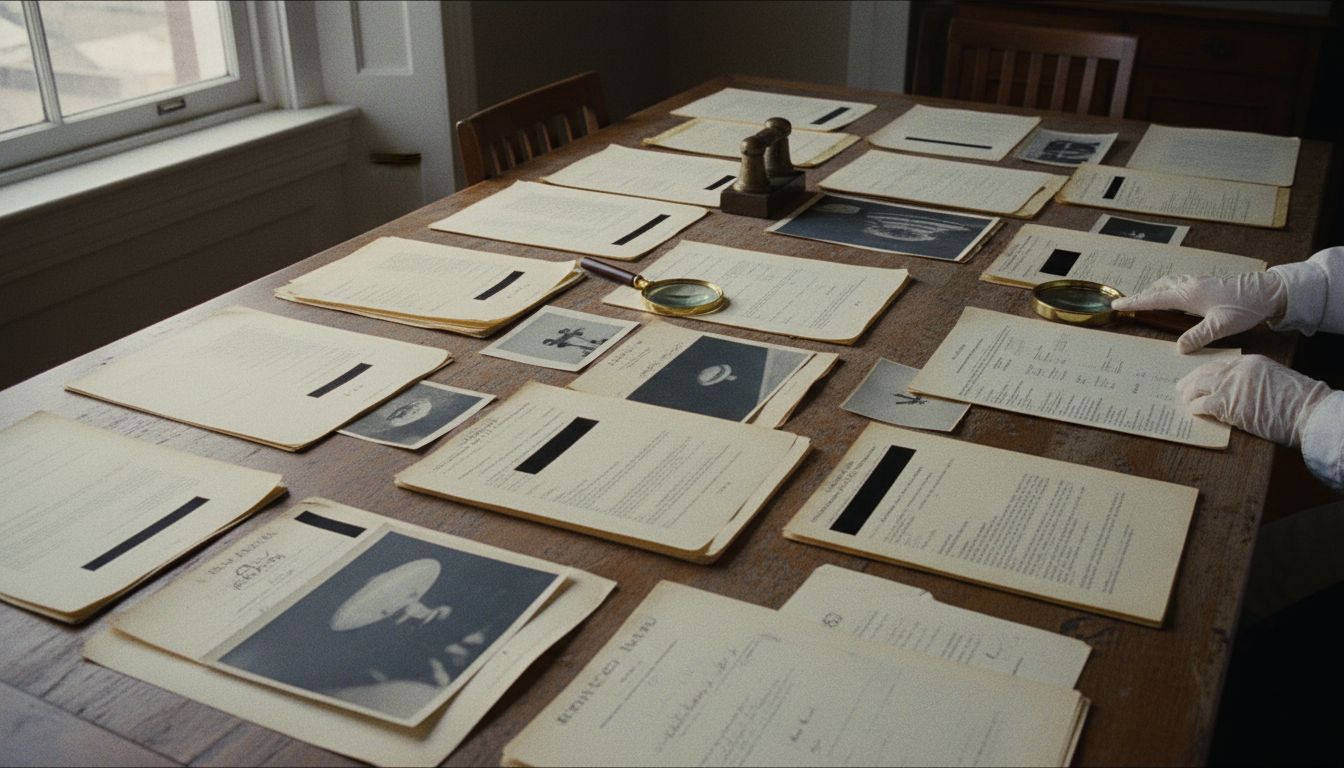
Declassified government records from a PURSUE-era UFO file release are offering a fresh look at one of the earliest waves of postwar aerial sightings. The newly surfaced archival material, published by the Department of War in a 126-page PDF, contains confidential Air Defense Command interview summaries describing a “possible flying disc” seen by Pan American Airways crew members in August 1947. The documents are part of a broader historical record now circulating among UFO researchers and archivists, and they show how seriously military authorities were cataloging unusual airborne reports in the months immediately following the Roswell-era public fascination with “flying saucers.”
What the records say
One of the clearest reports in the release centers on Alpheus O. Powell, a Pan Am captain flying a Constellation-type aircraft from Gander, Newfoundland, to La Guardia Field, New York, on 4 August 1947. According to the Air Defense Command summary, Powell and his navigator spotted unidentifiable flying objects while cruising at approximately 6,000 feet. The sighting occurred around 4:00 p.m. Eastern Daylight Saving Time, with the aircraft roughly midway between the Everett and Bedford radio beacons in Massachusetts. The weather was reported as favorable: good visibility, 8/10 to 9/10 cloud cover, cloud tops near 10,000 feet, and winds at the 6,000-foot level estimated at 270 degrees at 25 mph.
Powell’s account is notable for its level of detail. The navigator first drew his attention to a bright orange object to the right of the aircraft and slightly below its level. Powell, unable to see it from the co-pilot’s side, leaned to the left window and observed what he described as an object at about a 45-degree angle to the left, roughly one mile away and at an estimated altitude of 1,800 feet. He reportedly banked the aircraft to obtain a better view. The object remained visible for about 50 seconds and was described as being roughly the length of a P-40 fuselage, blunt at both ends, cylindrical in shape, and a vivid orange color. Powell estimated it was traveling at about 160 mph on a course of 200 degrees magnetic.
Why the document matters
The report is significant not because it proves an extraordinary claim, but because it captures how early military investigators documented unexplained sightings in precise operational language. Powell told interviewers the object appeared to have a definite shape and showed no suggestion of gaseous dissipation, which he said made it unlike exhaust from a rocket or jet aircraft. The crew lost sight of the object when it passed behind a cloud bank, and the account notes the pursuit was not continued because doing so would have required leaving the established airline route. That detail underscores the practical limits facing pilots and investigators in an era before modern radar tracking, widespread air traffic control coverage, or standardized UFO reporting procedures.
Broader archival context
The release also includes a second interview summary involving Walter I. White, another Pan Am navigator on the same route, suggesting the sighting was taken seriously enough to warrant multiple statements. While the document set does not offer a definitive explanation, it reflects the early Cold War environment in which commercial pilots, military offices, and intelligence personnel were all trying to distinguish weather effects, aircraft, and other conventional causes from genuinely unexplained phenomena. For UFO historians, these files are valuable less as proof of a specific object and more as a window into how the U.S. government recorded and evaluated one of the most famous types of mid-century sightings: the mysterious bright, disc-shaped or cylindrical object seen by experienced airmen and entered into the official record.