Overview
Researchers investigating Turkey’s Durupınar Formation say new radar scans have identified possible subsurface corridors, stalls, and other anomalies beneath the boat-shaped site long associated by some advocates with the biblical Noah’s Ark. The work, carried out by Bakhtar Research and Engineering, LLC and Noah’s Ark Scans, was announced in a press release and has not yet been presented in peer-reviewed research, meaning the findings remain preliminary. While the team says the results merit further study, outside experts caution that the evidence is far from conclusive and should not be interpreted as proof that the formation is artificial.
What the Radar Survey Reportedly Found
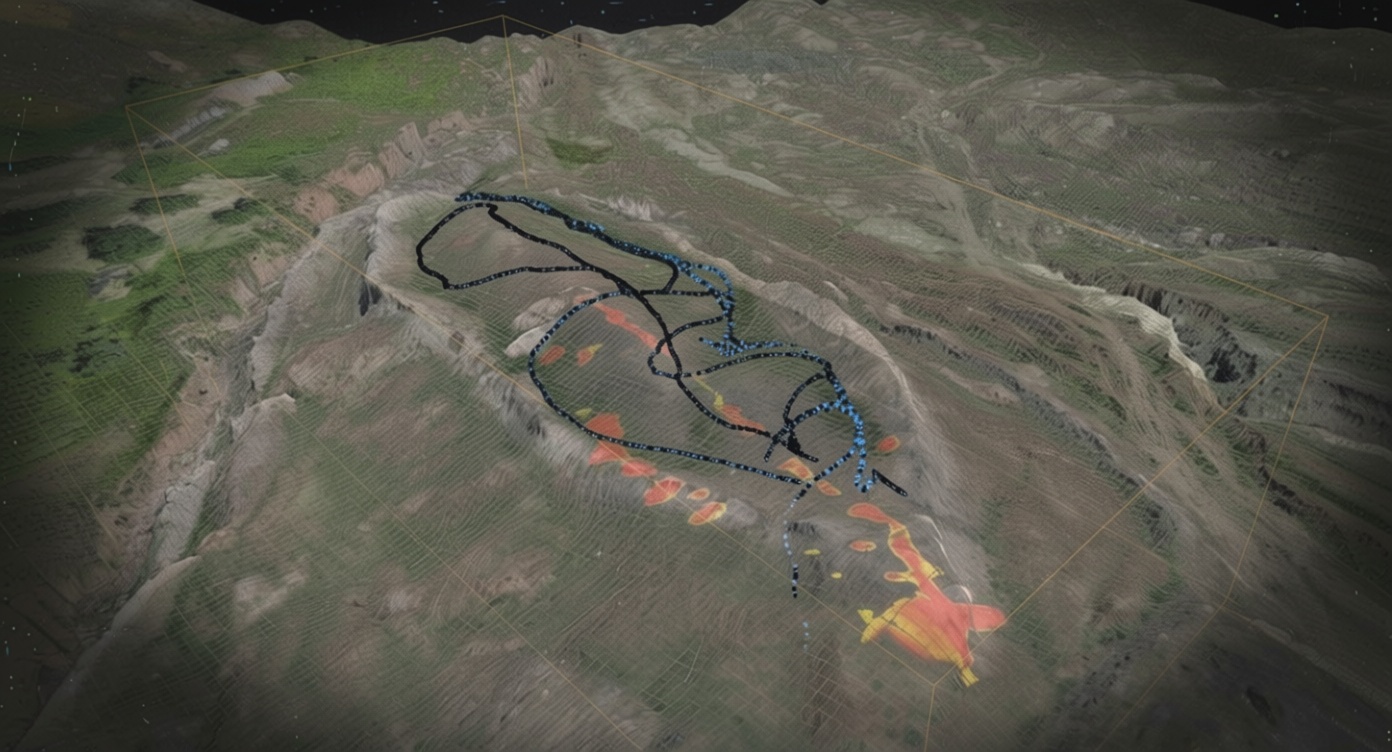
The Durupınar Formation, a 157-meter (515-foot) geological feature near Mount Ararat in eastern Turkey, has been at the center of debate for decades. Some researchers have argued its shape and size resemble descriptions of a large vessel, while geologists have largely maintained that it is a natural formation. According to the team’s statement, the new scan was the first use of BakhtarRadar at the site. The system, developed by project leader Dr. Khosrow Bakhtar, is described as originating from a specialized subsurface imaging technology called EarthRadar, which the release says was developed for the U.S. Air Force.
Working alongside Andrew Jones, founder of Noah’s Ark Scans, Bakhtar’s team says the survey produced high-resolution, three-dimensional volumetric imagery of the subsurface. Before scanning, the researchers said they were trying to answer three main questions: whether the formation is a single homogeneous mass of natural stone, whether it contains internal structures, and where the bedrock sits beneath the feature and surrounding valley. The team described the challenge as “separating layers, structures and discontinuities in difficult conditions and building a 3-D picture of what lies underneath.”
Why the Findings Remain Unproven
Despite the dramatic framing in the press release, the researchers themselves stopped short of claiming they had found Noah’s Ark. The announcement speaks of “subsurface anomalies” and other features that warrant more investigation, but it does not establish that the formation is man-made. That distinction is important: radar can reveal changes in density, layering, voids, and other subsurface contrasts, but those signals do not automatically indicate archaeological remains. Without independent verification, testable data, and peer-reviewed publication, the results remain provisional.
Wider Context and Next Steps
The Durupınar site has drawn periodic attention since it was identified in 1959, and it continues to attract a mix of biblical scholars, amateur explorers, and skeptics. The latest radar campaign adds a new layer to the discussion, but also underscores the long-standing divide between those who see the formation as a potential archaeological clue and those who view it as an ordinary geological structure. For now, the new findings may be best understood as an invitation for further study rather than a conclusion. Whether the anomalies prove to be natural features, buried rock layers, or something else entirely will depend on independent analysis and peer-reviewed evidence still to come.