Overview
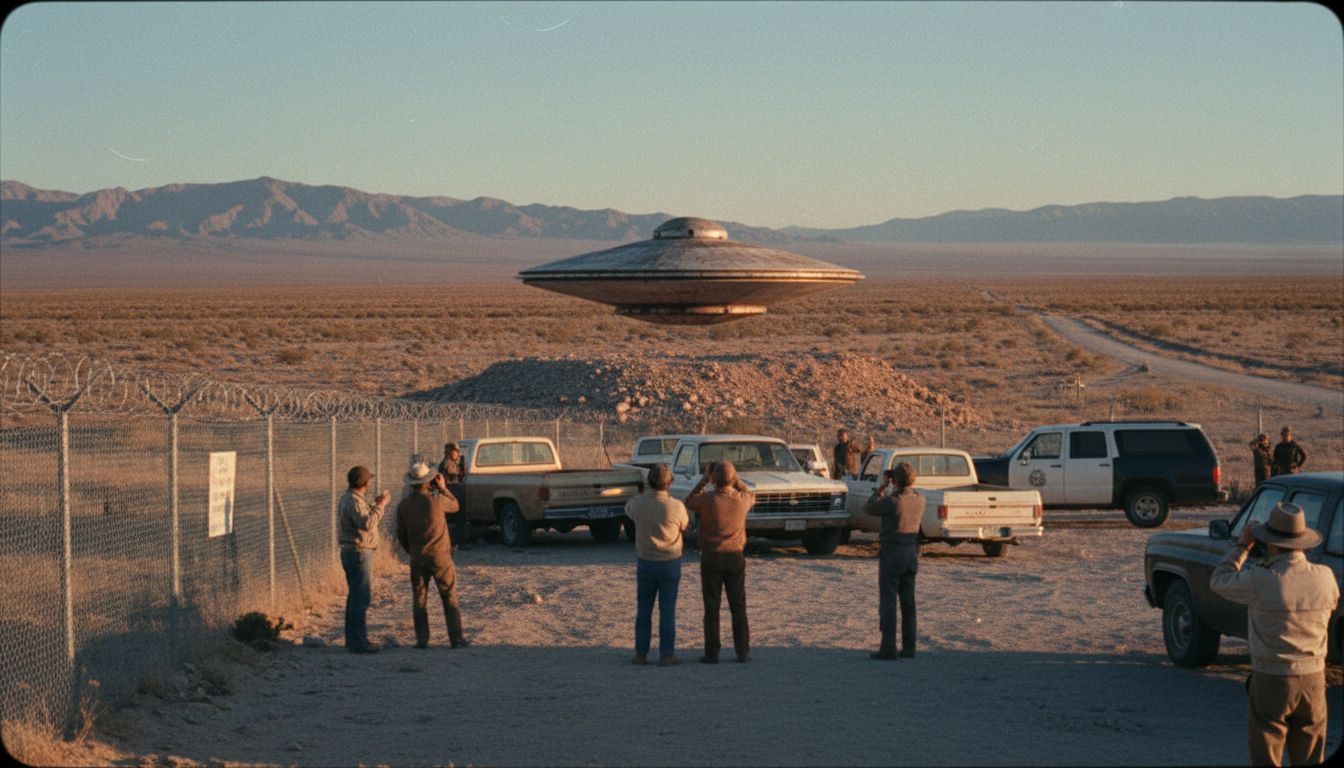
A recent UFO sighting in Nevada is once again drawing attention to a state that has long sat at the center of America’s unexplained aerial phenomena conversation. While the latest report adds little in the way of hard answers, it has renewed public interest in a region already associated with decades of unusual sightings, military secrecy and lingering speculation about what people see in the sky.
The new case, highlighted in recent coverage as part of Nevada’s broader UAP history, underscores a familiar pattern: brief accounts of strange lights or unidentified objects are often followed by more questions than evidence. For believers, each new sighting reinforces the idea that something real and unexplained is occurring. For skeptics, it is another reminder that misidentification, distance, atmospheric effects and human perception can all create convincing but ambiguous reports.
A State With a Long UFO Legacy
Nevada’s reputation in UFO lore is difficult to separate from its geography. The state is home to vast stretches of remote desert, restricted military airspace and longstanding public fascination with Area 51, the heavily scrutinized U.S. Air Force facility in southern Nevada. Those factors have helped make the state one of the most talked-about locations in the country for unexplained aerial reports.
Over the years, Nevada has accumulated a wide range of accounts from residents, tourists and even former military personnel describing strange lights, fast-moving craft and objects that appear to defy conventional aircraft behavior. Some reports have later been explained as planes, drones, satellites or other identifiable phenomena. Others have remained unresolved, contributing to the state’s enduring association with the unknown.
Why the New Sighting Matters
The latest sighting matters less for any single dramatic detail than for what it represents: another entry in a long-running archive of uncertainty. In the modern UAP era, that uncertainty is especially notable because public interest has expanded beyond hobbyists and local eyewitnesses to include journalists, researchers and lawmakers examining whether some sightings reflect gaps in aviation awareness, sensor limitations or truly anomalous activity.
This is part of a broader shift in how such reports are discussed. UFOs, now more commonly referred to as UAPs, are no longer treated solely as fringe curiosities. Government disclosures and congressional hearings in recent years have encouraged a more serious tone around unexplained sightings, even as definitive conclusions remain elusive. Nevada, with its blend of open terrain and high-security testing zones, continues to provide fertile ground for those discussions.
Public Fascination and Ongoing Questions
What keeps Nevada UFO stories alive is not just the possibility of something extraordinary, but the persistence of ambiguity. Many witnesses describe what they saw with confidence, yet without corroborating data, the reports often remain anecdotal. That gap between experience and proof has helped fuel public fascination for generations.
In the end, the latest Nevada sighting does not resolve the state’s mysteries; it adds to them. Whether it turns out to have a conventional explanation or joins the list of unresolved cases, it reflects a familiar reality in UAP reporting: the sky can still surprise people, and the line between the explained and unexplained remains frustratingly thin.