Overview
A Reddit post has drawn attention to a Lockheed Martin promotional video featuring Vectis™, a conceptual autonomous combat aircraft associated with the company’s Skunk Works® advanced-development division. The post provides a link to related imagery or video and suggests that viewers may have encountered another Skunk Works presentation, but it offers little additional context or independent evidence. The available material indicates that Vectis remains a concept rather than a confirmed production aircraft.
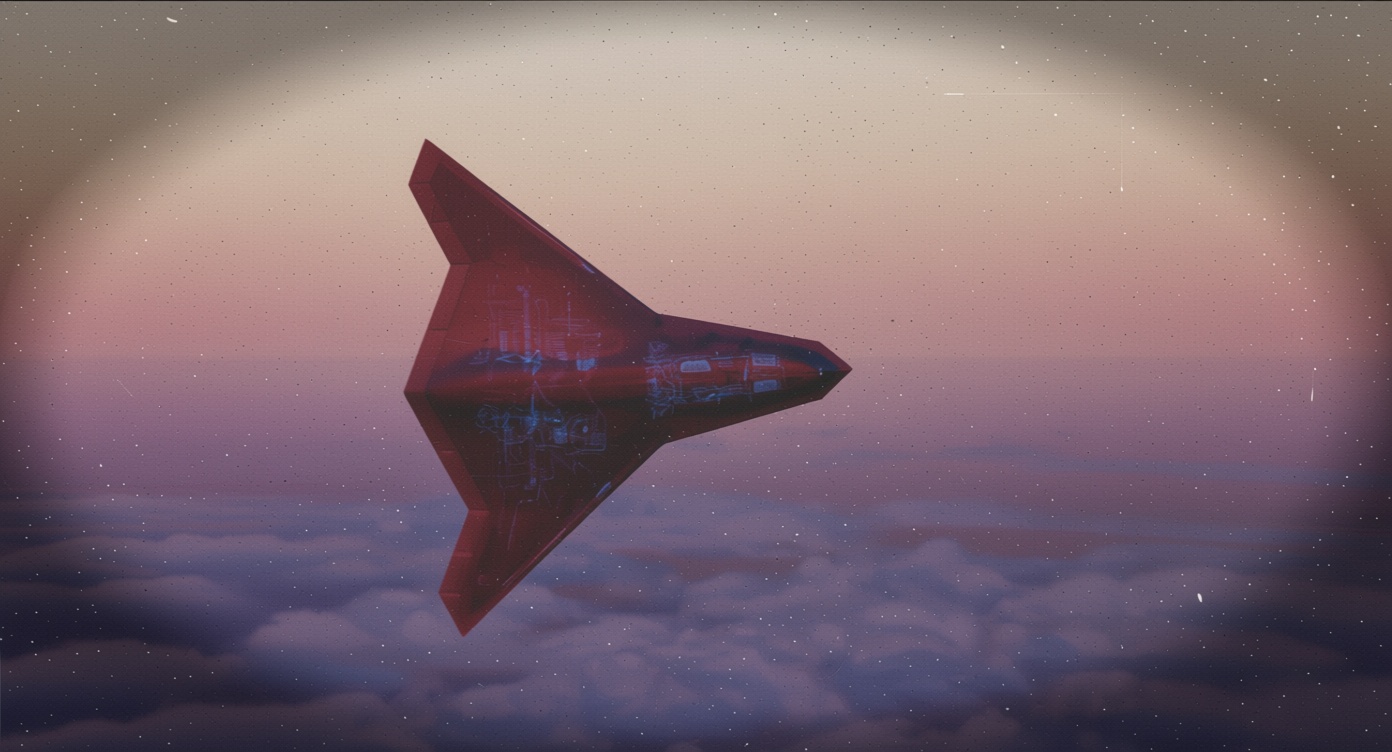
The video presents Vectis as a tailless, unmanned aerial vehicle designed for operations in heavily contested airspace. Its low-observable configuration resembles a “cranked-kite” or modified delta-wing layout, with no conventional vertical stabilizers visible. Such features are generally associated with efforts to reduce radar detectability across multiple viewing angles, although Lockheed Martin has not publicly released detailed radar-cross-section data or performance specifications for the platform.
Design and Mission Flexibility
According to the demonstration, the aircraft is intended to support multiple mission types. Visual sequences using X-ray-style overlays depict a modular internal architecture, suggesting that the platform could be configured for reconnaissance, electronic warfare, communications support, or strike missions. The video uses the phrase “Adaptable to any mission” to underscore this flexibility, but it does not identify specific payloads, weapons, sensors, or software systems.
The presentation also shows apparent internal weapons bays. Housing ordnance inside the aircraft would allow Vectis to preserve its external stealth characteristics while carrying missiles or precision-guided weapons. However, the video does not disclose the number, dimensions, or capacity of those bays. Similarly, no information is provided about range, speed, endurance, autonomy levels, or the degree of human control that would be required during combat operations.
Survivability and Autonomous Operations
Survivability is another central theme. The video describes the aircraft as offering “Unparalleled Survivability” and uses a honeycomb-like visual effect to represent possible protective technologies. The imagery may refer broadly to low-observable materials, electronic countermeasures, threat detection, or other defensive systems, but it should not be interpreted as confirmation of a particular operational capability. Promotional graphics often communicate design goals rather than verified field performance.
Vectis is depicted operating autonomously in an environment where communications, navigation, and sensor systems could be disrupted. Even so, the presentation does not explain how the aircraft would make decisions, respond to changing rules of engagement, or operate if links to human controllers were interrupted. Those issues remain important considerations for any future autonomous combat aircraft.
Manned-Unmanned Teaming
A major element of the video is the aircraft’s interaction with a Lockheed Martin F-35 Lightning II. Vectis is shown flying alongside the fifth-generation fighter, reinforcing its proposed role in manned-unmanned teaming, often described as a “loyal wingman” concept. In that role, an autonomous aircraft could extend a pilot’s sensors, scout ahead, conduct electronic warfare, carry additional weapons, or draw enemy attention away from crewed aircraft.
The footage does not establish that Vectis has entered flight testing or been selected for a specific military program. Lockheed Martin has not, in the material summarized here, announced a production schedule, customer, or formal acquisition decision. As a result, the video is best understood as an illustration of the company’s direction in autonomous aviation rather than evidence of an operational aircraft.
Context
Vectis reflects a broader defense-industry effort to develop affordable, adaptable autonomous systems capable of working with existing fighter fleets. Its emphasis on stealth, modular payloads, and cooperation with crewed aircraft aligns with military planning for increasingly sophisticated air defenses. Further assessment will depend on official technical disclosures, test results, and confirmation of government involvement. For now, the project remains a notable concept associated with Lockheed Martin’s Skunk Works portfolio, amplified by online discussion rather than supported by publicly available evidence of deployment.