Overview
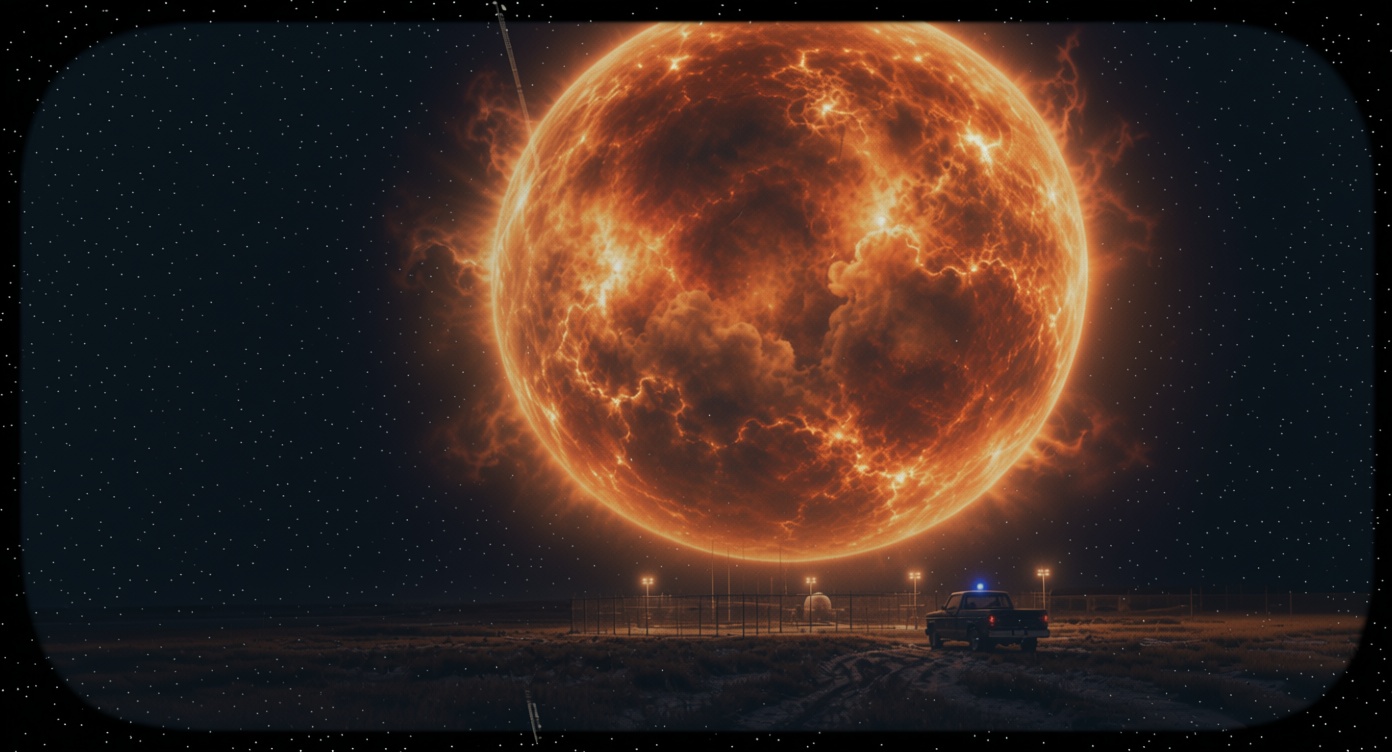
A new interactive reconstruction revisits Mario Woods’s reported encounter near Ellsworth, South Dakota, on Nov. 5, 1977. Presented by Probed Space as “The Ellsworth encounter — An interactive experience,” the project uses a 3D environment to recreate elements of Woods’s account and place visitors within the reported setting.
The source material identifies two men—Mario Woods and Michael Johnson—who were together during the incident. It describes a single night involving “missing hours” and invites users to explore the prairie, the reported forms, and an interview connected to the case. The experience is designed to run for approximately three minutes and is recommended with sound.
What the Reconstruction Shows
According to the project description, the interactive presentation is organized into six chapters. It combines an “original record” with a “calculated sky,” suggesting that the experience incorporates both the historical account and a reconstruction of the celestial conditions associated with the event.
The wording provided by the project is deliberately limited. It refers to reported forms and unexplained missing time but does not supply a detailed chronology, identify the forms, or explain precisely how the missing hours were calculated. As a result, the 3D presentation should be understood as a visual and narrative interpretation of Woods’s account—not as independent confirmation that the reported events occurred as depicted.
The Historical Account
The incident is associated with the Ellsworth area of South Dakota, and a related link on the project page points to an event record identified as the “1977 Ellsworth AFB incident.” The available material, however, does not provide additional documentation about the location, the men’s movements, contemporary reports, official investigations, or physical evidence.
That lack of detail is significant when assessing any historical UFO or UAP claim. A reconstruction can clarify how a witness remembers an event, illustrate geography, or show how different elements might fit together. It cannot, by itself, establish the accuracy of the testimony or resolve questions about perception, elapsed time, environmental conditions, or later recollection.
Why the Project Matters
The presentation’s main contribution is its attempt to preserve and make accessible a witness-centered account. Rather than presenting a conventional written summary, it places the viewer in an explorable landscape and links the reported experience to an interview. This format may help audiences understand the atmosphere and spatial context of the story, while also making clear which elements originate with the witness and which have been reconstructed by the project’s creators.
For researchers and readers, the distinction between source material and interpretation remains essential. The project is best viewed as an archive-inspired visualization of a reported encounter, not as a definitive explanation of it.
Access and Context
The interactive experience is available through Probed Space’s reconstruction page and is labeled as a short, sound-enhanced presentation. Its focus is specifically the Nov. 5 account involving Woods and Johnson, rather than a broader history of Ellsworth-area sightings.
Because the provided source contains no substantive comments from the witnesses, investigators, or independent experts, many questions remain open. The reconstruction offers a way to revisit the account, but further evaluation would require access to the original interview, contemporaneous records, and any corroborating evidence connected to the 1977 report.