Overview
A video from a NASA livestream has prompted renewed speculation about an unidentified object near the International Space Station, after UFO researcher Scott C. Waring claimed the object may have passed dangerously close to the orbital outpost. The footage was recorded during the arrival of a SpaceX Dragon cargo spacecraft at the ISS on October 15, 2026, according to a report published by WION.
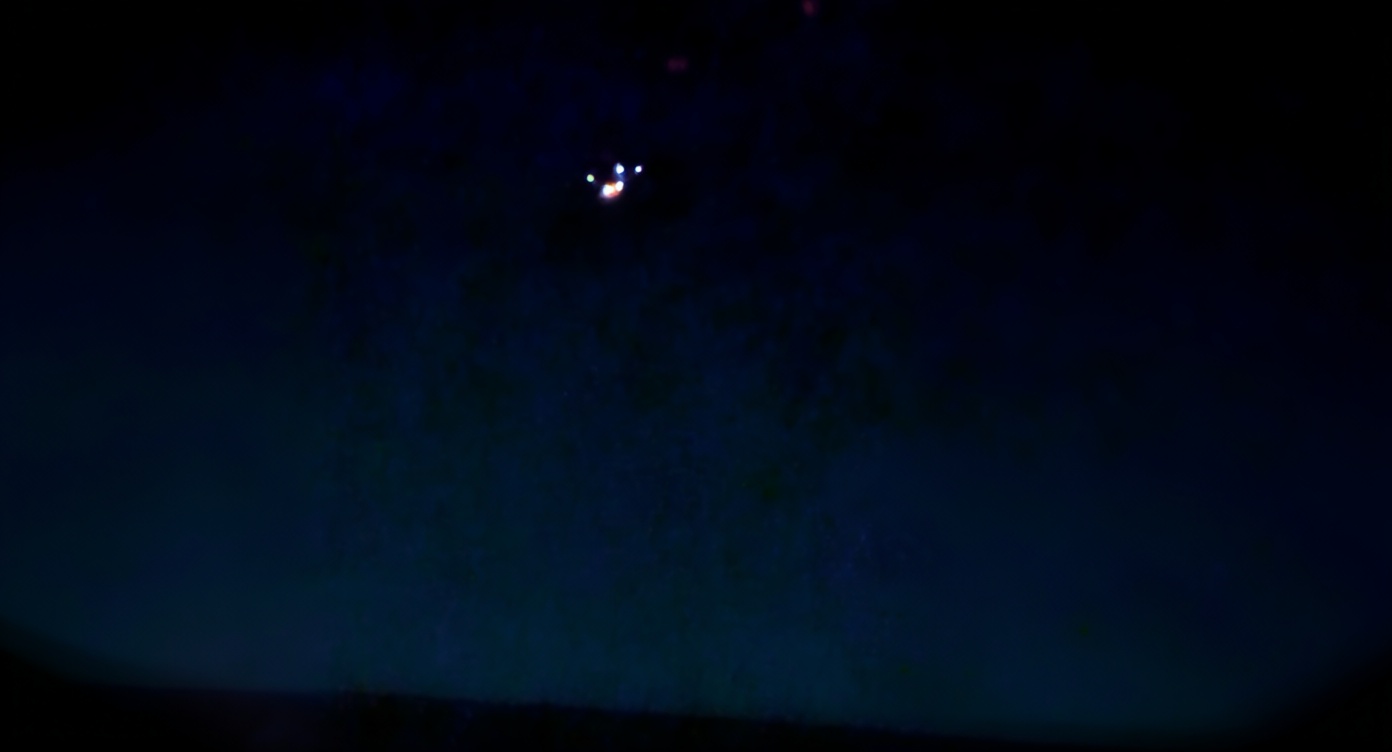
The object appears in the livestream as a bright disc-like or spherical shape moving near the station and the Dragon spacecraft. However, the available material does not establish what the object was, how far it was from the ISS, or whether it posed any actual collision risk.
Researcher’s Claims
Waring, who publishes the UFO Sightings Daily website, said the unidentified object was approximately 23 feet across and passed within about 82 feet of the ISS. He further claimed that a collision could have caused catastrophic damage, saying the object “could have destroyed the station had it hit it.”
The report also refers to what Waring described as another unidentified craft moving around the Dragon spacecraft. It is not clear from the provided footage or reporting whether the two observations represent separate objects, camera artifacts, nearby debris, or different views of the same event. No independent tracking data, photographic analysis, or trajectory reconstruction was provided to substantiate the measurements.
The footage reportedly shows a bright object moving through the camera’s field of view shortly after the broadcast began. Because the camera was mounted on or associated with the Dragon spacecraft, determining the object’s actual distance and speed from the video alone would be difficult without additional telemetry, multiple camera angles, or known reference points.
Mission Context
The Dragon spacecraft involved in the broadcast was carrying more than 6,300 pounds of supplies, scientific experiments and two roll-out solar arrays for the space station. NASA livestreams of spacecraft arrivals commonly show views of the station, visiting vehicles and the surrounding Earth, but the visual environment can also include reflections, lens flares, illuminated particles, or pieces of orbital debris.
Objects seen in space video can be difficult to identify because apparent motion may result from the movement of the camera, the spacecraft, or the station itself. An object that appears close on a two-dimensional screen may in fact be much farther away. Establishing a near miss would normally require orbital tracking information and a calculated separation distance, rather than visual interpretation alone.
No Official Confirmation
NASA, SpaceX and the ISS crew have not publicly confirmed that an unknown spacecraft was operating near the station or that a collision was narrowly avoided. The source material also does not indicate that NASA classified the object as a UFO in the sense of an extraterrestrial or technologically advanced craft. In this context, “UFO” means only that the object has not been identified from the available footage.
Nor does the report provide evidence that the station entered an emergency condition, performed an avoidance maneuver, or received a conjunction warning related to the object. Space agencies routinely monitor the ISS for orbital debris and other potential hazards, and credible close approaches are generally assessed using radar, optical observations and orbital models.
Until NASA, SpaceX or an independent orbital-tracking organization analyzes the footage and releases supporting data, the claim remains unverified. The video may warrant examination, but it does not by itself establish the object’s identity, dimensions, trajectory or proximity to the ISS.