Overview
Researchers continue to study Mexico’s pyramids as both architectural achievements and historical records, drawing on hieroglyphs, excavation data, and astronomical alignments to understand the societies that built them. From the stepped temples of the Maya at Chichén Itzá to the monumental complexes of Teotihuacan and the ritual center of Templo Mayor in Tenochtitlan, these structures remain central to debates about religion, governance, and scientific knowledge in ancient Mesoamerica. While the broad outlines of their origins are well established, many details — including construction methods, ceremonial use, and symbolic meaning — are still being revised as new discoveries emerge.
Builders, Materials, and Construction
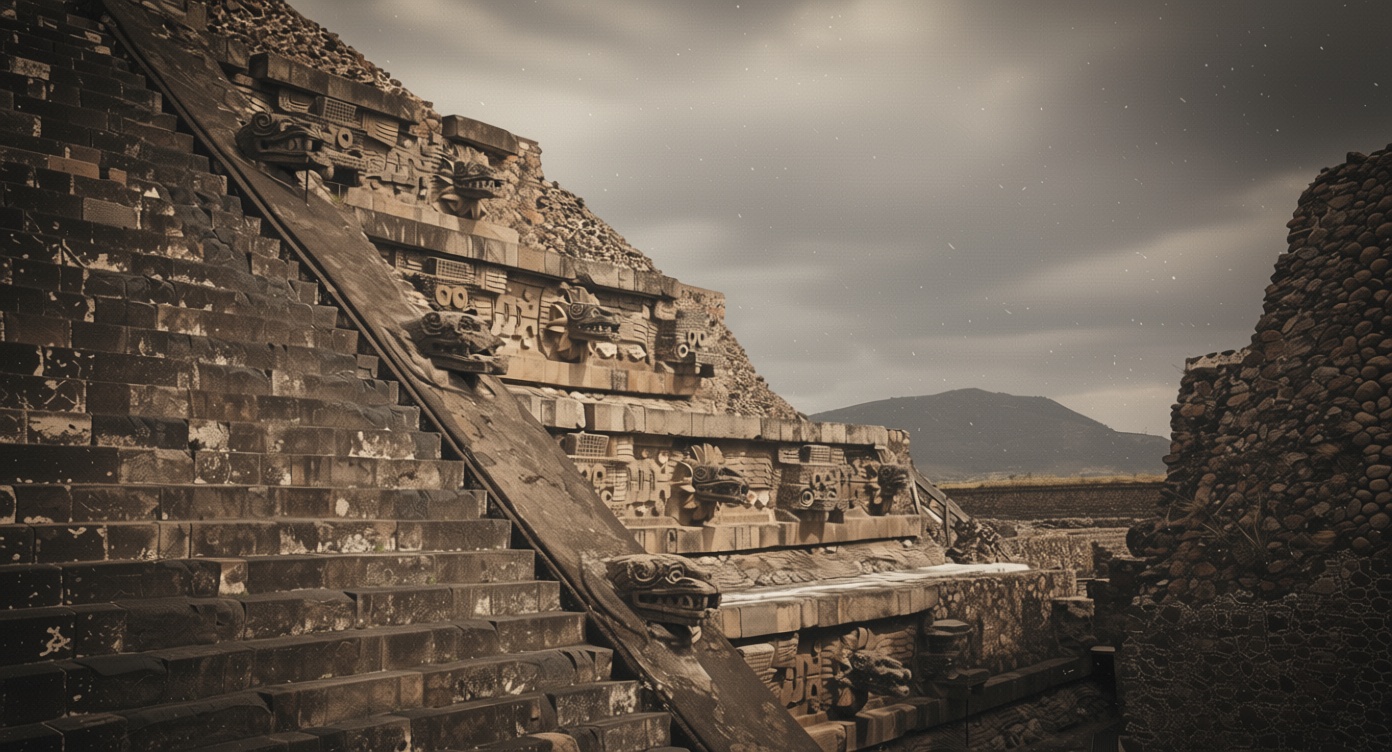
The pyramids of Mexico were not the work of a single civilization, but of several advanced cultures, each with distinct traditions. The Maya, known for their calendrical systems and written glyphs, built iconic monuments such as El Castillo at Chichén Itzá. The Aztec Empire later constructed the Templo Mayor, a ceremonial heart of imperial power. Earlier still, the Teotihuacan culture created the Pyramid of the Sun and Pyramid of the Moon, among the largest pre-Columbian structures in the Americas. Archaeologists continue to examine how these societies moved massive stone blocks, organized labor, and achieved the precise engineering visible at sites that were built without metal tools or wheeled transport.
Alignments and Astronomical Knowledge
One of the most compelling aspects of the pyramids is their apparent connection to the sky. At Chichén Itzá, the famous equinox “shadow serpent” effect on El Castillo has long been interpreted as evidence of careful astronomical planning and religious symbolism tied to the deity Kukulkan. At Teotihuacan, the Pyramid of the Sun and related structures appear aligned with solar events, suggesting that celestial observation was deeply embedded in urban design. Researchers say such alignments may have served multiple purposes: tracking agricultural cycles, reinforcing elite authority, and linking ritual life to the movements of the cosmos. The exact balance among those functions remains a matter of debate.
Hidden Chambers and Unresolved Questions
Beyond their visible grandeur, many pyramids present mysteries that continue to intrigue specialists. Some structures are believed to contain undiscovered chambers or tunnels, while others show unusual asymmetries or layered construction phases that complicate reconstruction of their histories. The Pyramid of the Magician at Uxmal, for example, has attracted attention for its unusual shape and complex building sequence. In several cases, archaeologists must infer the order of construction from fragments of masonry, burial evidence, and inscriptions. These unresolved features have helped sustain scholarly interest, even as they caution against simplistic explanations.
Why the Pyramids Still Matter
The enduring appeal of Mexico’s pyramids lies in the fact that they are more than ruins: they are evidence of sophisticated societies that combined religion, astronomy, political power, and engineering in ways that still challenge modern understanding. Researchers continue to analyze hieroglyphs and material finds not to prove sensational theories, but to build a clearer picture of how these civilizations viewed the world and their place in it. For archaeologists, the mystery is not that the pyramids are unknowable, but that they remain rich enough to keep producing new questions — and new insights — centuries after they were first built.