Overview
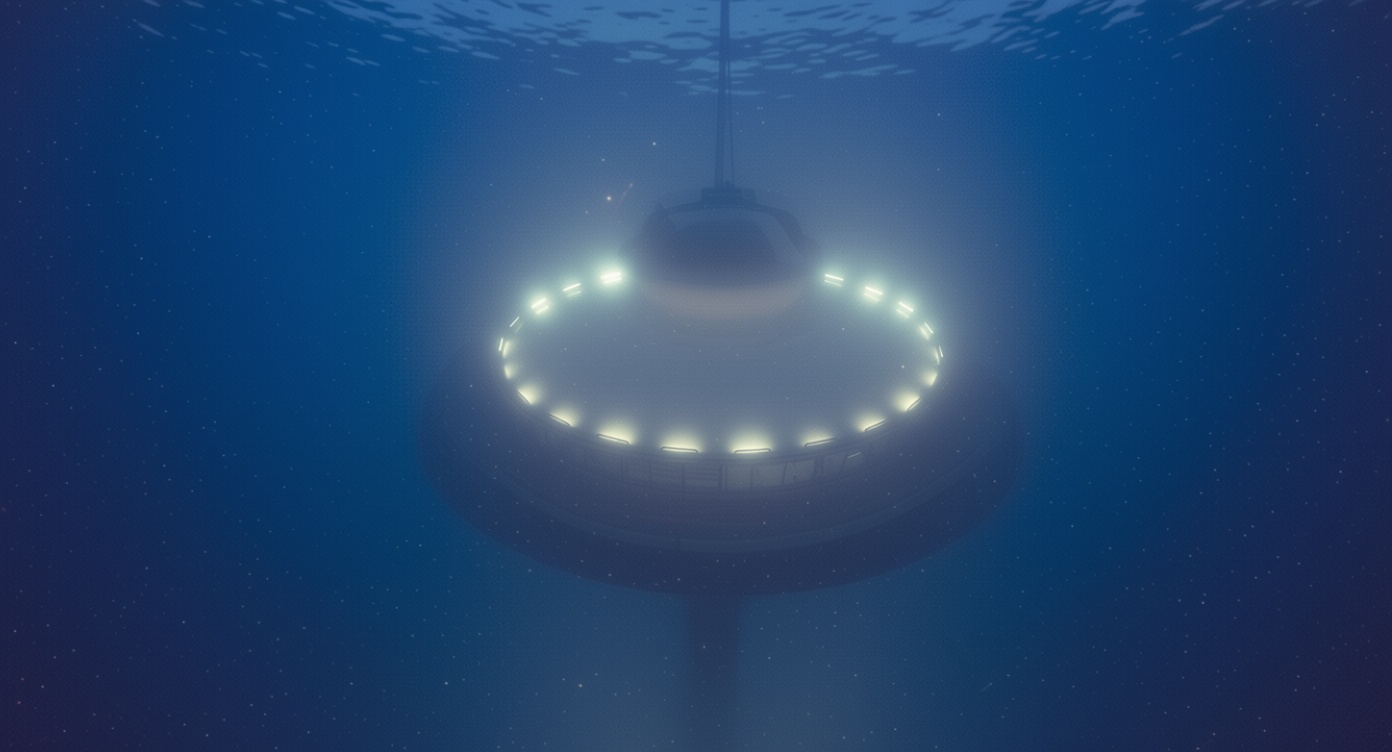
A retired U.S. Navy admiral has alleged that government and military officials have concealed information about unidentified anomalous phenomena (UAP) for decades, according to a report by Fox News. The report also described the former officer’s suggestion that the deep ocean could serve as a potential hiding place for unexplained objects.
The claims remain allegations and were not independently substantiated in the source material. No specific documentation, recovered object, incident report or firsthand evidence was identified in the available account. The report also did not establish that any UAP are extraterrestrial in origin, or that unidentified objects have been confirmed to operate beneath the ocean.
The Cover-Up Allegation
The retired admiral’s assertion reflects a broader debate over whether the U.S. government has withheld information about unusual sightings observed by military personnel. In recent years, lawmakers, former service members and intelligence officials have called for greater transparency regarding reports involving objects that appear to demonstrate unusual speed, maneuverability or operating characteristics.
The allegation of a decades-long cover-up is substantially broader than the evidence described in the report. Publicly available U.S. government reviews have acknowledged that military personnel have reported unexplained aerial incidents, but acknowledgment of an unexplained sighting does not confirm an extraordinary explanation. In many cases, officials have said limited sensor data, incomplete visual observations or insufficient information prevent a definitive identification.
The source material does not specify which agencies or individuals the admiral accused, nor does it provide a timeline, supporting records or details of alleged suppressed investigations. Those omissions make it difficult to independently assess the claim.
Why the Ocean Has Become Part of the UAP Debate
The deep ocean has periodically been cited by UAP commentators as a possible location for objects that are difficult to detect or track. Much of the seafloor remains poorly mapped, and the ocean presents significant technical challenges for surveillance, including extreme pressure, limited visibility and the difficulty of maintaining reliable communications underwater.
However, the existence of unexplored or difficult-to-monitor areas is not evidence that UAP are operating there. Submerged objects can also have conventional explanations, including submarines, unmanned underwater vehicles, marine debris, unusual atmospheric or oceanographic effects, and sensor errors. Establishing that an object entered the ocean—and determining what it was—would require corroborating data from multiple instruments or physical evidence.
Official Context
The U.S. government generally uses the term UAP for observations that cannot immediately be identified as aircraft, balloons, drones, natural phenomena or other known objects. The Pentagon’s All-domain Anomaly Resolution Office, or AARO, has been tasked with examining reports across air, sea, space and land domains. NASA has also studied how improved data collection and scientific methods could help evaluate UAP reports.
Those efforts have increased official attention to the subject while stopping short of confirming nonhuman technology. Investigators have repeatedly emphasized that many cases remain unresolved because the available data are incomplete, rather than because an extraordinary explanation has been demonstrated.
What Remains Unclear
The admiral’s comments are likely to renew debate over classified programs, military transparency and whether UAP investigations should include more systematic monitoring of the maritime environment. For the claims to be evaluated, researchers and lawmakers would need access to verifiable records, sensor data, chain-of-custody documentation and testimony that can be independently checked.
Until such evidence is made available, the reported cover-up allegation and the idea of a deep-ocean hiding place remain unverified possibilities, not established findings.