Overview
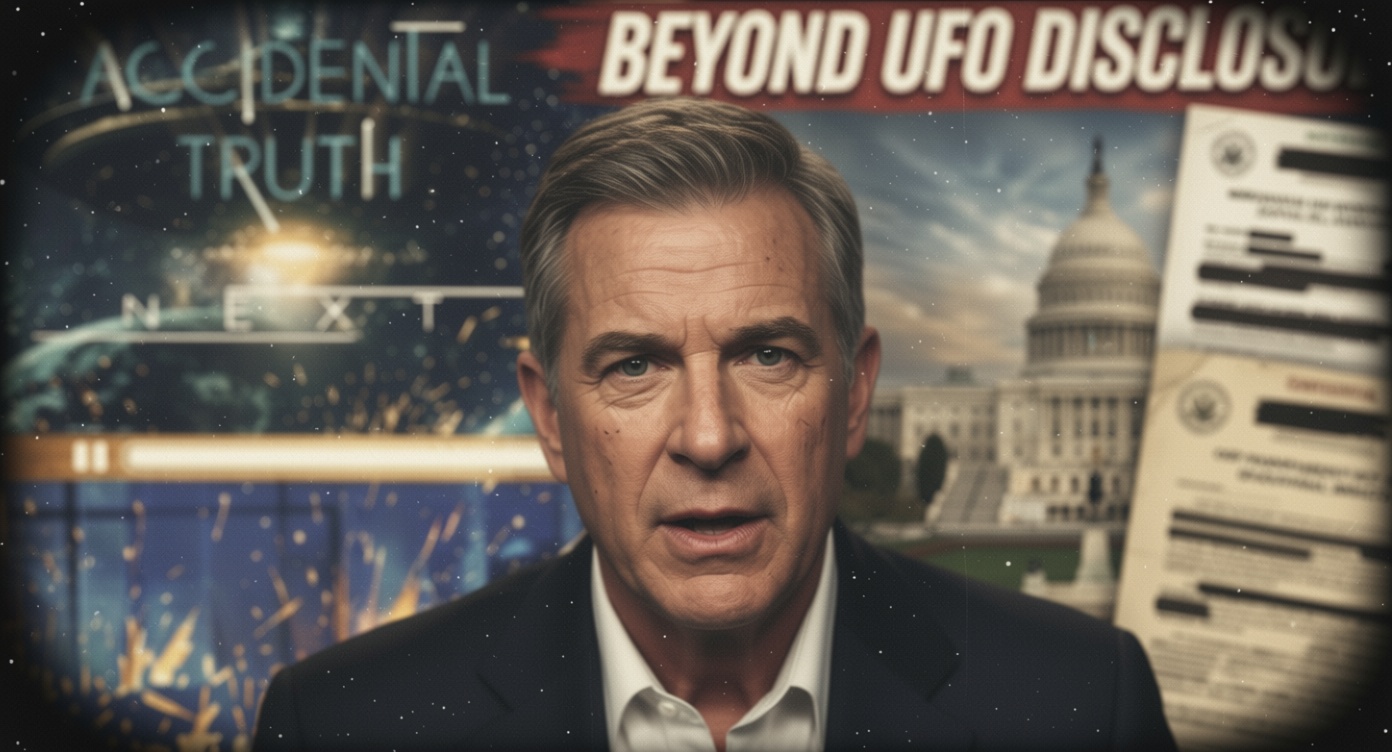
In a recent episode of “The UFO Report” on The Hannibal TV, host Jim Awrach sat down with Ron James, the media relations director for the Mutual UFO Network (MUFON) and filmmaker behind the Accidental Truth documentary series, for a wide-ranging conversation about the state of UFO disclosure and what may come after it. The discussion, which circulated widely in #UFOTwitter circles, moved beyond the usual question of whether governments acknowledge unidentified anomalous phenomena and instead examined what James believes is happening behind the scenes, both politically and culturally, in the modern UFO community.
Disclosure, Secrecy and Institutional Limits
James was sharply skeptical of the current disclosure process, describing it as “theatrical” and “a dog and pony show.” In his view, public-facing revelations from government officials, including disclosures tied to former intelligence officer David Grusch, amount to only surface-level access to a much deeper and more secretive system. James argued that the real information remains buried in what he called “deep-black programs,” and suggested that meaningful transparency is unlikely to emerge through conventional political channels because people with access to sensitive material are often constrained by security clearances and nondisclosure rules.
He also framed MUFON as a historically important part of the UFO landscape, saying that after the U.S. Air Force’s Project Blue Book ended, the organization received investigative protocols and paperwork used by the military. James said MUFON Television now hosts one of the world’s largest archives of UFO-related material, underscoring the group’s long-running role in collecting and cataloging reports from the public.
Conflict Within the UFO Community
A major portion of the interview focused on tensions inside the UFO research world, particularly what James sees as the commercialization of the subject. He criticized what he called “narrative farmers”—podcasters, commentators and media personalities he believes prioritize clicks and attention over careful investigation. That critique extended to recent disputes involving journalists and former officials, including a fallout with Ross Coulthart over his public criticism of Lou Elizondo. James defended Elizondo and argued that some of the loudest voices in the field are more interested in shaping a storyline than pursuing evidence.
James also challenged the idea that figures such as Grusch and Elizondo should be treated as traditional whistleblowers. He claimed their statements are cleared through the Department of Defense, a point he used to argue that the disclosure conversation is still tightly managed. The interview also touched on congressional UFO hearings, with James alleging that during one session he and others, including attorney Danny Sheehan, helped steer questioning in real time by texting prompts to Rep. Eric Burlison.
Bigger Claims and Broader Implications
Beyond politics and media strategy, James discussed alleged anomalous materials and corporate control over potentially nonhuman technology. He referenced a sample reportedly smuggled out of Russia that he said showed signs of nanotechnology and unusual isotopic ratios, which he suggested could indicate an off-world origin. He also claimed major aerospace companies, including Lockheed Martin, have blocked the transfer of such materials to other entities, including Bigelow Aerospace, asserting that corporate interests may be treating the technology as proprietary.
A Philosophical Turn
The interview ended on a more speculative note, with James discussing simulation theory and the possibility that physical reality is a programmed expression of consciousness. He said the ultimate meaning of disclosure may extend well beyond “nuts and bolts” UFO evidence, instead forcing a reassessment of human origins, consciousness and spirituality. His upcoming film, Accidental Truth: Next, he said, explores the relationship between NHI, artificial intelligence and the nature of reality, reflecting a broader shift in the UFO conversation from sightings and sensors to questions about what kind of universe humanity inhabits.