Overview
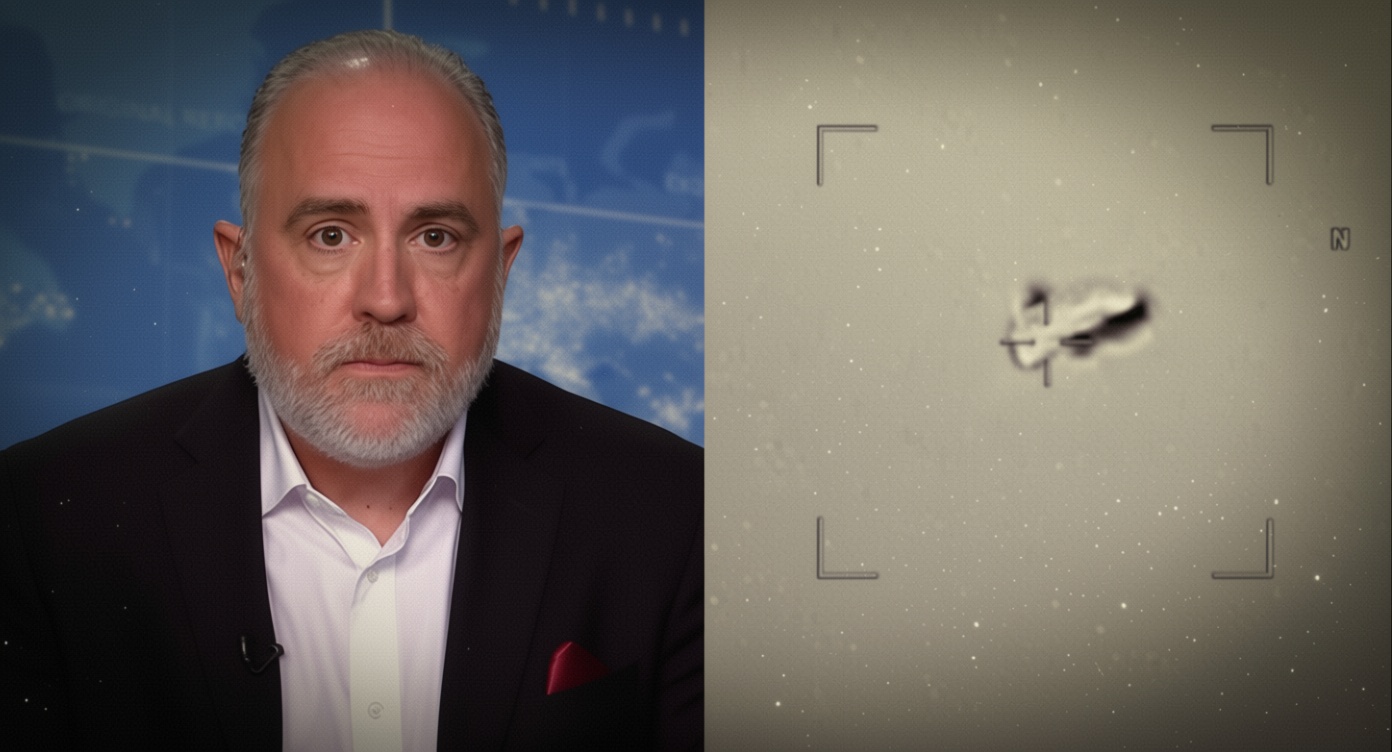
NewsNation special correspondent Ross Coulthart and producer Meagan Medick used a recent episode of Reality Check to examine claims surrounding unidentified anomalous phenomena (UAP), government transparency and the possibility of a long-running “legacy” program involving technology of unknown origin. The discussion covered recent statements by former Pentagon official Jay Stratton, proposed scientific monitoring by Harvard professor Avi Loeb, reported UAP activity near nuclear facilities and allegations involving private aerospace contractors. Many of the claims remain unverified, and no publicly available evidence has established the existence of non-human technology or recovered craft.
Stratton, Grusch and the Alleged Legacy Program
Coulthart focused on Jay Stratton’s recently released book and his public statements about UAP investigations. Stratton, who previously led the Pentagon’s UAP Task Force, has said that he encountered evidence of non-human beings and craft. Coulthart also reported that Stratton provided information to the Senate Select Committee on Intelligence concerning the alleged recovery of craft and bodies connected to the 1947 Roswell incident. Those assertions have not been independently substantiated by publicly released physical evidence or official documentation.
The program also addressed David Grusch, the former National Geospatial-Intelligence Agency official who testified to Congress about alleged concealed UAP-retrieval programs. Coulthart clarified an earlier misstatement, emphasizing that Grusch did not work for the CIA. Grusch was a GS-15 official at the NGA and was assigned to the UAP Task Force; his wife, rather than Grusch, had worked for the CIA.
Corporate Secrecy and NASA Criticism
A substantial portion of the discussion concerned the possibility that major aerospace and defense companies possess information or technology allegedly derived from reverse-engineering UAP. Coulthart named Lockheed Martin and Northrop Grumman while arguing that Congress may need to create a “qualified conditional amnesty” allowing companies or individuals to disclose relevant information without facing disproportionate legal, financial or patent-related consequences.
These suggestions remain speculative. No named company has publicly confirmed possession of non-human technology. Coulthart also criticized NASA’s approach to UAP records, claiming the agency’s searches may rely too heavily on terms such as “UFO” and overlook potentially relevant astronaut recordings, imagery and audio. NASA has said its scientific UAP work is intended to improve data collection and analysis rather than validate extraterrestrial explanations.
Scientific Monitoring and Global Reports
Coulthart endorsed Avi Loeb’s proposal to deploy unclassified scientific sensors in locations where UAP reports are concentrated. He cited the White Sands Missile Range as an area of interest and repeated allegations that the site has been associated with UAP “luring and retrieval operations.” Such claims have not been verified by publicly available evidence, while the range’s military restrictions make independent observation difficult.
The segment also revisited reports of UAP activity near nuclear installations in Europe, drawing on research by author Robert Hastings. Locations mentioned included facilities in Germany, France and the Netherlands, along with the Hessdalen Valley in Norway and military sites in Greece and Belgium. Coulthart speculated that nuclear detonations, including the 1954 Castle Bravo test, might affect unusual propulsion or gravitational phenomena, but acknowledged no established scientific evidence supports that interpretation.
Changing Descriptions and the Disclosure Debate
Coulthart noted differences between older and newer UAP accounts. Reports associated with incidents such as the 1948 Aztec, New Mexico case often described visible mechanical features, while modern witnesses more commonly portray objects as highly advanced or seemingly non-mechanical. The episode also discussed Jake Barber’s alleged “mothership” video and historical claims associated with Philip Corso and Bob Lazar, both of which remain controversial and disputed.
Coulthart concluded that public pressure and independent researchers are increasingly driving the disclosure debate. He suggested that repeated reports may represent a form of “steady conditioning,” while government agencies and defense contractors face security and legal barriers. For now, however, the existence of a hidden legacy UAP program remains an allegation rather than a fact established by publicly verifiable evidence.