Overview
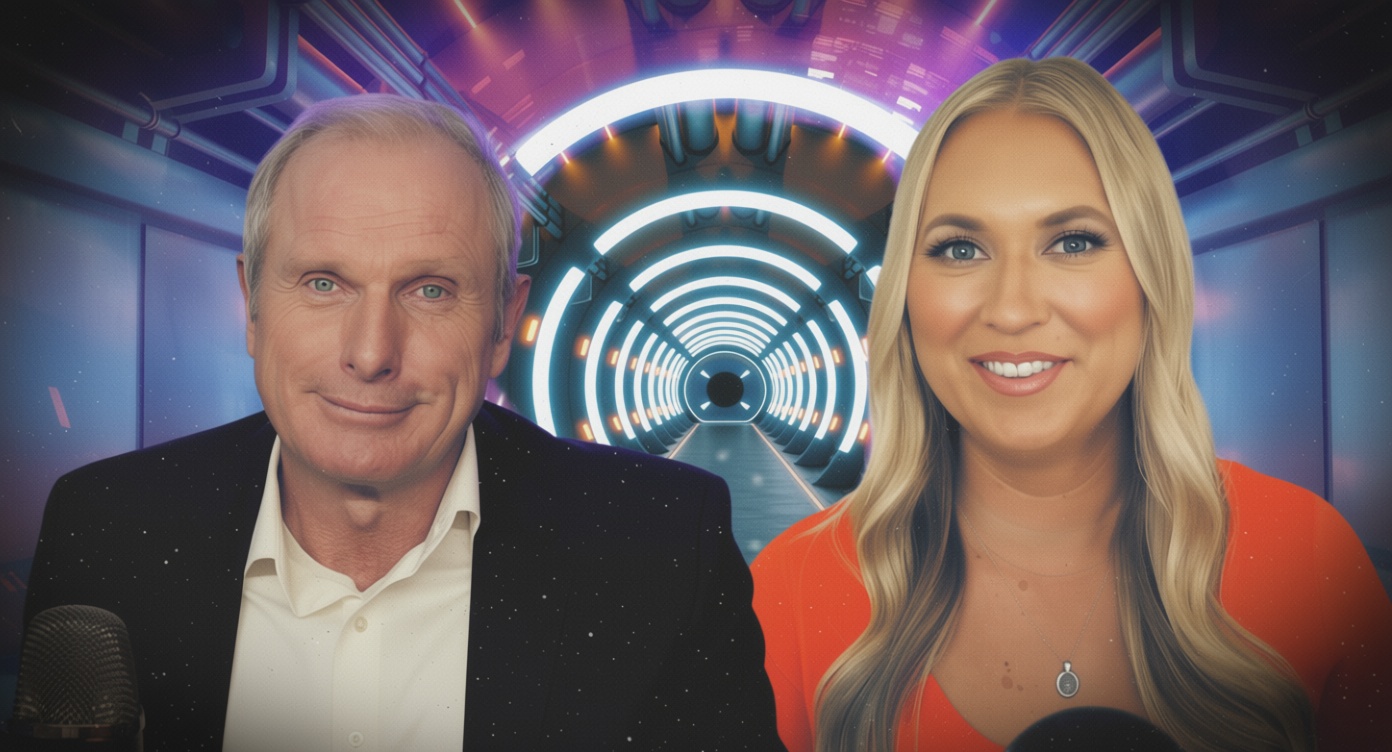
Investigative journalist Ross Coulthart returned to familiar territory in a new Q&A format, fielding viewer questions on some of the most controversial corners of UFO and UAP lore. In the latest installment, Coulthart addressed claims tied to Skinwalker Ranch, allegations of CIA influence inside the Office of the Director of National Intelligence (ODNI), and speculation that a secretive legacy program may possess technology advanced enough to make time travel possible. The conversation, presented in a fact-based style, reflects the continuing appetite for explanations around unexplained phenomena — and the persistent frustration over what many observers see as a culture of secrecy surrounding them.
Skinwalker Ranch and Unverified Biological Claims
Among the most eye-catching topics was a reported dire wolf recovery and DNA result connected to Skinwalker Ranch, the Utah site long associated with strange activity, disputed evidence, and competing claims from researchers, skeptics, and enthusiasts. Coulthart’s discussion underscored the broader challenge of reporting on alleged anomalous events: sensational claims often circulate faster than verifiable evidence. In the UAP world, Skinwalker Ranch remains one of the most polarizing subjects because even when new stories emerge, the line between documentation, interpretation, and speculation is often blurred.
That tension is central to why the site continues to attract attention. For believers, it represents a rare location where multiple unexplained phenomena appear to converge; for skeptics, it is a case study in how anecdote can outpace proof. Coulthart’s framing did not attempt to settle the matter so much as to place it within the ongoing debate over what can be substantiated and what remains anecdotal.
Government Secrecy, the ODNI, and Legacy Programs
Coulthart also took on questions involving alleged CIA cover-ups and the agency’s continued influence within the ODNI, especially in the wake of Tulsi Gabbard’s departure. The discussion reflects a familiar theme in modern UAP reporting: even as official interest in unidentified phenomena has increased in recent years, questions persist about whether key information remains compartmentalized within older, highly classified structures.
The Q&A further explored newly surfaced details about Admiral Thomas Wilson’s alleged briefing to Dr. Eric Davis, a story that has circulated for years among researchers focused on the so-called legacy program. Coulthart suggested that the significance of such claims may extend beyond any one administration, noting that a national security oath can outlast political changes in the White House. That point speaks to a broader concern among transparency advocates: if information is being withheld, it may be because it is embedded in institutional systems rather than tied to a single official.
Time Travel, Sightings, and the Limits of Perception
The episode also ventured into more speculative terrain, including whether the legacy program could be in possession of technology that might make time travel possible. Coulthart did not present such ideas as established fact, but rather as part of the larger inquiry into what might be hidden behind classified walls. Questions of this kind remain difficult to assess because they sit at the intersection of science fiction, strategic secrecy, and genuine unknowns.
He also responded to a retired detective’s report of a silver metallic cylinder seen in daylight over a Southern California freeway, and raised the possibility that the phenomenon itself may affect who does — and does not — perceive it. That idea echoes a common thread in UAP testimony: the notion that anomalous objects may not behave like ordinary aircraft or may interact with observers in ways that challenge conventional explanation. Whether such reports point to advanced technology, misperception, or something else entirely remains unresolved.
Broader Context
Coulthart’s Q&A illustrates why UFO reporting continues to resonate. The subject remains a mix of government secrecy, eyewitness accounts, disputed evidence, and public skepticism, with each new claim reviving calls for transparency and careful scrutiny. While the questions raised in the episode ranged from the extraordinary to the highly technical, the underlying issue was consistent: many people want clearer answers about what is being observed, what is being hidden, and who gets to decide.