Overview
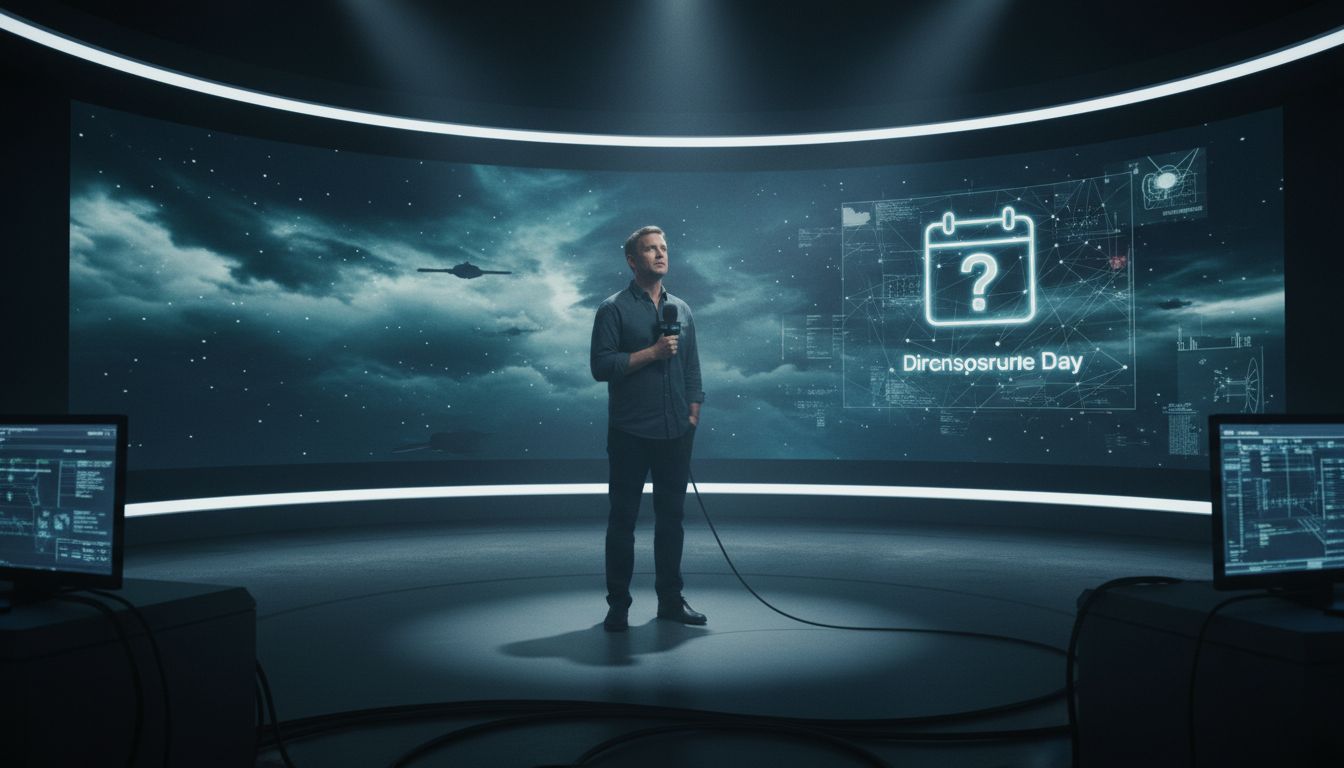
NewsNation’s Ross Coulthart is using his latest “Reality Check” special, Road to Disclosure, to explore one of the most persistent questions in the UFO debate: what would a real, official “Disclosure Day” actually look like? The program frames that idea not as science fiction, but as a possible end point of years of mounting public pressure, congressional scrutiny, and repeated calls for the government to be more open about what it knows regarding unidentified aerial phenomena (UAP). In that sense, the special positions disclosure less as a single dramatic announcement and more as the culmination of a slow, contested process already unfolding in public view.
Disclosure in the real world
Coulthart’s focus reflects the broader shift in the UFO conversation over the last several years, as the subject moved from the fringes of pop culture into hearings, official reports, and routine news coverage. Advocates for transparency argue that the public deserves clearer answers about unexplained sightings, military encounters, and whether the U.S. government has collected evidence that has not yet been fully shared. Critics, meanwhile, caution that many cases remain unresolved for ordinary reasons: sensor limitations, incomplete data, or misidentification. That tension is central to the idea of disclosure, which depends on whether authorities can separate verified facts from speculation and decide how much information can be released without compromising national security.
A future public revelation?
The notion of a “Disclosure Day” has become a kind of shorthand among UAP observers for a hypothetical moment when officials would formally acknowledge the full scope of what they know. In practice, however, the path to such a moment is likely to be incremental rather than theatrical. It could come through declassified documents, congressional testimony, agency reports, or a high-level briefing rather than a single televised event. Coulthart’s segment appears to tap into that reality by asking how close the public may be to a more definitive accounting — and whether current transparency efforts are building toward a breakthrough or simply revealing how much remains unknown.
Culture, credibility, and public interest
The special also ties disclosure to broader cultural interest, including discussion of Steven Spielberg’s new film, which underscores how UFOs continue to straddle entertainment, skepticism, and serious policy debate. That mix helps explain why disclosure stories resonate so strongly: they are about more than anomalous objects in the sky. They touch on trust in government, the handling of military information, and the public’s right to know. For NewsNation, which has made UFO coverage a recurring theme, Coulthart’s segment reinforces the network’s role in treating the topic as a legitimate news issue rather than a novelty.
Why it matters
Ultimately, Road to Disclosure reflects where the UAP conversation now stands: in a space between unanswered questions and rising expectations. Whether a true Disclosure Day ever arrives may depend on evidence that can withstand scrutiny, institutions willing to release it, and an audience prepared to separate fact from speculation. Until then, the story remains one of process — and of an increasingly visible demand that the government explain what it knows, what it does not, and what it may still be withholding.